amigo
Buhi'non Bikol • Cebuano • Central Bikol • Chavacano • Chinese • East Miraya Bikol • Eastern Huasteca Nahuatl • Galician • Istriot • Ladino • Libon Bikol • Masbate Sorsogon • Masbatenyo • Old Galician-Portuguese • Portuguese • Rinconada Bikol • Southern Catanduanes Bikol • Spanish • Tagalog • Venetan • Waray Sorsogon • West Miraya Bikol
Page categories
English
Etymology
Borrowed from Spanish amigo (“friend”), from Latin amīcus (“friend”), derived from amāre (“to love”). Compare French ami, Italian amico, Portuguese amigo and Romanian amic. Doublet of amicus.
Pronunciation
- (UK) IPA(key): /əˈmiː.ɡəʊ/
Audio (Southern England): (file) - (US) IPA(key): /əˈmiɡoʊ/
- Hyphenation: a‧mi‧go
Noun
amigo (plural amigos)
- (informal, colloquial) A friend.
- Synonyms: see Thesaurus:friend
- 1989, Dan Simmons, Hyperion, London: Headline, published 1991, page 247:
- I don’t remember electing you dictator, amigo.
- 1996, “No Time”, in Hard Core, performed by Lil' Kim ft. Diddy:
- Chillin' in a Benz with my amigos / Tryin' to stick a nigga for his pesos
- (colloquial, informal, chiefly California) Mexican.
- (historical) A native of the Philippines who was friendly toward the Spanish.
Derived terms
Translations
Anagrams
Buhi'non Bikol
Etymology
Noun
amigo
Cebuano
Etymology
Borrowed from Spanish amigo (“male friend”), from Old Spanish amigo, amygo, from Latin amīcus.
Pronunciation
- Hyphenation: a‧mi‧go
- IPA(key): /ʔaˈmiɡo/ [ʔaˈmiː.ɡo]
Noun
amigo (Badlit spelling ᜀᜋᜒᜄᜓ)
- a male friend
- (obsolete) an address to a male friend
Central Bikol
Etymology
Pronunciation
- IPA(key): /ʔaˈmiɡo/ [ʔaˈmi.ɡo]
- Hyphenation: a‧mi‧go
Noun
amígo (feminine amiga, Basahan spelling ᜀᜋᜒᜄᜓ)
Derived terms
- amigohon
- aminigo
- aramigo
- kaamigo
- mag-amigo
- maki-amigo
Chavacano
Etymology
Inherited from Spanish amigo (“friend”).
Pronunciation
- IPA(key): /aˈmiɡo/ [a.ˈmi.ɡo]
- Rhymes: -ɡo, -iɡo
- Hyphenation: a‧mi‧go
Noun
amígo
Chinese
Etymology
Pronunciation
Noun
amigo
- (informal, American (1980–)) Mexican people
East Miraya Bikol
Etymology
Noun
amigo
Eastern Huasteca Nahuatl
Etymology
Noun
amigo (possessive iamigo)
Galician
Etymology
Inherited from Old Galician-Portuguese amigo, from Latin amīcus, from amō + -īcus.
Pronunciation
- IPA(key): (standard) /aˈmiɡo/ [ɐˈmi.ɣ̞ʊ]
- IPA(key): (gheada) /aˈmiħo/ [ɐˈmi.ħʊ]
- (standard) Rhymes: -iɡo
- (gheada) Rhymes: -iħo
- Hyphenation: a‧mi‧go
Noun
amigo m (plural amigos, feminine amiga, feminine plural amigas)
Related terms
Adjective
amigo (feminine amiga, masculine plural amigos, feminine plural amigas)
Further reading
- “amigo”, in Dicionario da Real Academia Galega (in Galician), A Coruña: Royal Galician Academy, 2012–2026
- “amigo”, in Dicionário Estraviz de galego (in Galician), 2014–2026
Istriot
Etymology
Noun
amigo m
References
- Antonio Pellizzer; Giovanni Pellizzer (1992), Vocabulario del dialetto di Rovigno d'Istria, page 46
- Sandro Cergna (2015), Vocabolario del dialetto di Valle d'Istria, →ISBN, page 24
Ladino
Etymology
From Old Spanish amigo, amygo, from Latin amīcus.
Noun
amigo m (Hebrew spelling אמיגו)
- (male) friend
Coordinate terms
Libon Bikol
Etymology
Noun
amigo
Masbate Sorsogon
Etymology
Noun
amigo
Masbatenyo
Etymology
Noun
amigo
Old Galician-Portuguese
Alternative forms
Etymology
From Latin amīcus (“friend; friendly”), from amō (“to love”) + -icus.
Pronunciation
Noun
amigo m (plural amigos, feminine amiga, feminine plural amigas)
- friend
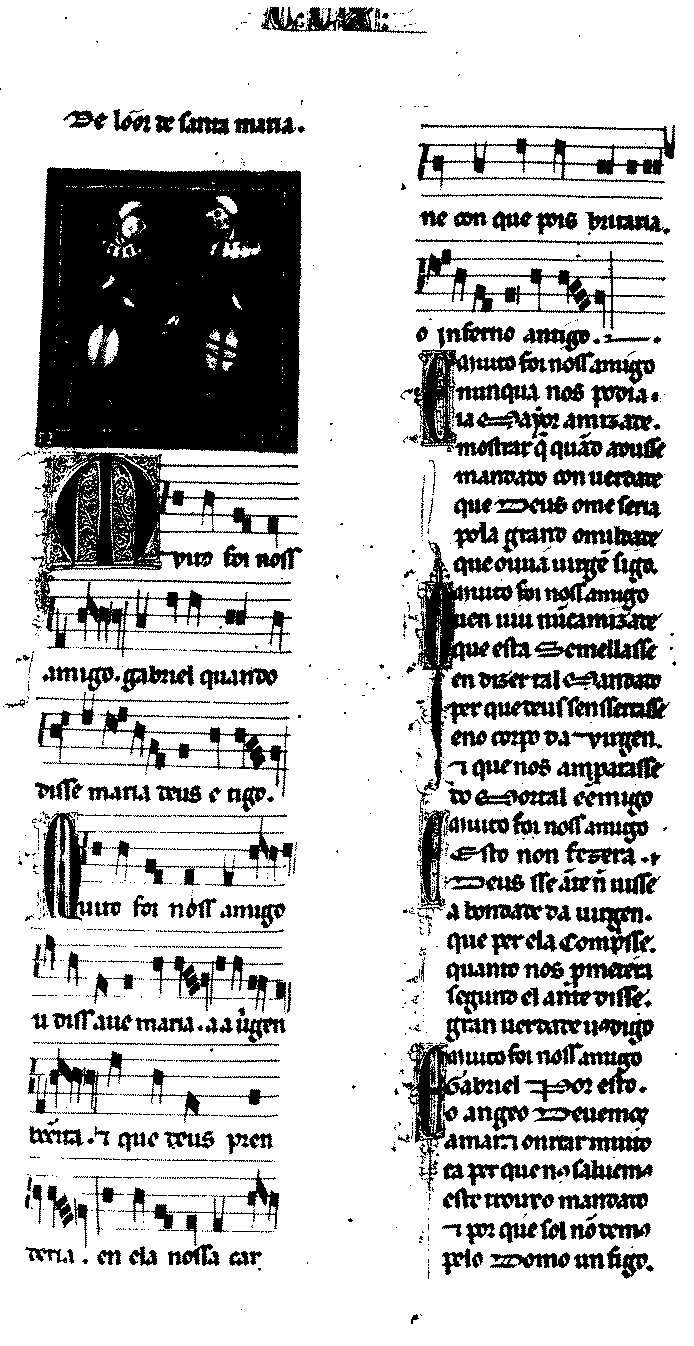
- a. 1284, Alfonso X of Castile, Cantigas de Santa Maria, Códice de los músicos, cantiga 210 (facsimile):
- Mvito foi noſſamigo / gabriel quando diſſe / maria deus e tigo.
- Gabriel was our true friend when he said: "Mary, God is with you".
- Mvito foi noſſamigo / gabriel quando diſſe / maria deus e tigo.
- lover
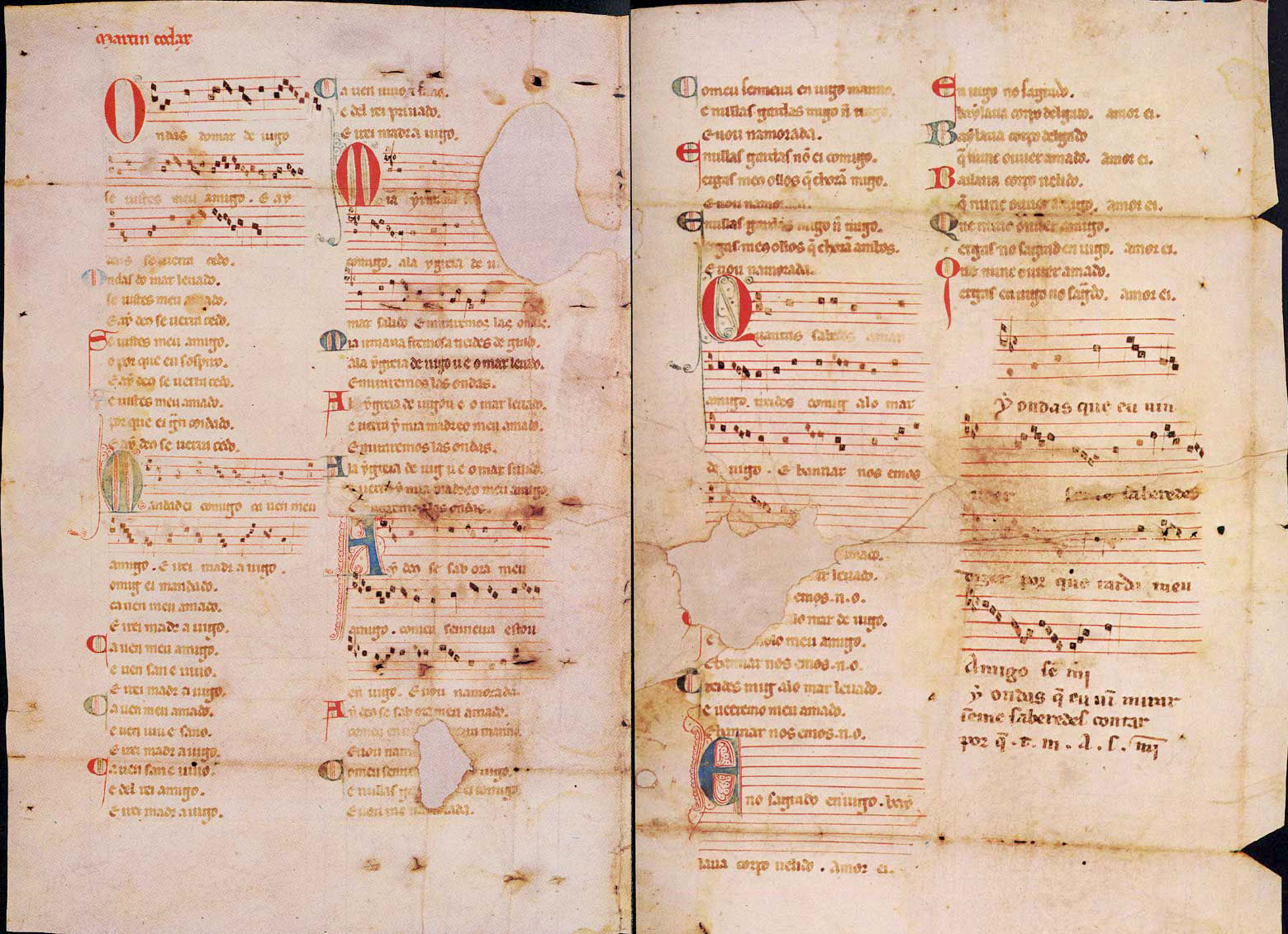
- 13th century, Vindel manuscript, Martín Codax, Ondas do mar de Vigo (facsimile)
- Ondas do mar de uigo / ſe uiſtes meu amigo. / E ay deꝯ ſe uerra cedo.
- Waves of the sea of Vigo / Have you seen my lover? / Oh God, will he return soon?
- 13th century, Vindel manuscript, Martín Codax, Ondas do mar de Vigo (facsimile)
Antonyms
- (antonym(s) of “friend”): ẽemigo
Descendants
Portuguese
Pronunciation
- (Brazil) IPA(key): /aˈmi.ɡu/
- (Portugal) IPA(key): /ɐˈmi.ɡu/ [ɐˈmi.ɣu]
- (Southern Portugal) IPA(key): /ɐˈmi.ɡu/
- (Rural Central Brazil) IPA(key): /ɐˈmi.ɡʷ/
Audio (Portugal (Porto)): (file) - Rhymes: -iɡu
- Hyphenation: a‧mi‧go
Etymology 1
From Old Galician-Portuguese amigo, from Latin amīcus (“friend; friendly”), from amō (“to love”) + -icus. Compare Catalan amic, French ami, Italian amico, Romanian amic and Spanish amigo.
Noun
amigo m (plural amigos, feminine amiga, feminine plural amigas)
- friend (person whose company one enjoys)
- Synonyms: camarada, companheiro
- Antonym: inimigo
- João e Maria são meus amigos.
- John and Mary are my friends.
- 2011, Edelvino Razzolini Filho, Administração da Pequena e Média Empresa, IESDE Brasil S.A., →ISBN, page 44:
- Convém, aqui, lembrar o ditado popular: amigos, amigos; negócios à parte. Caso o empreendedor saiba separar a amizade dos negócios, certamente estará em melhores condições para o sucesso.
- (please add an English translation of this quotation)
- 2012, Luís Fernando Veríssimo, “A tática da bolsa”, in Diálogos Impossíveis, Rio de Janeiro: Editora Objetiva, →ISBN, page 119:
- A Jussara estava a fim de um cara e bolou um plano para conhecê-lo. Ou para ele a conhecer. Um plano minucioso, que descreveu para as amigas como se fosse uma operação militar. Em vez de conquistar um reduto inimigo, Jussara conquistaria o cara, que se renderia ao seu ataque. Ela acreditava que, no amor como na guerra, audácia era tudo.
- (please add an English translation of this quotation)
- friend (an associate or thing which provides assistance)
- Sou amigo da natureza.
- I’m a friend of nature.
- Perseverança é a melhor amiga do conhecimento.
- Perseverance is knowledge’s best friend.
- a state with good relations with another state
- O Canadá é amigo dos Estados Unidos.
- Canada is the United States’ friend.
- (Brazil, colloquial, used in the vocative) A term of address for someone
Derived terms
- (augmentative) amigaço
- (augmentative) amigão
- amigar
- amigo da onça
- amigo do peito
- amigo oculto
- amigo secreto
- amigo-urso
- (diminutive) amiguinho
- falso amigo
- lista de amigos
Derived terms
- → Hunsrik: Amigo, Amiga
Adjective
amigo (feminine amiga, masculine plural amigos, feminine plural amigas, comparable, comparative mais amigo, superlative o mais amigo or amiguíssimo or amicíssimo)
- friendly (characteristic of friendliness)
- Synonym: amigável
- Abraço amigo.
- Friendly hug.
- (military) friendly (of or relating to friendlies)
- Fogo amigo.
- Friendly fire.
- beneficial (helpful or good to something or someone)
Related terms
Etymology 2
See the etymology of the corresponding lemma form.
Verb
amigo
- first-person singular present indicative of amigar
Further reading
- “amigo”, in Dicionário Aulete Digital (in Portuguese), Rio de Janeiro: Lexikon Editora Digital, 2008–2026
- “amigo”, in Dicionário Priberam da Língua Portuguesa (in Portuguese), Lisbon: Priberam, 2008–2026
Rinconada Bikol
Etymology
Noun
amigo
Southern Catanduanes Bikol
Etymology
Noun
amigo
Spanish
Pronunciation
- IPA(key): /aˈmiɡo/ [aˈmi.ɣ̞o]
Audio (Colombia): (file)
- IPA(key): (interjection) /ˌaˈmiɡo/ [ˌaˈmi.ɣ̞o]
- Rhymes: -iɡo
- Syllabification: a‧mi‧go
Etymology 1
Inherited from Old Spanish amigo, amygo, from Latin amīcus, from amō (“to love”). Cognate with Catalan amic, French ami, Italian amico, Portuguese amigo, Romanian amic.
Noun
amigo m (plural amigos, feminine amiga, feminine plural amigas)
- friend
- (Rioplatense, slang) penis
- Synonyms: see Thesaurus:pene
Derived terms
Related terms
Descendants
- Chamicuro: ameko
- → Cebuano: amigo
- → English: amigo
- ⇒ French: igo
- → German: Amigo
- → Hanunoo: amigos
- → Papiamentu: amigu
- → Turkish: amigo
- → Yucatec Maya: amigoo
Interjection
amigo
- Said when realizing something.
Etymology 2
Verb
amigo
- first-person singular present indicative of amigar
Further reading
- “amigo”, in Diccionario de la lengua española [Dictionary of the Spanish Language] (in Spanish), 24th edition, Royal Spanish Academy [Spanish: Real Academia Española], 30 October 2026
Tagalog
Alternative forms
- amigos — obsolete
Etymology
Borrowed from Spanish amigo, from Old Spanish amigo, from Latin amīcus, from amō + -īcus.
Pronunciation
- (Standard Tagalog) IPA(key): /ʔaˈmiɡo/ [ʔɐˈmiː.ɣ̠o]
- Rhymes: -iɡo
- Syllabification: a‧mi‧go
Noun
amigo (feminine amiga, Baybayin spelling ᜀᜋᜒᜄᜓ)
- (strictly) guy friend; male friend
- friend
- Synonyms: kaibigan; see also Thesaurus:kaibigan
Related terms
Further reading
- “amigo”, in KWF Diksiyonaryo ng Wikang Filipino, Komisyon sa Wikang Filipino, 2025
- San Buena Ventura, Fr. Pedro de (1613), Vocabulario de lengua tagala. El romance castellano puesto primero. Primera, y segunda parte. [Vocabulary of the Tagalog language. Castilian Romance placed first. First, and second parts.][1] (overall work in Early Modern Spanish and Classical Tagalog), as directed by Gov. Gen. Juan de Silva, Pila, Laguna: La noble Villa de Pila, por Tomás Pinpin y Domingo Loag. [The noble Villa of Pila, by Tomás Pinpin and Domingo Loag.], page 52: “Amigo) Amigos (pp) C. dos queſe quieren bien”
Venetan
Etymology
Noun
amigo m (plural amighi) (Alternative plural: amisi)
Waray Sorsogon
Etymology
Noun
amigo
West Miraya Bikol
Etymology
Noun
amigo
- English terms borrowed from Spanish
- English terms derived from Spanish
- English terms derived from Latin
- English doublets
- English 3-syllable words
- English terms with IPA pronunciation
- English terms with audio pronunciation
- English lemmas
- English nouns
- English countable nouns
- English informal terms
- English colloquialisms
- English terms with quotations
- California English
- English terms with historical senses
- English terms of address
- Buhi'non Bikol terms derived from Spanish
- Buhi'non Bikol terms derived from Latin
- Buhi'non Bikol terms borrowed from Spanish
- Buhi'non Bikol terms derived from Proto-Indo-European
- Buhi'non Bikol terms derived from the Proto-Indo-European root *h₃emh₃-
- Buhi'non Bikol terms derived from Old Spanish
- Buhi'non Bikol terms derived from Proto-Italic
- Buhi'non Bikol lemmas
- Buhi'non Bikol nouns
- Cebuano terms borrowed from Spanish
- Cebuano terms derived from Spanish
- Cebuano terms derived from Old Spanish
- Cebuano terms derived from Latin
- Cebuano terms with IPA pronunciation
- Cebuano lemmas
- Cebuano nouns
- Cebuano terms with Badlit script
- Cebuano terms with obsolete senses
- Cebuano terms of address
- ceb:Male
- ceb:People
- Central Bikol terms borrowed from Spanish
- Central Bikol terms derived from Proto-Indo-European
- Central Bikol terms derived from Latin
- Central Bikol terms derived from Old Spanish
- Central Bikol terms derived from the Proto-Indo-European root *h₃emh₃-
- Central Bikol terms derived from Spanish
- Central Bikol terms derived from Proto-Italic
- Central Bikol terms with IPA pronunciation
- Central Bikol lemmas
- Central Bikol nouns
- Central Bikol terms with Basahan script
- bcl:Male
- bcl:People
- Central Bikol terms of address
- Chavacano terms inherited from Spanish
- Chavacano terms derived from Spanish
- Chavacano terms with IPA pronunciation
- Rhymes:Chavacano/ɡo
- Rhymes:Chavacano/ɡo/3 syllables
- Rhymes:Chavacano/iɡo
- Rhymes:Chavacano/iɡo/3 syllables
- Chavacano lemmas
- Chavacano nouns
- Caviteño Chavacano
- Zamboangueño Chavacano
- Chinese terms borrowed from English
- Chinese terms derived from English
- Chinese lemmas
- Chinese nouns
- Chinese terms with IPA pronunciation
- Chinese terms written in foreign scripts
- Chinese informal terms
- American (1980–) Chinese
- East Miraya Bikol terms borrowed from Spanish
- East Miraya Bikol terms derived from Proto-Italic
- East Miraya Bikol terms derived from the Proto-Indo-European root *h₃emh₃-
- East Miraya Bikol terms derived from Proto-Indo-European
- East Miraya Bikol terms derived from Old Spanish
- East Miraya Bikol terms derived from Spanish
- East Miraya Bikol terms derived from Latin
- East Miraya Bikol lemmas
- East Miraya Bikol nouns
- Eastern Huasteca Nahuatl terms borrowed from Spanish
- Eastern Huasteca Nahuatl terms derived from Spanish
- Eastern Huasteca Nahuatl lemmas
- Eastern Huasteca Nahuatl nouns
- Galician terms derived from the Proto-Indo-European root *h₃emh₃-
- Galician terms derived from Old Galician-Portuguese
- Galician terms inherited from Old Galician-Portuguese
- Galician terms derived from Latin
- Galician terms derived from Proto-Italic
- Galician terms derived from Proto-Indo-European
- Galician terms inherited from Latin
- Galician terms with IPA pronunciation
- Rhymes:Galician/iɡo
- Rhymes:Galician/iɡo/3 syllables
- Rhymes:Galician/iħo
- Rhymes:Galician/iħo/3 syllables
- Galician lemmas
- Galician nouns
- Galician countable nouns
- Galician masculine nouns
- Galician adjectives
- Galician terms with collocations
- gl:People
- Istriot terms inherited from Latin
- Istriot terms derived from Latin
- Istriot lemmas
- Istriot nouns
- Istriot masculine nouns
- Ladino terms derived from Old Spanish
- Ladino terms derived from Latin
- Ladino lemmas
- Ladino nouns
- Ladino nouns in Latin script
- Ladino masculine nouns
- Libon Bikol terms derived from Proto-Indo-European
- Libon Bikol terms derived from Old Spanish
- Libon Bikol terms derived from Proto-Italic
- Libon Bikol terms derived from Latin
- Libon Bikol terms derived from the Proto-Indo-European root *h₃emh₃-
- Libon Bikol terms derived from Spanish
- Libon Bikol terms borrowed from Spanish
- Libon Bikol lemmas
- Libon Bikol nouns
- Masbate Sorsogon terms derived from the Proto-Indo-European root *h₃emh₃-
- Masbate Sorsogon terms derived from Proto-Italic
- Masbate Sorsogon terms derived from Spanish
- Masbate Sorsogon terms borrowed from Spanish
- Masbate Sorsogon terms derived from Proto-Indo-European
- Masbate Sorsogon terms derived from Old Spanish
- Masbate Sorsogon terms derived from Latin
- Masbate Sorsogon lemmas
- Masbate Sorsogon nouns
- Masbatenyo terms derived from Old Spanish
- Masbatenyo terms derived from the Proto-Indo-European root *h₃emh₃-
- Masbatenyo terms borrowed from Spanish
- Masbatenyo terms derived from Latin
- Masbatenyo terms derived from Spanish
- Masbatenyo terms derived from Proto-Indo-European
- Masbatenyo terms derived from Proto-Italic
- Masbatenyo lemmas
- Masbatenyo nouns
- Old Galician-Portuguese terms derived from Latin
- Old Galician-Portuguese terms derived from Proto-Italic
- Old Galician-Portuguese terms derived from the Proto-Indo-European root *h₃emh₃-
- Old Galician-Portuguese terms inherited from Latin
- Old Galician-Portuguese terms derived from Proto-Indo-European
- Old Galician-Portuguese terms with IPA pronunciation
- Old Galician-Portuguese lemmas
- Old Galician-Portuguese nouns
- Old Galician-Portuguese masculine nouns
- Old Galician-Portuguese terms with quotations
- Portuguese 3-syllable words
- Portuguese terms with IPA pronunciation
- Portuguese 2-syllable words
- Portuguese terms with audio pronunciation
- Rhymes:Portuguese/iɡu
- Rhymes:Portuguese/iɡu/3 syllables
- Portuguese terms derived from the Proto-Indo-European root *h₃emh₃-
- Portuguese terms derived from Proto-Italic
- Portuguese terms derived from Latin
- Portuguese terms inherited from Old Galician-Portuguese
- Portuguese terms inherited from Latin
- Portuguese terms derived from Proto-Indo-European
- Portuguese terms derived from Old Galician-Portuguese
- Portuguese lemmas
- Portuguese nouns
- Portuguese countable nouns
- Portuguese masculine nouns
- Portuguese terms with usage examples
- Portuguese terms with quotations
- Brazilian Portuguese
- Portuguese colloquialisms
- Portuguese adjectives
- Portuguese comparable adjectives
- pt:Military
- Portuguese non-lemma forms
- Portuguese verb forms
- Rinconada Bikol terms derived from the Proto-Indo-European root *h₃emh₃-
- Rinconada Bikol terms derived from Old Spanish
- Rinconada Bikol terms borrowed from Spanish
- Rinconada Bikol terms derived from Proto-Indo-European
- Rinconada Bikol terms derived from Latin
- Rinconada Bikol terms derived from Proto-Italic
- Rinconada Bikol terms derived from Spanish
- Rinconada Bikol lemmas
- Rinconada Bikol nouns
- Southern Catanduanes Bikol terms borrowed from Spanish
- Southern Catanduanes Bikol terms derived from Proto-Italic
- Southern Catanduanes Bikol terms derived from Proto-Indo-European
- Southern Catanduanes Bikol terms derived from Old Spanish
- Southern Catanduanes Bikol terms derived from the Proto-Indo-European root *h₃emh₃-
- Southern Catanduanes Bikol terms derived from Spanish
- Southern Catanduanes Bikol terms derived from Latin
- Southern Catanduanes Bikol lemmas
- Southern Catanduanes Bikol nouns
- Spanish 3-syllable words
- Spanish terms with IPA pronunciation
- Spanish terms with audio pronunciation
- Rhymes:Spanish/iɡo
- Rhymes:Spanish/iɡo/3 syllables
- Spanish terms inherited from Old Spanish
- Spanish terms derived from Proto-Italic
- Spanish terms inherited from Latin
- Spanish terms derived from Old Spanish
- Spanish terms derived from Proto-Indo-European
- Spanish terms derived from Latin
- Spanish terms derived from the Proto-Indo-European root *h₃emh₃-
- Spanish lemmas
- Spanish nouns
- Spanish countable nouns
- Spanish masculine nouns
- Spanish terms with usage examples
- Rioplatense Spanish
- Spanish slang
- Spanish interjections
- Spanish non-lemma forms
- Spanish verb forms
- es:Love
- es:People
- Spanish terms of address
- Tagalog terms borrowed from Spanish
- Tagalog terms derived from Spanish
- Tagalog terms derived from the Proto-Indo-European root *h₃emh₃-
- Tagalog terms derived from Proto-Indo-European
- Tagalog terms derived from Proto-Italic
- Tagalog terms derived from Old Spanish
- Tagalog terms derived from Latin
- Tagalog 3-syllable words
- Tagalog terms with IPA pronunciation
- Rhymes:Tagalog/iɡo
- Rhymes:Tagalog/iɡo/3 syllables
- Tagalog terms with malumay pronunciation
- Tagalog lemmas
- Tagalog nouns
- Tagalog terms with Baybayin script
- tl:Friendship
- tl:Male people
- tl:People
- Venetan terms inherited from Latin
- Venetan terms derived from Latin
- Venetan lemmas
- Venetan nouns
- Venetan masculine nouns
- Waray Sorsogon terms derived from Proto-Italic
- Waray Sorsogon terms derived from Spanish
- Waray Sorsogon terms derived from Latin
- Waray Sorsogon terms borrowed from Spanish
- Waray Sorsogon terms derived from Old Spanish
- Waray Sorsogon terms derived from Proto-Indo-European
- Waray Sorsogon terms derived from the Proto-Indo-European root *h₃emh₃-
- Waray Sorsogon lemmas
- Waray Sorsogon nouns
- West Miraya Bikol terms borrowed from Spanish
- West Miraya Bikol terms derived from Old Spanish
- West Miraya Bikol terms derived from Spanish
- West Miraya Bikol terms derived from Latin
- West Miraya Bikol terms derived from Proto-Indo-European
- West Miraya Bikol terms derived from the Proto-Indo-European root *h₃emh₃-
- West Miraya Bikol terms derived from Proto-Italic
- West Miraya Bikol lemmas
- West Miraya Bikol nouns