amor
Asturian • Catalan • Chavacano • Galician • Icelandic • Interlingua • Italian • Ladino • Latin • Leonese • Occitan • Old English • Old French • Old Galician-Portuguese • Old Occitan • Old Spanish • Portuguese • Romanian • Spanish • Tagalog
Page categories
English
Etymology
Perhaps partly after Classical Latin amor[1] and/or Spanish amor.
Noun
amor (plural amors)
- (now nonstandard) Archaic spelling of amour.
- 1625 February 20 (date licensed; Gregorian calendar), I. [i.e., James] S[hirley], The Schoole of Complement. […], 2nd edition, London: […] I. H. for Francis Constable, […], published 1637, →OCLC, Act V, page 68:
- Ienkin had knowledge, and ſaw you in your Shepheard apparels, and was make ambulations after you hither, out of meere amors and affections as her was true Sentilman.
- 1775, Robert Jephson, “The Hotel”, in Braganza. A Tragedy. […], Dublin: […] Messrs. Exshaw, Sleater, Potts, Chamberlaine, Williams, Wilson, Husband, Porter, Walker, Jenkin, Flyn, and Hillary, page 41; republished as “The Hotel”, in The English and American Stage, volume VI, New York, N.Y.: […] David Longworth, […], 1807, act II, scene II, pages 31–32:
- Don Ped. That all the care I took of myself should be thrown away—never exposing myself to the night air; never fatiguing myself beyond a gentle perspiration, so careful of my diet, so regular in my hours, so chaste in my amors [originally amours], and after all this, in the evening of my days to have a long spado run through my guts, and look like a blue-breech’d fly with a corking pin sticking in it!
- 1810 September, “Gil Blas […] a fine gentleman”, in The Adventures of Gil Blas, of Santillane, Abridged, Leominster: […] Salmon Wilder, for Isaiah Thomas, Jun., page 70:
- In this manner I succeed in my amors, and would advise thee to take the same method.
- 1845 April, Ned Buntline, “A Night-Adventure in Cuba”, in The Knickerbocker, or New-York Monthly Magazine, volume XXV, number 4, New York, N.Y.: […] John Allen, […], page 326:
- ‘Dulce, will you go to the masquerade-ball to night?’ said I to my lesser-half, on a bright evening during the gayest part of the ‘carnival season.’ / ‘No, my amor,’ answered she; ‘I am ill this evening; do n’t go out to-night, but stay by my side, and let your cheering presence save a doctor’s fee.’
- 1905, Havelock Ellis, Studies in the Psychology of Sex: Sexual Selection in Man, page 240:
- But even in the midst of my love affairs I always retained sufficient sense to criticise the moral and intellectual calibre of the women I loved, and I held strong views on the advisability of mental and moral sympathies and congenial tastes existing between people who married. In my amors I had hitherto found no intellectual equality or sympathies.
- 1981, Katherine Yorke, Falcon Gold, Pinnacle Books, →ISBN, page 247:
- The late Queen was a model in this respect about the amors of His Majesty, even allowing his mistresses to become her ladies-in-waiting.
- 1991, M. C. Beaton, His Lordship’s Pleasure (The Regency Intrigue Series), New York, N.Y.: RosettaBooks, published 2011, →ISBN:
- “Imply once more that I am of that breed who prefer amors with their own sex and I shall blow your head off,” he said levelly. […] But he was merely an accomplished flirt and she was the impoverished Mrs. Carruthers, married to a drunk and a wastrel, and had spent a precious part of the evening allowing herself to be questioned about the amors of a rake by a silly girl. […] I do not like to broadcast my amors about the town.
- 2003, Sting, Broken Music: A Memoir, New York, N.Y.: The Dial Press, →ISBN, page 123:
- The years of safe sex and condoms being years hence, we live with a libertine fatalism and I’m too ignorant and horny to calibrate my amors to the female cycle.
References
- ^ “amour, n.”, in OED Online
 , Oxford: Oxford University Press, launched 2000.
Anagrams
Asturian
Etymology
Pronunciation
- IPA(key): /aˈmoɾ/ [aˈmoɾ]
- Rhymes: -oɾ
- Syllabification: a‧mor
Noun
amor m (plural amores)
Related terms
Further reading
- García Arias, Xosé Lluis (2002–2004), “amor”, in Diccionario general de la lengua asturiana [General Dictionary of the Asturian Language] (overall work in Spanish), Editorial Prensa Asturiana, →ISBN
- “amor”, in Diccionariu de la llingua asturiana [Dictionary of the Asturian Language] (in Asturian), 1st edition, Academy of the Asturian Language [Asturian: Academia de la Llingua Asturiana], 2000, →ISBN
Catalan
Etymology
Inherited from Latin amōrem. First attested in the 12th century.[1]
Pronunciation
- IPA(key): (Northern) [əˈmur]
- IPA(key): (Balearic) [əˈmo]
- IPA(key): (Central) [əˈmor]
- IPA(key): (Valencia) [aˈmoɾ]
- IPA(key): (Northwestern) [aˈmor]
Audio (Catalonia): (file) - Rhymes: -oɾ
Noun
amor m or (archaic or poetic) f (plural amors)
Derived terms
Related terms
References
- ^ “amor”, in Gran Diccionari de la Llengua Catalana, Grup Enciclopèdia Catalana, 2026
Further reading
- “amor”, in Diccionari de la llengua catalana [Dictionary of the Catalan Language] (in Catalan), second edition, Institute of Catalan Studies [Catalan: Institut d'Estudis Catalans], April 2007
- “amor” in Diccionari normatiu valencià, Acadèmia Valenciana de la Llengua.
- Alcover, Antoni Maria; Moll, Francesc de Borja (1963), “amor”, in Diccionari català-valencià-balear (in Catalan)
Chavacano
Etymology
Inherited from Spanish amor (“love”).
Pronunciation
- IPA(key): /aˈmoɾ/ [a.ˈmoɾ]
- Rhymes: -oɾ, -moɾ
- Hyphenation: a‧mor
Noun
amór
- (Cavite, Zamboangueño) love
Derived terms
Galician
Etymology
Inherited from Old Galician-Portuguese amor, from Latin amōrem.
Pronunciation
- IPA(key): /aˈmoɾ/ [aˈmoɾ]
- Rhymes: -oɾ
- Hyphenation: a‧mor
Noun
amor m (plural amores)
- love
- Antonym: odio
- love, darling
- O meu amor mariñeiro (1981), song by L. Álvarez Pousa and Xosé L. Rivas (Fuxan os Ventos):
- Meu amor é mariñeiro
e vive no alto mar;
son os seus brazos o vento
ninguén llos pode amarrar- My love is a sailor
and he lives in the high sea;
his arms are the wind:
no one can moor them
- My love is a sailor
- O meu amor mariñeiro (1981), song by L. Álvarez Pousa and Xosé L. Rivas (Fuxan os Ventos):
Derived terms
Related terms
References
- Seoane, Ernesto Xosé González; Granja, María Álvarez de la; Agrelo, Ana Isabel Boullón (2006–2022), “amor”, in Dicionario de Dicionarios do galego medieval [Dictionary of dictionaries of Medieval Galician] (in Galician), Santiago de Compostela: Instituto da Lingua Galega
- Barreiro, Xavier Varela; Guinovart, Xavier Gómez (2006–2018), “amor”, in Corpus Xelmírez: corpus lingüístico da Galicia medieval [Corpus Xelmírez: linguistic corpus of Medieval Galicia] (in Galician), Santiago de Compostela: Instituto da Lingua Galega
- Antón Santamarina, editor (2006–2013), “amor”, in Dicionario de Dicionarios da lingua galega [Dictionary of Dictionaries of the Galician language] (in Galician), Santiago de Compostela: Instituto da Lingua Galega
- Antón Santamarina, Ernesto X. González Seoane, María Álvarez de la Granja, editors (2003–2018), “amor”, in Tesouro informatizado da lingua galega (in Galician), Santiago de Compostela: Instituto da Lingua Galega
- Rosario Álvarez Blanco, editor (2014–2024), “amor”, in Tesouro do léxico patrimonial galego e portugués (in Galician), Santiago de Compostela: Instituto da Lingua Galega, →ISSN
Further reading
- “amor”, in Dicionario da Real Academia Galega (in Galician), A Coruña: Royal Galician Academy, 2012–2026
Icelandic
Etymology
Learned borrowing from Latin amor.
Pronunciation
- IPA(key): [ˈaːmɔr]
Noun
amor m (genitive singular amors, no plural)
Declension
| singular | ||
|---|---|---|
| indefinite | definite | |
| nominative | amor | amorinn |
| accusative | amor | amorinn |
| dative | amor | amornum |
| genitive | amors | amorsins |
Derived terms
- amorslegur
References
- Kristín Bjarnadóttir, editor (2002–2026), “amor”, in Beygingarlýsing íslensks nútímamáls [The Database of Modern Icelandic Inflection] (in Icelandic), Reykjavík: The Árni Magnússon Institute for Icelandic Studies
Interlingua
Etymology
Noun
amor
Italian
Pronunciation
- IPA(key): /aˈmor/
- Rhymes: -or
- Hyphenation: a‧mór
Noun
amor m (apocopated)
- apocopic form of amore
Anagrams
Ladino
Etymology
Inherited from Old Spanish amor, from Latin amōrem.
Noun
amor m
Latin
Pronunciation
- (Classical Latin) IPA(key): [ˈa.mɔr]
- (modern Italianate Ecclesiastical) IPA(key): [ˈaː.mor]
Etymology 1
Alternative forms
- (Cupid) Amor
Noun
amor m (genitive amōris); third declension
- love, affection, devotion (for a person, one's family, one's country)
- amor alicuius / in aliquem / erga aliquem ― love for somebody
- amor fati ― love of fate
- c. 52 BCE, Julius Caesar, Commentarii de bello Gallico 1.20:
- [dixit] sese tamen et amore fraterno et existimatione vulgi commoveri.
- [Divitiacus said] that, moreover, he was motivated by love for his brother and the common people's affection.
- [dixit] sese tamen et amore fraterno et existimatione vulgi commoveri.
- strong and passionate longing for something, desire, lust
- Synonyms: cupīdō, libīdō, dēsīderium, ardor, appetītus, studium, impetus, appetītiō
- amor laudum ― desire for praises/glory
- 45 BCE, Cicero, De finibus bonorum et malorum 5.48:
- Tantus est igitur innatus in nobis cognitionis amor et scientiae, ut nemo dubitare possit quin, ad eas res hominum, natura nullo emolumento invitata rapiatur.
- And so, the desire for understanding and knowledge is so great, no one can doubt that, in human topics, there's a way to dissuade human nature from attainment (of knowledge).
- Tantus est igitur innatus in nobis cognitionis amor et scientiae, ut nemo dubitare possit quin, ad eas res hominum, natura nullo emolumento invitata rapiatur.
- beloved, loved person
- 8 CE, Ovidius, Metamorphoses 1.452–453:
- Primus amor Phoebi Daphne Peneia, quem non fors / ignara dedit, sed saeva Cupidinis ira.
- Phoebus' first love was Daphne the Penean, which accidental luck did not give (to him), but rather Cupid's fierce anger.
- Primus amor Phoebi Daphne Peneia, quem non fors / ignara dedit, sed saeva Cupidinis ira.
- sex
- 29 BCE, Vergilius, Georgicon 3.242–244:
- Omne adeo genus in terris hominumque ferarumque
et genus aequoreum, pecudes pictaeque uolucres,
in furias ignemque ruunt: amor omnibus idem.- Thus everywhere every type of people and beasts,
whether those of water, livestock, or those portrayed flying,
are ruined into fury and fire: sex is the same to all.
- Thus everywhere every type of people and beasts,
- Omne adeo genus in terris hominumque ferarumque
- (in the plural) love, sweetheart (term of endearment)
- (plural only) love affair
- c. 84 BCE – 54 BCE, Catullus, Carmina 7:
- aut quam sidera multa, cum tacet nox, / furtivos hominum vident amores: / tam te basia multa basiare / vesano satis et super Catullo'st
- or as many as the stars, when the night is silent, watching people's secret love affairs: for you to kiss these many kisses / would be more than enough for frenzied Catullus...
- aut quam sidera multa, cum tacet nox, / furtivos hominum vident amores: / tam te basia multa basiare / vesano satis et super Catullo'st
- the god Cupid; see: Amor
- c. 2 CE, Ovidius, Remedia Amoris 1.1–2:
- Legerat huius Amor titulum nomenque libelli: 'Bella mihi, video, bella parantur' ait.
- Cupid read the title and name of this little book [The Cure for Love], and said, "War, I see war is being prepared for, against me."
- Legerat huius Amor titulum nomenque libelli: 'Bella mihi, video, bella parantur' ait.
- (figuratively) used to signify something associated with love
- 29 BCE – 19 BCE, Vergilius, Aeneis 4.515–516:
- [...] quaeritur et nāscentis equī dē fronte revolsus / et mātrī praereptus amor.
- [...] and [the priestess] requires a love-[charm], having been plucked from the forehead of a foal at birth before being snatched away by its mother.
(This unusual use of “amor” is traditionally understood here to mean a magic charm or philter, a reference to ancient belief in the magical properties of a hippomanes.)
- [...] and [the priestess] requires a love-[charm], having been plucked from the forehead of a foal at birth before being snatched away by its mother.
- [...] quaeritur et nāscentis equī dē fronte revolsus / et mātrī praereptus amor.
Declension
Third-declension noun.
| singular | plural | |
|---|---|---|
| nominative | amor | amōrēs |
| genitive | amōris | amōrum |
| dative | amōrī | amōribus |
| accusative | amōrem | amōrēs |
| ablative | amōre | amōribus |
| vocative | amor | amōrēs |
Descendants
- Italo-Dalmatian:
- Sardinian:
- Padanian:
- Northern Gallo-Romance:
- Southern Gallo-Romance:
- Ibero-Romance:
- Borrowings:
Etymology 2
See the etymology of the corresponding lemma form.
Verb
amor
- first-person singular present passive indicative of amō (“to love”)
References
- “amor”, in Charlton T. Lewis and Charles Short (1879), A Latin Dictionary, Oxford: Clarendon Press
- “amor”, in Charlton T. Lewis (1891), An Elementary Latin Dictionary, New York: Harper & Brothers
- "amor", in Charles du Fresne du Cange, Glossarium Mediæ et Infimæ Latinitatis (augmented edition with additions by D. P. Carpenterius, Adelungius and others, edited by Léopold Favre, 1883–1887)
- “amor”, in Gaffiot, Félix (1934), Dictionnaire illustré latin-français, Hachette.
- Carl Meißner; Henry William Auden (1894), Latin Phrase-Book[2], London: Macmillan and Co.
- to feel affection for a person: in amore habere aliquem
- to feel affection for a person: amore prosequi, amplecti aliquem
- to be fired with love: amore captum, incensum, inflammatum esse, ardere
- to banish love from one's mind: amorem ex animo eicere
- somebody's darling: amores et deliciae alicuius
- to be some one's favourite: in amore et deliciis esse alicui (active in deliciis habere aliquem)
- to feel affection for a person: in amore habere aliquem
- “amor”, in Harry Thurston Peck, editor (1898), Harper’s Dictionary of Classical Antiquities, New York: Harper & Brothers
- “amor”, in William Smith, editor (1848), A Dictionary of Greek and Roman Biography and Mythology, London: John Murray
Anagrams
Leonese
Etymology
Noun
amor m (in the plural amores)
References
- “amor”, in Diccionario Castellano-Leonés / Leonés-Castellano [Spanish-Leonese / Leonese-Spanish Dictionary] (in Spanish), La Asociación L'Alderique, 2012–2026
Occitan
Alternative forms
- amour (Mistralian)
Etymology
Inherited from Old Occitan amor, from Latin amōrem. Attested from the 12th century.[1]
Pronunciation
Audio (Béarn): (file)
Noun
amor m (plural amors)
Related terms
References
Old English
Alternative forms
Etymology
From Proto-West Germanic *amaʀ, *amaʀō (“blackbird, bunting”), from Proto-Germanic *amazaz, *amazô (“blackbird”).
Pronunciation
- IPA(key): /ˈɑ.mor/
- Rhymes: -ɑ.mor
Noun
amor m
Declension
Strong a-stem:
| singular | plural | |
|---|---|---|
| nominative | amor | amoras |
| accusative | amor | amoras |
| genitive | amores | amora |
| dative | amore | amorum |
Derived terms
Related terms
Descendants
- Middle English: *amer (merged with descendant of Old English amore)
- English: ammer
- ⇒ English: yellowhammer
- English: ammer
Old French
Alternative forms
Etymology
Noun
amor oblique singular, m or f (oblique plural amors, nominative singular amors, nominative plural amor)
Usage notes
- Attestable as both a masculine and a feminine noun, sometimes both in the same text
- Often capitalized because of the perceived importance of the word
Related terms
Descendants
Old Galician-Portuguese
Etymology
Pronunciation
- IPA(key): /aˈmoɾ/
Noun
amor m (plural amors)
- love
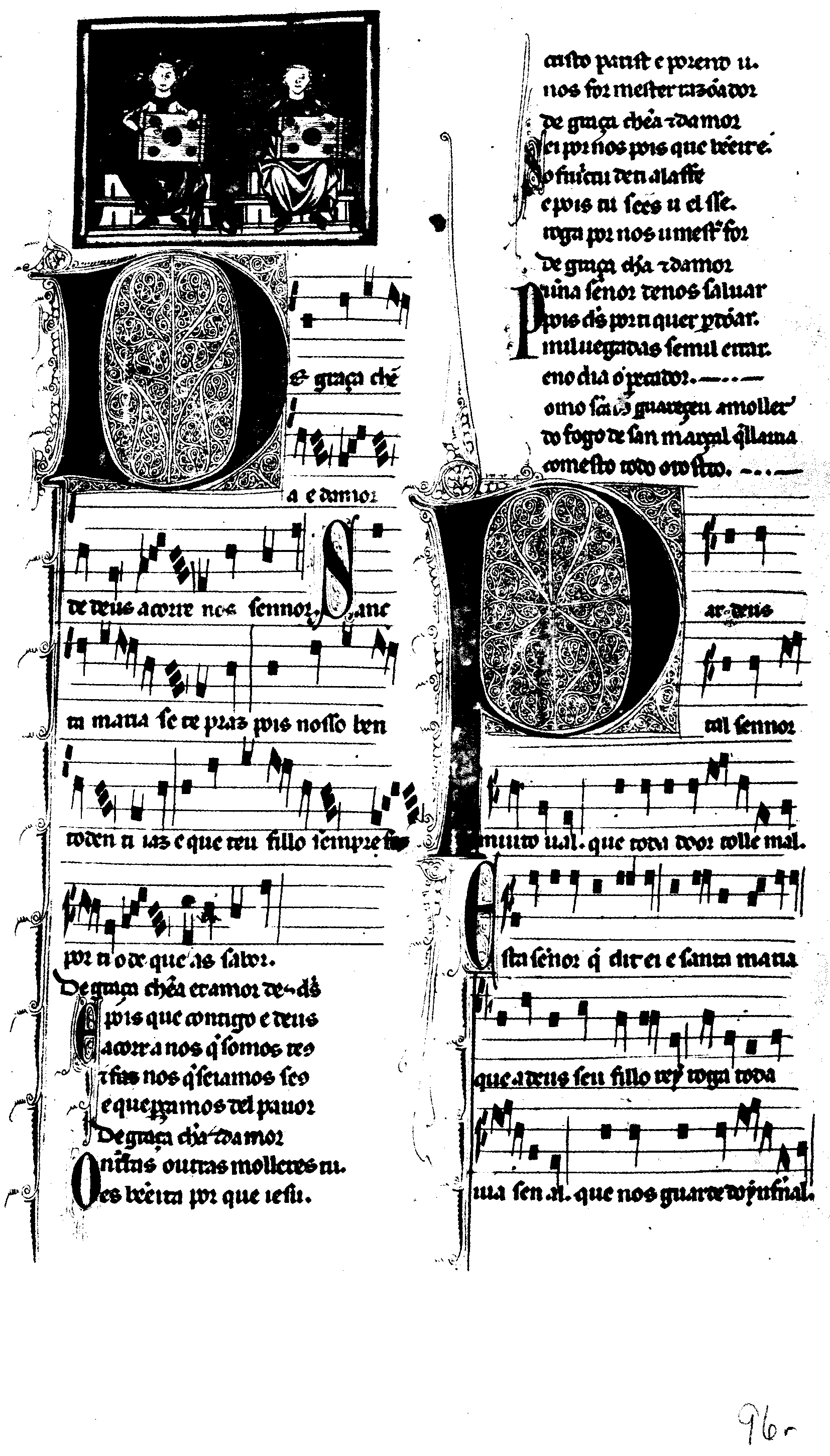
- a. 1284, Alfonso X of Castile, Cantigas de Santa Maria, Códice de los músicos, cantiga 80 (facsimile):
- De graça chẽa e damoꝛ / de deus acoꝛre nos ſennoꝛ.
- Of grace full and of love / of God, come to our aid Lady.
- De graça chẽa e damoꝛ / de deus acoꝛre nos ſennoꝛ.
Descendants
Old Occitan
Etymology
Noun
amor m (oblique plural amors, nominative singular amors, nominative plural amor)
- love
- c. 1160, Raimbaut d'Aurenga, vers:
- Assatz sai d’amor ben parlar [...].
- Well I know how to speak of love [...].
- c. 1160, Raimbaut d'Aurenga, vers:
Descendants
- Occitan: amor
Old Spanish
Etymology
Pronunciation
- IPA(key): /aˈmoɾ/
Noun
amor m (plural amores)
- love
- a. 1430, Juan Alfonso de Baena, Cancionero de Baena:
- con obras de amor é coraçon puro.
- with the labours of love and a pure heart.
Descendants
Portuguese
Alternative forms
- mor (apheretic)
Etymology
Inherited from Old Galician-Portuguese amor, from Latin amōrem. Doublet of amore.
Pronunciation
- (Brazil) IPA(key): /aˈmoʁ/ [aˈmoh]
- (São Paulo) IPA(key): /aˈmoɾ/
- (Rio de Janeiro) IPA(key): /aˈmoʁ/ [aˈmoχ]
- (Caipira) IPA(key): /aˈmoɻ/
- (Portugal) IPA(key): /ɐˈmoɾ/
- (Southern Portugal) IPA(key): /ɐˈmo.ɾi/
Audio (Portugal (Porto)): (file) - Homophone: amou (non-rhotic accents)
- Rhymes: (Portugal, São Paulo) -oɾ, (Brazil) -oʁ
- Hyphenation: a‧mor
Noun
amor m (plural amores)
- love
- 1607, Luís Vaz de Camões, Rimas, Amor é fogo que arde sem se ver:
- Amor he hum fogo que arde ſem ſe ver
- Love is a fire that burns but is not seen
- 1607, Luís Vaz de Camões, Rimas, Amor é fogo que arde sem se ver:
- (figuratively, endearing) honey, babe, sweetheart, darling (term of endearing)
- 2018, “Queima Minha Pele”, performed by Baco Exu do Blues:
- Amor, você é como o sol / Ilumina o meu dia, mas queima minha pele
- Darling, you're like the sun / You light up my day, but burn my skin
- Amor, cheguei.
- Honey, I'm home.
- Synonym: querido
- (figuratively) a kind or humble person
- Ele é um amor.
- He is a lovely person.
Derived terms
Related terms
Descendants
- Macanese: amôr
Further reading
- “amor”, in Dicionário Aulete Digital (in Portuguese), Rio de Janeiro: Lexikon Editora Digital, 2008–2026
- “amor”, in Dicionário Infopédia da Língua Portuguesa (in Portuguese), Porto: Porto Editora, 2003–2026
- “amor”, in Michaelis Dicionário Brasileiro da Língua Portuguesa (in Portuguese), São Paulo: Editora Melhoramentos, 2015–2026, →ISBN
- “amor”, in Dicionário Priberam da Língua Portuguesa (in Portuguese), Lisbon: Priberam, 2008–2026
Anagrams
Romanian
Alternative forms
- амор (amor) — post-1930s Cyrillic spelling
Etymology
Borrowed from Latin amōrem, French amour, Italian amore.
Pronunciation
- IPA(key): /aˈmor/
- Rhymes: -or
- Hyphenation: a‧mor
Noun
amor n (plural amoruri)
Declension
| singular | plural | |||
|---|---|---|---|---|
| indefinite | definite | indefinite | definite | |
| nominative-accusative | amor | amorul | amoruri | amorurile |
| genitive-dative | amor | amorului | amoruri | amorurilor |
| vocative | amorule | amorurilor | ||
Further reading
- “amor”, in DEX online—Dicționare ale limbii române (Dictionaries of the Romanian language) (in Romanian), 2004–2026
Spanish
Etymology
Inherited from Old Spanish amor.
Pronunciation
- IPA(key): /aˈmoɾ/ [aˈmoɾ]
Audio (US): (file) - Rhymes: -oɾ
- Syllabification: a‧mor
Noun
amor m (plural amores)
- love
- love affair
- Synonym: aventura
Derived terms
- a su amor
- amor a simple vista
- amor al uso
- amor con amor se paga
- amor de hortelano
- amor del Canadá
- amor libre
- amor no correspondido
- amor platónico
- amor prohibido
- amor propio
- amor y paz y nada más
- (diminutive) amorcillo, amorcito
- amorío
- amoroso
- árbol del amor
- carta de amor
- con mil amores
- de mil amores
- desamor
- el amor es ciego
- en amor compaña
- en la guerra y en el amor todo vale
- enamorar
- flor de amor
- hacer el amor
- lazo de amor
- por amor al arte
- por amor de
- por el amor de Dios
- primer amor
- requerir de amores
Further reading
- “amor”, in Diccionario de la lengua española [Dictionary of the Spanish Language] (in Spanish), 24th edition, Royal Spanish Academy [Spanish: Real Academia Española], 30 October 2026
Anagrams
Tagalog
Etymology
Borrowed from Spanish amor, from Old Spanish amor, from Latin amōrem, accusative singular of amor, from amō + -or. Doublet of amores.
Pronunciation
- (Standard Tagalog) IPA(key): /ʔaˈmoɾ/ [ʔɐˈmoɾ]
- Rhymes: -oɾ
- Syllabification: a‧mor
Noun
amór (Baybayin spelling ᜀᜋᜓᜇ᜔)
Derived terms
- magkaamor
- magpaamor
- walang-amor
Related terms
Further reading
- “amor”, in Pambansang Diksiyonaryo | Diksiyonaryo.ph, 2018
- Cuadrado Muñiz, Adolfo (1972), Hispanismos en el tagalo: diccionario de vocablos de origen español vigentes en esta lengua filipina [Hispanicisms in Tagalog: dictionary of words of Spanish origin still used in this Philippine language], Madrid: Oficina de Educación Iberoamericana [Office of Ibero-American Education], page 31
- English terms derived from Classical Latin
- English terms derived from Spanish
- English lemmas
- English nouns
- English countable nouns
- English nonstandard terms
- English archaic forms
- English terms with quotations
- Asturian terms inherited from Latin
- Asturian terms derived from Latin
- Asturian terms with IPA pronunciation
- Rhymes:Asturian/oɾ
- Rhymes:Asturian/oɾ/2 syllables
- Asturian lemmas
- Asturian nouns
- Asturian masculine nouns
- Catalan terms inherited from Latin
- Catalan terms derived from Latin
- Catalan terms derived from Proto-Indo-European
- Catalan terms derived from Proto-Italic
- Catalan terms derived from the Proto-Indo-European root *h₃emh₃-
- Catalan terms with IPA pronunciation
- Catalan terms with audio pronunciation
- Rhymes:Catalan/oɾ
- Rhymes:Catalan/oɾ/2 syllables
- Catalan lemmas
- Catalan nouns
- Catalan countable nouns
- Catalan feminine nouns with no feminine ending
- Catalan masculine nouns
- Catalan feminine nouns
- Catalan nouns with multiple genders
- Chavacano terms inherited from Spanish
- Chavacano terms derived from Spanish
- Chavacano terms with IPA pronunciation
- Rhymes:Chavacano/oɾ
- Rhymes:Chavacano/oɾ/2 syllables
- Rhymes:Chavacano/moɾ
- Rhymes:Chavacano/moɾ/2 syllables
- Chavacano lemmas
- Chavacano nouns
- Zamboangueño Chavacano
- Galician terms derived from the Proto-Indo-European root *h₃emh₃-
- Galician terms derived from Old Galician-Portuguese
- Galician terms inherited from Old Galician-Portuguese
- Galician terms derived from Latin
- Galician terms derived from Proto-Italic
- Galician terms derived from Proto-Indo-European
- Galician terms inherited from Latin
- Galician terms with IPA pronunciation
- Rhymes:Galician/oɾ
- Rhymes:Galician/oɾ/2 syllables
- Galician lemmas
- Galician nouns
- Galician countable nouns
- Galician masculine nouns
- Galician terms with quotations
- Icelandic terms borrowed from Latin
- Icelandic learned borrowings from Latin
- Icelandic terms derived from Latin
- Icelandic 2-syllable words
- Icelandic terms with IPA pronunciation
- Icelandic lemmas
- Icelandic nouns
- Icelandic uncountable nouns
- Icelandic masculine nouns
- Icelandic terms with rare senses
- Icelandic terms with obsolete senses
- Interlingua terms derived from Latin
- Interlingua lemmas
- Interlingua nouns
- Italian 2-syllable words
- Italian terms with IPA pronunciation
- Rhymes:Italian/or
- Rhymes:Italian/or/2 syllables
- Italian non-lemma forms
- Italian noun forms
- Italian apocopic forms
- Ladino terms inherited from Old Spanish
- Ladino terms derived from Old Spanish
- Ladino terms inherited from Latin
- Ladino terms derived from Latin
- Ladino lemmas
- Ladino nouns
- Ladino nouns in Latin script
- Ladino masculine nouns
- Latin 2-syllable words
- Latin terms with IPA pronunciation
- Latin terms derived from the Proto-Indo-European root *h₃emh₃-
- Latin terms suffixed with -or
- Latin lemmas
- Latin nouns
- Latin third declension nouns
- Latin masculine nouns in the third declension
- Latin masculine nouns
- Latin terms with usage examples
- Latin terms with quotations
- Latin pluralia tantum
- Latin non-lemma forms
- Latin verb forms
- Latin words in Meissner and Auden's phrasebook
- Latin endearing terms
- la:Emotions
- la:Love
- Leonese terms inherited from Latin
- Leonese terms derived from Latin
- Leonese lemmas
- Leonese nouns
- Leonese masculine nouns
- Occitan terms inherited from Old Occitan
- Occitan terms derived from Old Occitan
- Occitan terms inherited from Latin
- Occitan terms derived from Latin
- Occitan terms with audio pronunciation
- Occitan lemmas
- Occitan nouns
- Occitan countable nouns
- Occitan masculine nouns
- Old English terms inherited from Proto-West Germanic
- Old English terms derived from Proto-West Germanic
- Old English terms inherited from Proto-Germanic
- Old English terms derived from Proto-Germanic
- Old English terms with IPA pronunciation
- Rhymes:Old English/ɑ.mor
- Rhymes:Old English/ɑ.mor/2 syllables
- Old English lemmas
- Old English nouns
- Old English masculine nouns
- Old English masculine a-stem nouns
- Old French terms inherited from Latin
- Old French terms derived from the Proto-Indo-European root *h₃emh₃-
- Old French terms derived from Proto-Italic
- Old French terms derived from Proto-Indo-European
- Old French terms derived from Latin
- Old French lemmas
- Old French nouns
- Old French masculine nouns
- Old French feminine nouns
- Old French nouns with multiple genders
- Old Galician-Portuguese terms derived from Latin
- Old Galician-Portuguese terms derived from Proto-Italic
- Old Galician-Portuguese terms derived from the Proto-Indo-European root *h₃emh₃-
- Old Galician-Portuguese terms inherited from Latin
- Old Galician-Portuguese terms derived from Proto-Indo-European
- Old Galician-Portuguese terms with IPA pronunciation
- Old Galician-Portuguese lemmas
- Old Galician-Portuguese nouns
- Old Galician-Portuguese masculine nouns
- Old Galician-Portuguese terms with quotations
- Old Occitan terms inherited from Latin
- Old Occitan terms derived from Latin
- Old Occitan lemmas
- Old Occitan nouns
- Old Occitan masculine nouns
- Old Occitan terms with quotations
- Old Spanish terms inherited from Latin
- Old Spanish terms derived from Proto-Indo-European
- Old Spanish terms derived from Latin
- Old Spanish terms derived from Proto-Italic
- Old Spanish terms derived from the Proto-Indo-European root *h₃emh₃-
- Old Spanish terms with IPA pronunciation
- Old Spanish lemmas
- Old Spanish nouns
- Old Spanish masculine nouns
- Old Spanish terms with quotations
- Portuguese doublets
- Portuguese terms derived from the Proto-Indo-European root *h₃emh₃-
- Portuguese terms derived from Proto-Italic
- Portuguese terms derived from Latin
- Portuguese terms inherited from Old Galician-Portuguese
- Portuguese terms inherited from Latin
- Portuguese terms derived from Proto-Indo-European
- Portuguese terms derived from Old Galician-Portuguese
- Portuguese 2-syllable words
- Portuguese terms with IPA pronunciation
- Portuguese 3-syllable words
- Portuguese terms with audio pronunciation
- Portuguese terms with homophones
- Rhymes:Portuguese/oɾ
- Rhymes:Portuguese/oɾ/2 syllables
- Rhymes:Portuguese/oʁ
- Rhymes:Portuguese/oʁ/2 syllables
- Portuguese lemmas
- Portuguese nouns
- Portuguese countable nouns
- Portuguese masculine nouns
- Portuguese terms with quotations
- Portuguese endearing terms
- Portuguese terms with usage examples
- pt:Love
- Romanian terms borrowed from Latin
- Romanian terms derived from Latin
- Romanian terms borrowed from French
- Romanian terms derived from French
- Romanian terms borrowed from Italian
- Romanian terms derived from Italian
- Romanian terms with IPA pronunciation
- Rhymes:Romanian/or
- Rhymes:Romanian/or/2 syllables
- Romanian lemmas
- Romanian nouns
- Romanian countable nouns
- Romanian neuter nouns
- Spanish terms inherited from Old Spanish
- Spanish terms derived from Proto-Italic
- Spanish terms inherited from Latin
- Spanish terms derived from Old Spanish
- Spanish terms derived from Proto-Indo-European
- Spanish terms derived from Latin
- Spanish terms derived from the Proto-Indo-European root *h₃emh₃-
- Spanish 2-syllable words
- Spanish terms with IPA pronunciation
- Spanish terms with audio pronunciation
- Rhymes:Spanish/oɾ
- Rhymes:Spanish/oɾ/2 syllables
- Spanish lemmas
- Spanish nouns
- Spanish countable nouns
- Spanish masculine nouns
- Tagalog terms derived from the Proto-Indo-European root *h₃emh₃-
- Tagalog terms borrowed from Spanish
- Tagalog terms derived from Spanish
- Tagalog terms derived from Proto-Indo-European
- Tagalog terms derived from Proto-Italic
- Tagalog doublets
- Tagalog terms derived from Old Spanish
- Tagalog terms derived from Latin
- Tagalog 2-syllable words
- Tagalog terms with IPA pronunciation
- Rhymes:Tagalog/oɾ
- Rhymes:Tagalog/oɾ/2 syllables
- Tagalog terms with mabilis pronunciation
- Tagalog lemmas
- Tagalog nouns
- Tagalog terms with Baybayin script
- tl:Love
- tl:Emotions