parir
Asturian
Etymology
Verb
parir (first-person singular indicative present paro, past participle paríu)
- to give birth
Conjugation
| infinitive | parir | ||||||
|---|---|---|---|---|---|---|---|
| gerund | pariendo | ||||||
| past participle | m paríu, f parida, n parío, m pl paríos, f pl paríes | ||||||
| person | first singular yo |
second singular tu |
third singular él/elli |
first plural nosotros/nós |
second plural vosotros/vós |
third plural ellos | |
| indicative | present | paro | pares | pare | parimos | parís | paren |
| imperfect | paría | paríes | paría | paríemos, paríamos | paríeis, paríais | paríen | |
| preterite | parí | pariesti, paristi | parió | pariemos, parimos | pariestis, paristis | parieron | |
| pluperfect | pariere, pariera | parieres, parieras | pariere, pariera | pariéremos, pariéramos | pariereis, parierais | parieren, parieran | |
| future | pariré | parirás | parirá | pariremos | pariréis | parirán | |
| conditional | pariría | pariríes | pariría | pariríemos, pariríamos | pariríeis, pariríais | pariríen | |
| subjunctive | present | para | paras | para | paramos | paráis | paran |
| imperfect | pariere, pariera | parieres, parieras | pariere, pariera | pariéremos, pariéramos | pariereis, parierais | parieren, parieran | |
| imperative | — | pari | — | — | paríi | — | |
Related terms
Further reading
- “parir”, in Diccionariu de la llingua asturiana [Dictionary of the Asturian Language] (in Asturian), 1st edition, Academy of the Asturian Language [Asturian: Academia de la Llingua Asturiana], 2000, →ISBN
- García Arias, Xosé Lluis (2002–2004), “parir”, in Diccionario general de la lengua asturiana [General Dictionary of the Asturian Language] (overall work in Spanish), Editorial Prensa Asturiana, →ISBN
Catalan
Etymology
Inherited from Latin pariō, with normal change of conjugation to -ir.
Pronunciation
- IPA(key): (Northern, Balearic, Central) [pəˈɾi]
- IPA(key): (Valencia) [paˈɾiɾ]
- IPA(key): (Northwestern) [paˈɾi]
Audio (Barcelona): (file)
Verb
parir (first-person singular present pareixo, first-person singular preterite parí, past participle parit)
- (ambitransitive) to give birth
- Synonym: donar a llum
- (transitive, colloquial) to make, think up
Conjugation
| infinitive | parir | ||||||
|---|---|---|---|---|---|---|---|
| gerund | parint | ||||||
| past participle | masculine | feminine | |||||
| singular | parit | parida | |||||
| plural | parits | parides | |||||
| person | singular | plural | |||||
| first | second | third | first | second | third | ||
| indicative | jo | tu | ell/ella vostè |
nosaltres nós |
vosaltres vós |
ells/elles vostès | |
| present | pareixo | pareixes | pareix | parim | pariu | pareixen | |
| imperfect | paria | paries | paria | paríem | paríeu | parien | |
| future | pariré | pariràs | parirà | parirem | parireu | pariran | |
| preterite | parí | parires | parí | parírem | paríreu | pariren | |
| conditional | pariria | pariries | pariria | pariríem | pariríeu | paririen | |
| subjunctive | jo | tu | ell/ella vostè |
nosaltres nós |
vosaltres vós |
ells/elles vostès | |
| present | pareixi | pareixis | pareixi | parim | pariu | pareixin | |
| imperfect | parís | parissis | parís | paríssim | paríssiu | parissin | |
| imperative | — | tu | vostè | nosaltres | vosaltres vós |
vostès | |
| affirmative | — | pareix | pareixi | parim | pariu | pareixin | |
| negative (no) | — | no pareixis | no pareixi | no parim | no pariu | no pareixin | |
Related terms
See also
Further reading
- “parir”, in Diccionari de la llengua catalana [Dictionary of the Catalan Language] (in Catalan), second edition, Institute of Catalan Studies [Catalan: Institut d'Estudis Catalans], April 2007
- “parir”, in Gran Diccionari de la Llengua Catalana, Grup Enciclopèdia Catalana, 2026
- “parir” in Diccionari normatiu valencià, Acadèmia Valenciana de la Llengua.
- Alcover, Antoni Maria; Moll, Francesc de Borja (1963), “parir”, in Diccionari català-valencià-balear (in Catalan)
Galician
Etymology
From Old Galician-Portuguese parir (13th century, Cantigas de Santa Maria), from Latin pariō.
Pronunciation
- IPA(key): [paˈɾiɾ]
Verb
parir (first-person singular present pairo, first-person singular preterite parín, past participle parido)
parir (first-person singular present paro, first-person singular preterite parim or pari, past participle parido, reintegrationist norm)
- to give birth
- Synonym: dar a luz
Conjugation
| Singular | Plural | |||||
|---|---|---|---|---|---|---|
| First-person (eu) |
Second-person (ti) |
Third-person (el / ela / Vde.) |
First-person (nós) |
Second-person (vós) |
Third-person (eles / elas / Vdes.) | |
| Infinitive | ||||||
| Impersonal | parir | |||||
| Personal | parir | parires | parir | parirmos | parirdes | pariren |
| Gerund | ||||||
| parindo | ||||||
| Past participle | ||||||
| Masculine | parido | paridos | ||||
| Feminine | parida | paridas | ||||
| Indicative | ||||||
| Present | pairo | pares | pare | parimos | parides | paren |
| Imperfect | paría | parías | paría | pariamos | pariades | parían |
| Preterite | parín | pariches | pariu | parimos | paristes | pariron |
| Pluperfect | parira | pariras | parira | pariramos | parirades | pariran |
| Future | parirei | parirás | parirá | pariremos | pariredes | parirán |
| Conditional | pariría | parirías | pariría | paririamos | paririades | parirían |
| Subjunctive | ||||||
| Present | paira | pairas | paira | pairamos | pairades | pairan |
| Imperfect | parise | parises | parise | parísemos | parísedes | parisen |
| Future | parir | parires | parir | parirmos | parirdes | pariren |
| Imperative | ||||||
| Affirmative | pare | paira | pairamos | paride | pairan | |
| Negative (non) | non pairas | non paira | non pairamos | non pairades | non pairan | |
1Less recommended.
Derived terms
Related terms
References
- Seoane, Ernesto Xosé González; Granja, María Álvarez de la; Agrelo, Ana Isabel Boullón (2006–2022), “parir”, in Dicionario de Dicionarios do galego medieval [Dictionary of dictionaries of Medieval Galician] (in Galician), Santiago de Compostela: Instituto da Lingua Galega
- Barreiro, Xavier Varela; Guinovart, Xavier Gómez (2006–2018), “parir”, in Corpus Xelmírez: corpus lingüístico da Galicia medieval [Corpus Xelmírez: linguistic corpus of Medieval Galicia] (in Galician), Santiago de Compostela: Instituto da Lingua Galega
- Antón Santamarina, editor (2006–2013), “parir”, in Dicionario de Dicionarios da lingua galega [Dictionary of Dictionaries of the Galician language] (in Galician), Santiago de Compostela: Instituto da Lingua Galega
- “parir”, in Dicionario da Real Academia Galega (in Galician), A Coruña: Royal Galician Academy, 2012–2026
- Antón Santamarina, Ernesto X. González Seoane, María Álvarez de la Granja, editors (2003–2018), “parir”, in Tesouro informatizado da lingua galega (in Galician), Santiago de Compostela: Instituto da Lingua Galega
- “parir”, in Dicionário Estraviz de galego (in Galician), 2014–2026
- Rosario Álvarez Blanco, editor (2014–2024), “parir”, in Tesouro do léxico patrimonial galego e portugués (in Galician), Santiago de Compostela: Instituto da Lingua Galega, →ISSN
Maltese
Etymology
Borrowed from Sicilian pariri, from Latin pareō (“to seem”).
Pronunciation
- IPA(key): /paˈriːr/
- Rhymes: -iːr
Noun
parir m (plural pariri)
Old Galician-Portuguese
Etymology
From Latin pariō (“to bear, to give birth to”), from Proto-Indo-European *perh₃- (“to produce, beget”).
Pronunciation
- IPA(key): /pa.ˈɾiɾ/
Verb
parir
- to give birth, to bear
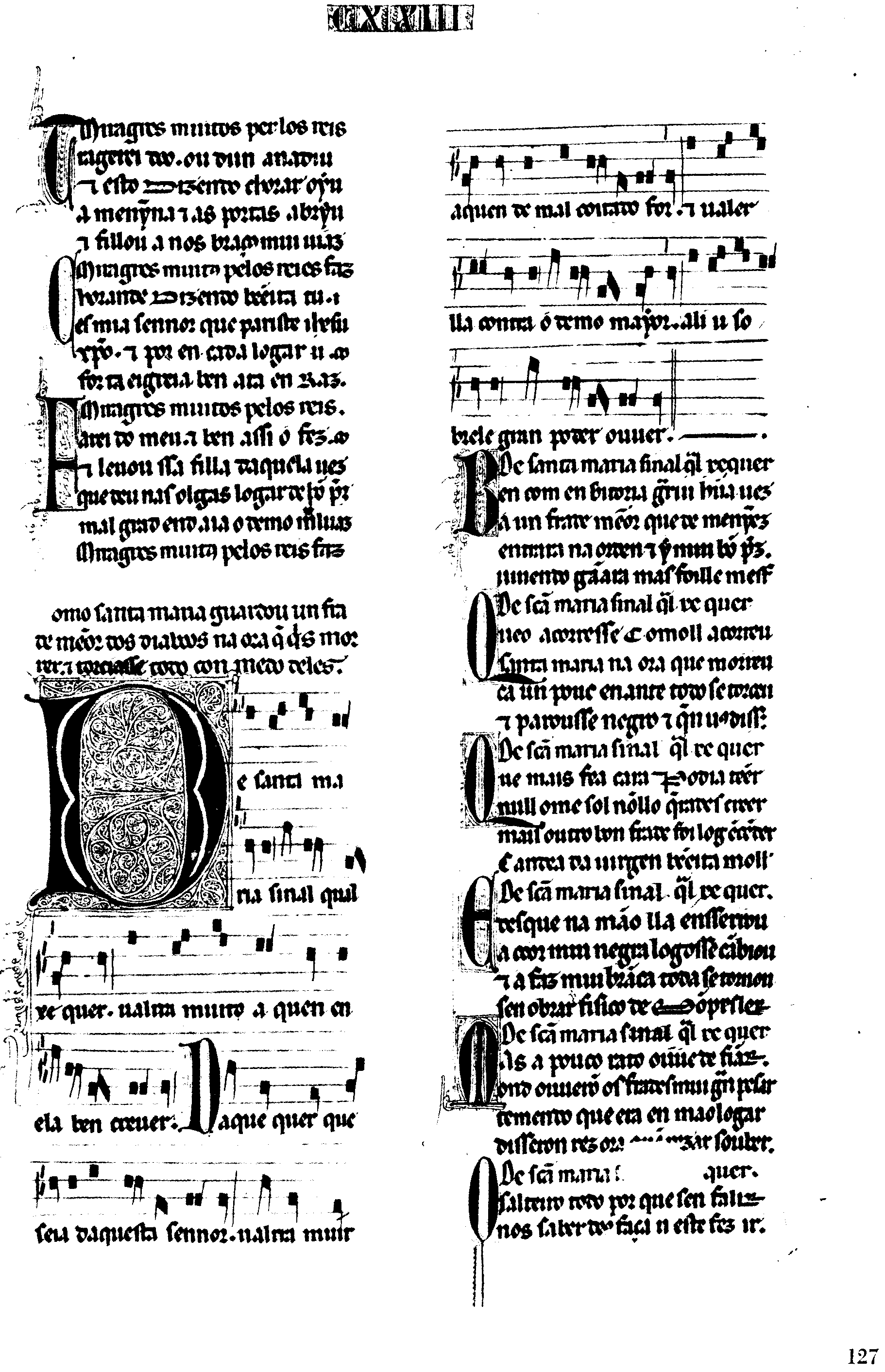
- a. 1284, Alfonso X of Castile, Cantigas de Santa Maria, Códice de los músicos, cantiga 122 (facsimile):
- […] bẽeita tu / eſ mia ſennor que pariſte iheſu / xp̃o.
- […] you are blessed, my Lady, who bore Jesus Christ.
- […] bẽeita tu / eſ mia ſennor que pariſte iheſu / xp̃o.
- 15th c., Adelino Almeida Calado, Corte Enperial [Imperial Court], 1st edition, Aveiro: Universidade de Aveiro, published 2000:
- E requere madre que conçeba e paira sobrenaturalmente e que seja muy nobre […]
- And it requires a mother who conceives and gives birth supernaturally, and who is very noble […]
Descendants
Portuguese
Etymology
Inherited from Old Galician-Portuguese parir (“to give birth”), from Latin pariō (“to bear, to give birth to”), from Proto-Indo-European *perh₃- (“to produce, beget”).
Pronunciation
- (Brazil) IPA(key): /paˈɾi(ʁ)/ [paˈɾi(h)]
- (São Paulo) IPA(key): /paˈɾi(ɾ)/
- (Rio de Janeiro) IPA(key): /paˈɾi(ʁ)/ [paˈɾi(χ)]
- (Caipira) IPA(key): /paˈɾi(ɻ)/
- (Portugal) IPA(key): /pɐˈɾiɾ/
- (Southern Portugal) IPA(key): /pɐˈɾi.ɾi/
Verb
parir (first-person singular present (archaic, now rare, sometimes proscribed) pairo, first-person singular preterite pari, past participle parido)
- (ambitransitive) to give birth
- Synonym: dar à luz
- A cadela pariu três cachorros. ― The dog gave birth to three pups.
- 1569, Duarte Nunez do Liam, “Regimento dos veedores das egoas [Regiment of the mare inspectors]”, in Leis extravagantes collegidas e relatadas pelo licenciado Duarte Nunez do Liam […] [Extravagant laws collected and reported by the licensed Duarte Nunez do Liam […] ][1], Lisbon: Antonio Gonçalvez, page 212v:
- E paſſados, ſe poderão ſeruir dellas ſeis meſes, & dehi em diante ſe não ſeruirão mais dellas ate q̃ pairão, por as ditas razões.
- And having passed [forty days since conception], they [the people] may utilize them [the mares] for six months, and after that they will not utilize them until they give birth, for the stated reasons.
- 1653, Bartolomeu do Quental, “Sermam da Immaculada Conceicam […]”, in Sermoens […], volume 2, Lisbon: Officina de Miguel Deslandes, published 1694, page 123, column 1:
- Com eſte exemplo provou o Anjo à Senhora, que podia conceber, & parir ficando Virgem […]
- With this example the Angel proved to the Lady that she could conceive and give birth staying virgin […]
- 1986, Mário Vaz Filho, director, Um Pistoleiro Chamado Papaco, São Paulo: Olympus Filmes:
- Não, gracinha, falei com a puta que te pariu.
- No, sweetie, I was talking to the whore that gave birth to you.
- (transitive, figurative) to produce
Usage notes
- This verb is usually used for animals. When used to refer to people, it has a somewhat offensive or derogatory connotation, comparable to that of saying knocked up instead of pregnant in English. The non-derogatory synonym used for people is dar à luz (literally “to give to light”).
- This verb is almost never used in its present conjugations. Many authorities consider it defective,[1][2][3] while others recognize historical irregular conjugations such as pairo (compare caibo, from caber). Forms such as paro may also be encountered colloquially.
Conjugation
| Singular | Plural | |||||
|---|---|---|---|---|---|---|
| First-person (eu) |
Second-person (tu) |
Third-person (ele / ela / você) |
First-person (nós) |
Second-person (vós) |
Third-person (eles / elas / vocês) | |
| Infinitive | ||||||
| Impersonal | parir | |||||
| Personal | parir | parires | parir | parirmos | parirdes | parirem |
| Gerund | ||||||
| parindo | ||||||
| Past participle | ||||||
| Masculine | parido | paridos | ||||
| Feminine | parida | paridas | ||||
| Indicative | ||||||
| Present | pairo1 | pares | pare | parimos | paris | parem |
| Imperfect | paria | parias | paria | paríamos | paríeis | pariam |
| Preterite | pari | pariste | pariu | parimos | paristes | pariram |
| Pluperfect | parira | pariras | parira | paríramos | paríreis | pariram |
| Future | parirei | parirás | parirá | pariremos | parireis | parirão |
| Conditional | pariria | paririas | pariria | pariríamos | pariríeis | paririam |
| Subjunctive | ||||||
| Present | paira1 | pairas1 | paira1 | pairamos1 | pairais1 | pairam1 |
| Imperfect | parisse | parisses | parisse | paríssemos | parísseis | parissem |
| Future | parir | parires | parir | parirmos | parirdes | parirem |
| Imperative | ||||||
| Affirmative | pare | paira1 | pairamos1 | pari | pairam1 | |
| Negative (não) | não pairas1 | não paira1 | não pairamos1 | não pairais1 | não pairam1 | |
1Archaic, now rare, sometimes proscribed.
Derived terms
Related terms
See also
References
- ^ “O controverso verbo parir” in Ciberdúvidas da Língua Portuguesa (in Portuguese)
- ^ “parir”, in Dicionário Infopédia da Língua Portuguesa (in Portuguese), Porto: Porto Editora, 2003–2026
- ^ “parir”, in Dicionário Priberam da Língua Portuguesa (in Portuguese), Lisbon: Priberam, 2008–2026
Further reading
- “parir”, in Dicionário Aulete Digital (in Portuguese), Rio de Janeiro: Lexikon Editora Digital, 2008–2026
Spanish
Etymology
Pronunciation
- IPA(key): /paˈɾiɾ/ [paˈɾiɾ]
- Rhymes: -iɾ
- Syllabification: pa‧rir
Verb
parir (first-person singular present paro, first-person singular preterite parí, past participle parido)
- (ambitransitive, vulgar in some areas) to give birth
- Synonym: dar a luz
- Yo tengo que irme al hospital, mi novia está pariendo
- I have to go to the hospital, my girlfriend is giving birth.
- (transitive, colloquial) to think up; imagine
- (transitive) to explain
Usage notes
- Parir is more commonly used in Spain, and is rarely used by Central- and South-Americans, as they believe parir is vulgar, in the sense that it is used to describe when animals give birth. Instead, they use the phrase dar a luz (literally “to give to light”).
Conjugation
| infinitive | parir | ||||||
|---|---|---|---|---|---|---|---|
| gerund | pariendo | ||||||
| past participle | masculine | feminine | |||||
| singular | parido | parida | |||||
| plural | paridos | paridas | |||||
| singular | plural | ||||||
| 1st person | 2nd person | 3rd person | 1st person | 2nd person | 3rd person | ||
| indicative | yo | tú vos |
él/ella/ello usted |
nosotros nosotras |
vosotros vosotras |
ellos/ellas ustedes | |
| present | paro | parestú parísvos |
pare | parimos | parís | paren | |
| imperfect | paría | parías | paría | paríamos | paríais | parían | |
| preterite | parí | pariste | parió | parimos | paristeis | parieron | |
| future | pariré | parirás | parirá | pariremos | pariréis | parirán | |
| conditional | pariría | parirías | pariría | pariríamos | pariríais | parirían | |
| subjunctive | yo | tú vos |
él/ella/ello usted |
nosotros nosotras |
vosotros vosotras |
ellos/ellas ustedes | |
| present | para | parastú parásvos2 |
para | paramos | paráis | paran | |
| imperfect (ra) |
pariera | parieras | pariera | pariéramos | parierais | parieran | |
| imperfect (se) |
pariese | parieses | pariese | pariésemos | parieseis | pariesen | |
| future1 | pariere | parieres | pariere | pariéremos | pariereis | parieren | |
| imperative | — | tú vos |
usted | nosotros nosotras |
vosotros vosotras |
ustedes | |
| affirmative | paretú parívos |
para | paramos | parid | paran | ||
| negative | no paras | no para | no paramos | no paráis | no paran | ||
These forms are generated automatically and may not actually be used. Pronoun usage varies by region.
| singular | plural | ||||||
|---|---|---|---|---|---|---|---|
| 1st person | 2nd person | 3rd person | 1st person | 2nd person | 3rd person | ||
| with infinitive parir | dative | parirme | parirte | parirle, parirse | parirnos | pariros | parirles, parirse |
| accusative | parirme | parirte | parirlo, parirla, parirse | parirnos | pariros | parirlos, parirlas, parirse | |
| with gerund pariendo | dative | pariéndome | pariéndote | pariéndole, pariéndose | pariéndonos | pariéndoos | pariéndoles, pariéndose |
| accusative | pariéndome | pariéndote | pariéndolo, pariéndola, pariéndose | pariéndonos | pariéndoos | pariéndolos, pariéndolas, pariéndose | |
| with informal second-person singular tuteo imperative pare | dative | páreme | párete | párele | párenos | not used | páreles |
| accusative | páreme | párete | párelo, párela | párenos | not used | párelos, párelas | |
| with informal second-person singular voseo imperative parí | dative | parime | parite | parile | parinos | not used | pariles |
| accusative | parime | parite | parilo, parila | parinos | not used | parilos, parilas | |
| with formal second-person singular imperative para | dative | párame | not used | párale, párase | páranos | not used | párales |
| accusative | párame | not used | páralo, párala, párase | páranos | not used | páralos, páralas | |
| with first-person plural imperative paramos | dative | not used | parámoste | parámosle | parámonos | parámoos | parámosles |
| accusative | not used | parámoste | parámoslo, parámosla | parámonos | parámoos | parámoslos, parámoslas | |
| with informal second-person plural imperative parid | dative | paridme | not used | paridle | paridnos | paríos | paridles |
| accusative | paridme | not used | paridlo, paridla | paridnos | paríos | paridlos, paridlas | |
| with formal second-person plural imperative paran | dative | páranme | not used | páranle | párannos | not used | páranles, páranse |
| accusative | páranme | not used | páranlo, páranla | párannos | not used | páranlos, páranlas, páranse | |
Derived terms
Derived terms
Related terms
See also
Further reading
- “parir”, in Diccionario de la lengua española [Dictionary of the Spanish Language] (in Spanish), 24th edition, Royal Spanish Academy [Spanish: Real Academia Española], 30 October 2026
- Asturian terms derived from Proto-Indo-European
- Asturian terms derived from the Proto-Indo-European root *perh₃-
- Asturian terms derived from Latin
- Asturian lemmas
- Asturian verbs
- Catalan terms derived from Proto-Indo-European
- Catalan terms derived from the Proto-Indo-European root *perh₃-
- Catalan terms inherited from Latin
- Catalan terms derived from Latin
- Catalan terms with IPA pronunciation
- Catalan terms with audio pronunciation
- Catalan lemmas
- Catalan verbs
- Catalan third conjugation verbs
- Catalan third conjugation verbs with -eix-
- Catalan transitive verbs
- Catalan intransitive verbs
- Catalan colloquialisms
- Catalan terms with usage examples
- Galician terms derived from Proto-Indo-European
- Galician terms derived from the Proto-Indo-European root *perh₃-
- Galician terms inherited from Old Galician-Portuguese
- Galician terms derived from Old Galician-Portuguese
- Galician terms derived from Latin
- Galician terms with IPA pronunciation
- Galician lemmas
- Galician verbs
- Galician verbs ending in -ir
- Galician irregular verbs
- Maltese terms derived from Proto-Italic
- Maltese terms derived from Proto-Indo-European
- Maltese terms derived from Sicilian
- Maltese terms derived from Latin
- Maltese terms derived from the Proto-Indo-European root *peh₂-
- Maltese terms borrowed from Sicilian
- Maltese 2-syllable words
- Maltese terms with IPA pronunciation
- Rhymes:Maltese/iːr
- Rhymes:Maltese/iːr/2 syllables
- Maltese lemmas
- Maltese nouns
- Maltese countable nouns
- Maltese masculine nouns
- Old Galician-Portuguese terms derived from Proto-Indo-European
- Old Galician-Portuguese terms derived from the Proto-Indo-European root *perh₃-
- Old Galician-Portuguese terms derived from Latin
- Old Galician-Portuguese terms with IPA pronunciation
- Old Galician-Portuguese lemmas
- Old Galician-Portuguese verbs
- Old Galician-Portuguese terms with quotations
- Portuguese terms with quotations
- Portuguese terms derived from Proto-Indo-European
- Portuguese terms derived from the Proto-Indo-European root *perh₃-
- Portuguese terms inherited from Old Galician-Portuguese
- Portuguese terms derived from Old Galician-Portuguese
- Portuguese terms inherited from Latin
- Portuguese terms derived from Latin
- Portuguese terms inherited from Proto-Indo-European
- Portuguese 2-syllable words
- Portuguese terms with IPA pronunciation
- Portuguese 3-syllable words
- Portuguese terms with homophones
- Portuguese lemmas
- Portuguese verbs
- Portuguese verbs ending in -ir
- Portuguese irregular verbs
- Portuguese transitive verbs
- Portuguese intransitive verbs
- Portuguese terms with usage examples
- Spanish terms derived from Proto-Indo-European
- Spanish terms derived from the Proto-Indo-European root *perh₃-
- Spanish terms derived from Proto-Italic
- Spanish terms derived from Latin
- Spanish 2-syllable words
- Spanish terms with IPA pronunciation
- Rhymes:Spanish/iɾ
- Rhymes:Spanish/iɾ/2 syllables
- Spanish lemmas
- Spanish verbs
- Spanish verbs ending in -ir
- Spanish transitive verbs
- Spanish intransitive verbs
- Spanish vulgarities
- Spanish terms with usage examples
- Spanish colloquialisms