aa
Acholi • Balinese • Bavarian • Bughotu • Dutch • East Central German • Estonian • Finnish • French • Gagauz • Hiligaynon • Indonesian • Inupiaq • Ipai • Italian • Japanese • Javanese • Kankanaey • Kumeyaay • Ladin • Latvian • Lithuanian • Lun Bawang • Lutuv • Malay • Manx • Mbya Guarani • Middle English • Middle Welsh • Murui Huitoto • Mwotlap • Navajo • Northern Sami • Norwegian • Norwegian Bokmål • Norwegian Nynorsk • Nuxalk • Old Galician-Portuguese • Paraujano • Pennsylvania German • Scots • Stoney • Sundanese • Swedish • Tagalog • Tipai • Tlingit • Võro • Votic • Yoruba • Zyphe
Page categories
Translingual
Etymology
Abbreviation of English Afar or Afar qafár.
Symbol
aa
See also
English
Etymology 1

Alternative forms
Pronunciation
- (Received Pronunciation) IPA(key): /ˈɑː.ɑː/, [ˈɑː.ʔɑː], enPR: äʹä
Audio (Southern England): (file) - (General American) IPA(key): /ˈɑ.ɑ/, [ˈɑ.ʔɑ]
Noun
aa (uncountable)
- (volcanology) A form of lava flow associated with Hawaiian-type volcanoes, consisting of basaltic rock, usually dark-colored with a jagged and loose, clinkery surface. Compare pahoehoe. [From 19th c.]
- 1859, R. C. Haskell, American journal of science and arts, series XXVIII:
- We...saw ‘pahoihoi’ or solid lava forming, and also ‘aa’ or clinkers.
- 1944, Charles A. Cotton, Volcanoes as landscape forms:
- Cooling and solidification frequently takes a different course [...] in lava flows, producing the clinker-like ‘aa’ lava.
Translations
Etymology 2
Abbreviation.
Noun
aa
- Initialism of acetic acid.
- Initialism of acting age.
- (medicine) Initialism of alveolar-arterial.
- Initialism of aminoacetone.
- Initialism of amino acid.
- Initialism of approximate absolute.
- Initialism of arachidonic acid.
- Initialism of armature accelerator.
- Initialism of ascending aorta.
- Initialism of atomic absorption.
- Initialism of author's alteration.
- Initialism of average audience.
Adjective
aa (not comparable)
Etymology 3
Compare pp.
Noun
aa pl (plural only)
- Abbreviation of adjectives.
- Abbreviation of arteries.
Etymology 4
Contraction.
Adjective
aa
- Abbreviation of ana (“of each, equal parts”).
Etymology 5
Pronoun
aa
- (Northumbria, personal) I.
Acholi
Verb
aa
- to get up, to move after staying still
- to move away, to go away, to get lost
- to originate from, to come from (used in past tense)
Verb
aa (passive voice)
- to have originated from, to have come from (used in past tense)
- to have commenced from, to have started from
Verb
aa
References
- Blackings, Mairi John (2009), Acholi English – English Acholi Dictionary[1], Munich: LINCOM GmbH, →ISBN, pages 1-2
Balinese
Etymology
Inherited from Proto-Malayo-Polynesian *qaʀa.
Noun
aa (Balinese script ᬳᬳᭂ)
References
- “aa”, in Balinese–Indonesian Dictionary [Kamus Bahasa Bali–Indonesia] (in Balinese), Denpasar, Indonesia: The Linguistic Center of Bali Province [Balai Bahasa Provinsi Bali].
Bavarian
Alternative forms
- ah (spelling variant)
Etymology
From Old High German ouh, from Proto-Germanic *auk. Cognates include German auch, Dutch ook, Old Norse ok, also archaic English eke.
Pronunciation
Adverb
aa
- also; too; as well; either; neither (in addition to whatever or whoever has previously been listed)
- I wui aa a Eis. ― Stress on “aa”: I too want icecream.
- I wui aa a Eis. ― Stress on “Eis”: I want icecream, too.
- Schåff ma des aa? ― Stress on “aa”: Can we do that too?
- Used for emphasis.
- To confirm a preceding statement: really, actually, indeed, in fact, exactly (always unstressed)
- A jeder håd se dåcht, dåss er ned kummt, und so woar's aa. ― Everybody thought that he wouldn't come, and that's exactly what happened.
- I håb ka Ångst, es gibt jå aa kan Grund. ― I'm not scared, there really is no reason to be.
- To confirm a preceding statement by someone else: really, actually, indeed, in fact
- I wui aa a Eis. ― Stress on “wui”: I do indeed want icecream.
- Des is aa so. ― Stress on “is”: It really is like that.
- Emphasis on a preceding conjunction (often with no) (always stressed)
- Des Essn håd eana ned gschmeckt und mia aa ned. ― They didn't like the food and neither did I.
- I håb heit vui z'tuan und zan Årzt muaß i aa. ― I'm very busy today and I also have to go to the doctor.
- Er håd ned nur s'Gödbeasl, sondern aa no de Augnglasln ausgstraat. ― He not only lost his wallet, but also his glasses.
- Emphasis on a preceding negative statement: even (always stressed)
- Implies doubt in a yes-no question really (always unstressed)
- Kånn i des aa glaubn? ― Can I really believe this?
- Håst da des aa guad iwalegt? ― Have you really thought this through?
- Schåff ma des aa? ― Can we really do that?
- To imply that something is unreasonable; also used when expressing reproach, anger, astonishment, etc. (always unstressed)
- Wås miassn de aa ålle då durchfoahrn?! ― Why do they all have to pass through here?!
- Du muasst aa immer bei jedn Bledsinn mitmåchn. ― You always have to take part in any nonsense, don't you?
- Wäul's aa nia de Pappn hoidn kennts! ― That's because you never shut up!
- To confirm a preceding statement: really, actually, indeed, in fact, exactly (always unstressed)
- (implying an extreme example in the case mentioned, as compared to the implied reality): even (always stressed)
- Synonym: sogår
- Aa wånn's woahr is, is's no ka endguitiger Beweis. ― Even if this is true, it is no definite proof.
- Mia is des aa scho amoi passiert. ― It even happened to me once.
- as in whatever, whenever, however, etc. ever (always unstressed)
- Wås'd aa tuast, ana is immer besser. ― Whatever you do, someone will always do it better.
Bughotu
Verb
aa
- to open
- to be open
- to open mouth
References
- W. Ivens, Bugotu-English/English-Bugotu Concise Dictionary (1998)
Dutch
Pronunciation
Audio: (file)
Noun
aa f (plural aa's, diminutive aatje n)
- (especially in names) alternative spelling of a
East Central German
Etymology
Article
aa
- (Erzgebirgisch) a, an
Further reading
- Hendrik Heidler (11 June 2020), Hendrik Heidler's 400 Seiten: Echtes Erzgebirgisch: Wuu de Hasen Hoosn haaßn un de Hosen Huusn do sei mir drhamm: Das Original Wörterbuch: Ratgeber und Fundgrube der erzgebirgischen Mund- und Lebensart: Erzgebirgisch – Deutsch / Deutsch – Erzgebirgisch[2] (in German), 3. geänderte Auflage edition, Norderstedt: BoD – Books on Demand, →ISBN, →OCLC, page 13
Estonian
Interjection
aa
- An interjection expressing recognition -
- Aa, see oled sina.
- Oh, it's you.
- An interjection expressing understanding -
- Aa, saan aru.
- Ah, I understand.
Noun
aa (genitive aa, partitive aad)
Further reading
- “aa”, in [EKSS] Eesti keele seletav sõnaraamat [Descriptive Dictionary of the Estonian Language] (in Estonian) (online version), Tallinn: Eesti Keele Sihtasutus (Estonian Language Foundation), 2009
Finnish
Etymology 1
Pronunciation
- IPA(key): /ˈɑː/, [ˈɑ̝ː]
- Rhymes: -ɑː
- Syllabification(key): aa
- Hyphenation(key): aa
Noun
aa
Usage notes
- Speakers often use the corresponding forms of a-kirjain (“letter A, letter a”) instead of inflecting this word, especially in plural.
Declension
| Inflection of aa (Kotus type 18/maa, no gradation) | |||
|---|---|---|---|
| nominative | aa | aat | |
| genitive | aan | aiden aitten | |
| partitive | aata | aita | |
| illative | aahan | aihin | |
| singular | plural | ||
| nominative | aa | aat | |
| accusative | nom. | aa | aat |
| gen. | aan | ||
| genitive | aan | aiden aitten | |
| partitive | aata | aita | |
| inessive | aassa | aissa | |
| elative | aasta | aista | |
| illative | aahan | aihin | |
| adessive | aalla | ailla | |
| ablative | aalta | ailta | |
| allative | aalle | aille | |
| essive | aana | aina | |
| translative | aaksi | aiksi | |
| abessive | aatta | aitta | |
| instructive | — | ain | |
| comitative | See the possessive forms below. | ||
| Possessive forms of aa (Kotus type 18/maa, no gradation) | ||||||||||||||||||||||||||||||||||||||||||||||||||||||||||||||||||||||||||||||||||||||||||||||||||||||||||||||||||||||||||||||||||||||||||||||||||||||||||||||||||||||||||||||||||||||||||||||||||||||||||||||||||||||||||||||||||||||||||||||||||||||||||||||||||||||||||||||||||||||||||||||||||||||||||||||||||||||||||||||||||||||||||||||||||||||||||||||
|---|---|---|---|---|---|---|---|---|---|---|---|---|---|---|---|---|---|---|---|---|---|---|---|---|---|---|---|---|---|---|---|---|---|---|---|---|---|---|---|---|---|---|---|---|---|---|---|---|---|---|---|---|---|---|---|---|---|---|---|---|---|---|---|---|---|---|---|---|---|---|---|---|---|---|---|---|---|---|---|---|---|---|---|---|---|---|---|---|---|---|---|---|---|---|---|---|---|---|---|---|---|---|---|---|---|---|---|---|---|---|---|---|---|---|---|---|---|---|---|---|---|---|---|---|---|---|---|---|---|---|---|---|---|---|---|---|---|---|---|---|---|---|---|---|---|---|---|---|---|---|---|---|---|---|---|---|---|---|---|---|---|---|---|---|---|---|---|---|---|---|---|---|---|---|---|---|---|---|---|---|---|---|---|---|---|---|---|---|---|---|---|---|---|---|---|---|---|---|---|---|---|---|---|---|---|---|---|---|---|---|---|---|---|---|---|---|---|---|---|---|---|---|---|---|---|---|---|---|---|---|---|---|---|---|---|---|---|---|---|---|---|---|---|---|---|---|---|---|---|---|---|---|---|---|---|---|---|---|---|---|---|---|---|---|---|---|---|---|---|---|---|---|---|---|---|---|---|---|---|---|---|---|---|---|---|---|---|---|---|---|---|---|---|---|---|---|---|---|---|---|---|---|---|---|---|---|---|---|---|---|---|---|---|---|---|---|---|---|---|---|---|---|---|---|---|---|---|---|---|---|---|---|---|---|---|---|---|---|---|---|---|---|---|---|---|---|---|---|---|---|
| ||||||||||||||||||||||||||||||||||||||||||||||||||||||||||||||||||||||||||||||||||||||||||||||||||||||||||||||||||||||||||||||||||||||||||||||||||||||||||||||||||||||||||||||||||||||||||||||||||||||||||||||||||||||||||||||||||||||||||||||||||||||||||||||||||||||||||||||||||||||||||||||||||||||||||||||||||||||||||||||||||||||||||||||||||||||||||||||
Synonyms
Derived terms
Etymology 2
Either crosslinguistic or borrowed from any of the many European languages it appears in.
Pronunciation
- IPA(key): /ˈɑː/, [ˈɑ̝ː]
- Rhymes: -ɑː
- Syllabification(key): aa
- Hyphenation(key): aa
Interjection
aa
French
Etymology
Pronunciation
Noun
aa m (plural aas)
Gagauz
Etymology
Inherited from Old Anatolian Turkish آغْ (aġ), from Proto-Turkic *āg. Compare Turkish ağ.
Pronunciation
- IPA(key): /ɑː/
Noun
aa (definite accusative [please provide], plural aalar)
References
- Kopuşçu M. İ., Todorova S. A., Kiräkova T.İ., editors (2019), Gagauzça-rusça sözlük: klaslar 5-12, Komrat: Gagauziya M.V. Maruneviç adına Bilim-Aaraştırma merkezi, →ISBN, page 8
Hiligaynon
Etymology 1
Pronunciation
- IPA(key): /ʔaˈʔaʔ/ [ʔaˈʔaʔ]
- Rhymes: -aʔ
- Hyphenation: a‧a
Interjection
aâ
- an exclamation employed to prevent other people from touching things that they should not
Etymology 2
Pronunciation
- IPA(key): /ˈʔaʔa/ [ˈʔa.ʔa]
- Rhymes: -aʔa
- Hyphenation: a‧a
Interjection
aa
Indonesian
Etymology
Pronunciation
- IPA(key): /ˈa.a/, [ˈa.(ʔ)a]
Noun
aa (plural aa-aa)
Synonyms
- (older brother): see Thesaurus:abang
Inupiaq
Etymology 1
Interjection
aa
- yes, I know
- I agree: expresses listener's agreement with storyteller or speaker
Derived terms
- aaqanuq
Etymology 2
Interjection
aa
- expresses exasperation, criticism or dismay over what another person does or says, said in breathy voice
- expression of surprise or awe
Derived terms
- aakhaa
- aallaalii
Ipai
Etymology
(This etymology is missing or incomplete. Please add to it, or discuss it at the Etymology scriptorium.) Compare Kumeyaay aa, Tipai aa, and Havasupai-Walapai-Yavapai yá.
Pronunciation
Noun
aa
References
- Amy Miller; Margaret Langdon (2008), Barona Inter-Tribal Dictionary: ʼIipay Aa Tiipay Aa Uumall, Barona Museum Press, →ISBN, page 236
- Ted Couro; Christina Hutcheson (1973), Dictionary of Mesa Grande Diegueño, Banning, California: Malki Museum Press, page 7
- 'Iipay Aa Living Dictionary[3], Sycuan Institute on Tribal Gaming, 2026
Italian
Etymology
Pronunciation
- IPA(key): /ˈa.a/
- Rhymes: -aa
- Hyphenation: à‧a
Noun
aa f (invariable)
- (volcanology) aa (type of lava flow)
- Synonym: afrolite
Further reading
- “aa”, in Vocabolario Treccani on line (in Italian), Istituto dell'Enciclopedia Italiana, 2026
- “aa” in Dizionario Italiano Olivetti, Olivetti Media Communication
Japanese
Romanization
aa
Javanese
Romanization
aa
- romanization of ꦲꦲ
Kankanaey
Pronunciation
- IPA(key): /ʔaˈa/ [ʔʌˈa] (“amazement”)
- Rhymes: -a
- IPA(key): /ˈʔaa/ [ˈʔaː.ʌ] (“go to the devil”)
- Rhymes: -aa
- Syllabification: a‧a
Interjection
aá
- ah! (denoting amazement)
Noun
áa
- (derogatory) act of going to the devil
Derived terms
- inaa
- inaadaka
References
- Morice Vanoverbergh (1933), “aa”, in A Dictionary of Lepanto Igorot or Kankanay. As it is spoken at Bauco (Linguistische Anthropos-Bibliothek; XII)[4], Mödling bei Wien, St. Gabriel, Österreich: Verlag der Internationalen Zeitschrift „Anthropos“, →OCLC, page 1
Kumeyaay
Etymology
(This etymology is missing or incomplete. Please add to it, or discuss it at the Etymology scriptorium.) Compare Ipai aa, Tipai aa, and Havasupai-Walapai-Yavapai yá.
Pronunciation
Noun
aa
References
- Amy Miller; Margaret Langdon (2008), Barona Inter-Tribal Dictionary: ʼIipay Aa Tiipay Aa Uumall, Barona Museum Press, →ISBN, page 236
- 'Iipay Aa Living Dictionary[5], Sycuan Institute on Tribal Gaming, 2026
Ladin
Etymology
From Latin ārea. Compare Italian aia.
Noun
aa f (plural [please provide])
Latvian
Interjection
aa
- yeah, uh-huh (expression of agreement, understanding)
- - Vai vēlies ēst? – Aa.
- - Do you want to eat? - Yeah.
Lithuanian
Etymology
Compare Russian ага (aga), and English uh-huh.
Pronunciation
- IPA(key): [ɐ.ˈɐ]
- Rhymes: -ɐ
- Syllabification: a‧à
- IPA(key): [ɐ.²ˈɑː]
- Rhymes: -ɑː
- Syllabification: a‧ã
Interjection
aà, aã
Synonyms
Further reading
- “aa”, in Lietuvių kalbos žodynas [Dictionary of the Lithuanian language], lkz.lt, 1941–2026
Lun Bawang
Pronunciation
- IPA(key): /ˈɔː/
Determiner
aa
Synonyms
Lutuv
Etymology
From Proto-Kuki-Chin *ʔaar, from Proto-Tibeto-Burman *haːr
Noun
aa
Malay
Particle
aa
- (text messaging, Internet slang) alternative form of -lah
- 2024 February 24, @syynysa, X[6] (post), archived from the original on 6-2-2026:
- pening aa setiap sem nk kena tukar kelas
- [Peninglah, setiap semester nak kena tukar kelas.]
- I'm so bewildered that every semester need to change classroom.
Manx
Etymology
From Old Irish oä, comparative form of oäc, from Proto-Celtic *yuwankos (compare Welsh ieuanc), from Proto-Indo-European *h₂yuh₁n̥ḱós (compare English young).
Pronunciation
- IPA(key): /ɛː/
Adjective
aa
- comparative degree of aeg (“young, adolescent, immature”)
Mbya Guarani
Adverb
aa
Middle English
Etymology
Borrowed from Old Norse á, from Proto-Germanic *ahwō (“water, stream”). Doublet of ee.
Pronunciation
- IPA(key): /aː/
Noun
aa
- (Late Middle English, hapax legomenon) river, stream (in place name)
References
- “ā, n.2”, in MED Online, Ann Arbor, Mich.: University of Michigan, 2007.
Middle Welsh
Pronunciation
- IPA(key): /ˈa.a/, /aː/
Verb
aa
Murui Huitoto
Alternative forms
- a (superseded)
Pronunciation
- IPA(key): [ˈaː]
- Hyphenation: aa
Adverb
aa
Related terms
References
- Shirley Burtch (1983), Diccionario Huitoto Murui (Tomo I) (Linguistica Peruana No. 20)[7] (in Spanish), Yarinacocha, Peru: Instituto Lingüístico de Verano, page 19
- Katarzyna Izabela Wojtylak (2017), A grammar of Murui (Bue): a Witotoan language of Northwest Amazonia.[8], Townsville: James Cook University press (PhD thesis), page 145
Mwotlap
Pronunciation
- IPA(key): /aː/
Interjection
aa
- Discourse particle placed at the end of a topic phrase, meant to ensure that the addressee identifies a shared referent: right?; you see?; you know?
- Ēgnōn Jon, a Anē en aa?
- John's wife, Annie, you see?
- 1998, Hansel, “The dancing Dead”, in Traditional narrative[9]:
- N-et vitwag a– mi gēn gōh en aa, kē n-ēh laptō!
- And that human who's amongst us, y'know? Well, I'm sure he's still alive!
References
- François, Alexandre (2026), “aa”, in Online Mwotlap–English–French cultural dictionary[10] (electronic files; overall work in English and French), Paris: CNRS
Navajo
Postposition
aa
- third-person indefinite of baa
Northern Sami
Interjection
aa
Norwegian
Letter
aa
- obsolete spelling of å
Norwegian Bokmål
Alternative forms
- å (current standard spelling)
Etymology
From the historical Danish–Norwegian digraph ⟨aa⟩, used to represent the long vowel descended from Old Norse á /ɑː/. The doubling of ⟨a⟩ originally indicated vowel length. In mainland Scandinavian, the vowel became rounded to /ɔː/ and was subsequently raised to /oː/ in many varieties.
The Swedish letter ⟨å⟩ developed graphically by writing the second ⟨a⟩ above the first, where it was eventually reduced to a ring. Norwegian retained ⟨aa⟩ for several centuries under Danish orthographic influence, until ⟨å⟩ officially replaced it through the spelling reform of 1917.
Pronunciation
Letter
aa m (upper case Aa, definite singular aa-en, indefinite plural aa-er, definite plural aa-ene)
- (superseded in 1917) alternative form of å (“the letter å”)
Usage notes
- The spelling ⟨aa⟩ was replaced by ⟨å⟩ in ordinary Norwegian words and official place names in 1917.
- It remains in established personal names and certain other proper names, such as Haakon and Aase.
- It may also be used as a substitute for ⟨å⟩ when that character is unavailable.
- When ⟨aa⟩ represents ⟨å⟩, it is alphabetized together with ⟨å⟩ at the end of the Norwegian alphabet rather than as two separate instances of ⟨a⟩.
See also
- (Latin-script letters) bokstav; A a, B b, C c, D d, E e, F f, G g, H h, I i, J j, K k, L l, M m, N n, O o, P p, Q q, R r, S s, T t, U u, V v, W w, X x, Y y, Z z, Æ æ, Ø ø, Å å
References
- “å” in The Bokmål Dictionary.
- “å” in Norwegian Academy Dictionary (NAOB).
- “aa (bokstav)”, Store norske leksikon
- “norsk alfabet”, Store norske leksikon
- “Kvifor har vi æ, ø og å i alfabetet?”, Språkrådet
Norwegian Nynorsk
Alternative forms
- Aa (letter and noun, upper case)
Conjunction
aa
Interjection
aa
- obsolete typography of å
Letter
aa (upper case Aa)
- obsolete typography of å
Noun
aa f (definite singular aai, indefinite plural aaer or aair, definite plural aaerne or aaine)
- obsolete typography of å
Particle
aa
- obsolete typography of å
Preposition
aa
- obsolete typography of å
References
- Ivar Aasen (1850), “aa”, in Ordbog over det norske Folkesprog (in Danish), Oslo: Samlaget, published 2000
Nuxalk
Pronunciation
- (phoneme): IPA(key): /aː/, [âː]
Letter
aa (lower case, upper case Aa, all caps AA)
See also
- (Latin-script letters) A a, Aa aa, C c, Cw cw, H h, I i, Ii ii, K k, Kʼ kʼ, Kw kw, Kwʼ kwʼ, L l, Lh lh, M m, N n, P p, Pʼ pʼ, Q q, Qʼ qʼ, Qw qw, Qwʼ qwʼ, S s, T t, Tʼ tʼ, Tlʼ tlʼ, Ts ts, Tsʼ tsʼ, U u, Uu uu, W w, X x, Xw xw, Y y, 7
Old Galician-Portuguese
Etymology 1
Alternative forms
Contraction
aa f
- contraction of a + a, literally “to/at the”
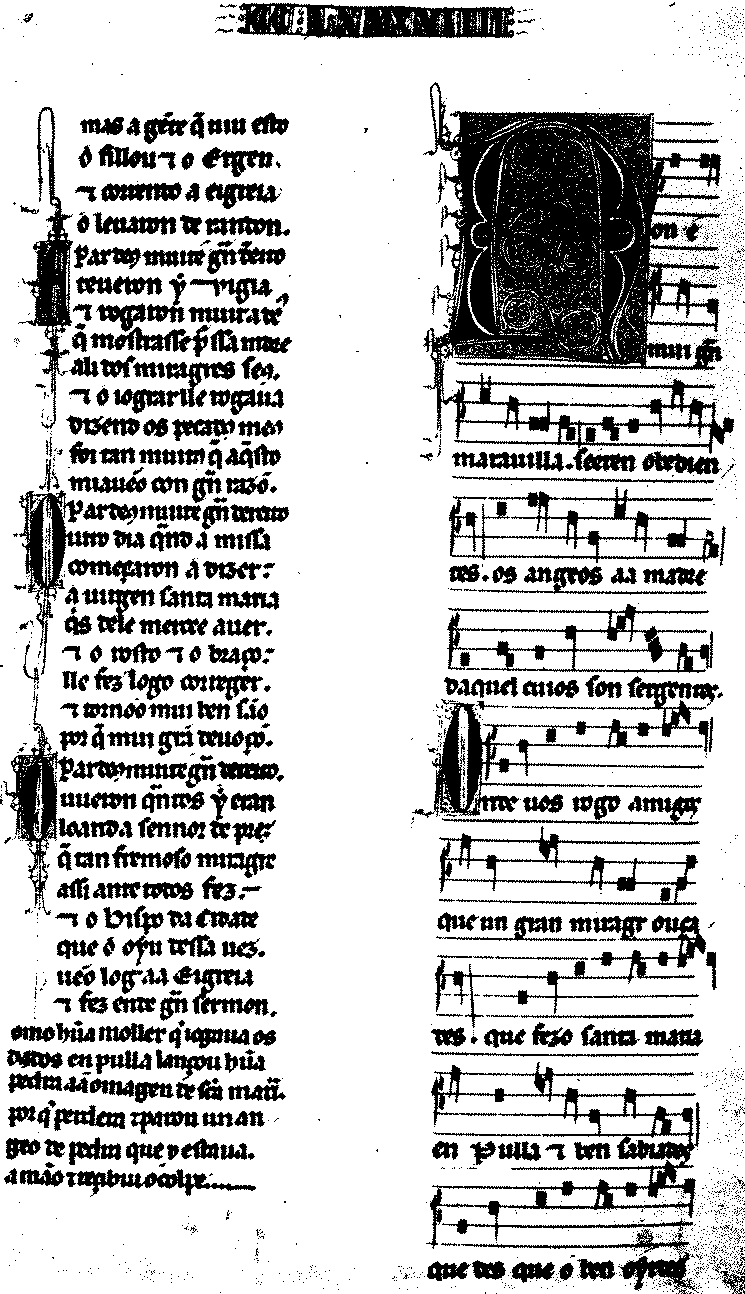
- a. 1284, Alfonso X of Castile, Cantigas de Santa Maria, Códice de los músicos, cantiga 294 (facsimile):
- [C]omo hũa moller q̇ iogaua os dados en pulla lançou hũa pedra aa omagen de ſṫa maṙi[a] poꝛ q̇ perdera ⁊ parou un angeo de pedra que y eſtaua a mão ⁊ reçibiu o colpe.
- [H]ow a woman who was playing the dices in Apulia threw a stone at the statue of Holy Mary because she had lost, and an angel of stone which was there reached out its hand and received the blow.
- [C]omo hũa moller q̇ iogaua os dados en pulla lançou hũa pedra aa omagen de ſṫa maṙi[a] poꝛ q̇ perdera ⁊ parou un angeo de pedra que y eſtaua a mão ⁊ reçibiu o colpe.
Descendants
Etymology 2
Inherited from Latin ala (“wing”).
Noun
aa f (plural aas)
- wing
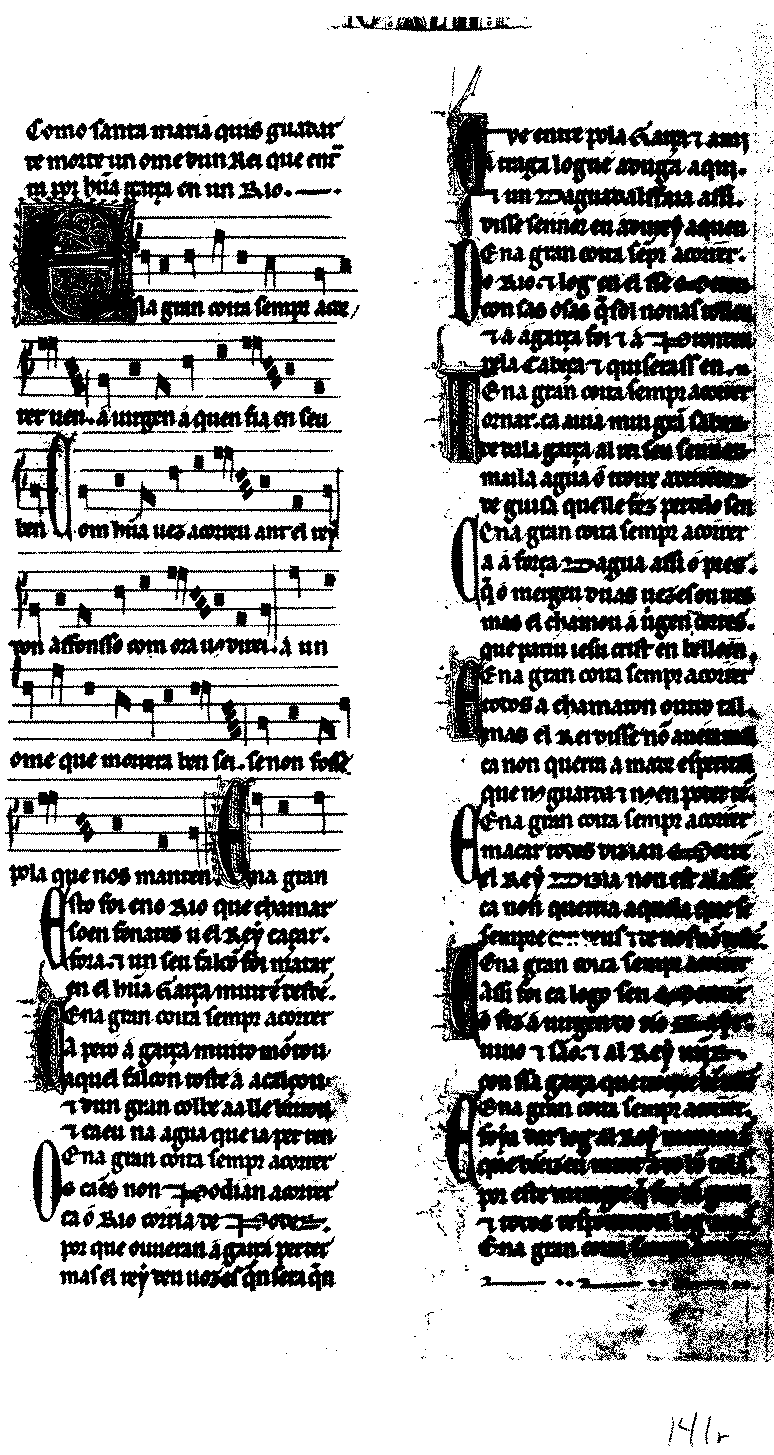
- a. 1284, Alfonso X of Castile, Cantigas de Santa Maria, Códice de los músicos, cantiga 142 (facsimile):
- ⁊ dun gran colbe aa lle bꝛitou
- And with a powerful blow, broke its wing
Descendants
Paraujano
Pronunciation
- IPA(key): /ˈaː/
- Rhymes: -aː
- Syllabification: aa
Adverb
aa
- there (far from the speaker)
References
- Álvarez, José; Bravo, María (2008), “aa”, in Diccionario básico de la lengua añú [Basic dictionary of the Añú language][11], Maracaibo, Venezuela: University of Zulia, →ISBN, page 41.
Pennsylvania German
Pronunciation
Etymology 1
From Old High German ouh, from Proto-Germanic *auk; cognate with German auch, Dutch ook, Old English ēac.
Alternative forms
- auch (literary)
Adverb
aa
- also, too
- 2004, Ammon Weber, edited by C. Richard Baum, Joshua R. Brown, The Comprehensive Pennsylvania German Dictionary, volume 1, 219 Mill Road, Morgantown, PA 19543-9516: Masthof Press, →ISBN, page 1:
- Ich bin mol in der Busche[1] gange. Ich bin aa. / Ich hab mei Ax mitgenumme. Ich hab aa. / Ich hab en Baam umghackt. Ich hab aa. / Ich hab ihn heemgschleeft. Ich hab aa. / Ich hab en Seidrog rausgmacht. Ich hab aa. / Die Sei hen rausgfresse. Ich hab aa.
- I went into the woods. I did, too. / I took my axe with me. I did, too. / I chopped down a tree. I did, too. / I dragged it home. I did, too. / I made a pig feeding though out of it. I did, too. / The pigs ate out of it. I did, too.
- to be sure, certainly, indeed
Interjection
aa
- (rare) to be sure!
- Synonyms: allerdings, doch, freilich, ei, ya
Etymology 2
From Old High German ana, from Proto-Germanic *ana, from Proto-Indo-European *h₂en- (“up, on high”). Compare German an, Dutch aan, English on.
Adverb
aa
- on (of a light)
- 1925 May 4, Pumpernickel Bill (William Stahley Troxell), The Allentown Morning Call[12]; republished as C. Richard Baum, Joshua R. Brown, editors, The Comprehensive Pennsylvania German Dictionary, volume 1, 219 Mill Road, Morgantown, PA 19543-9516: Masthof Press, 2004, →ISBN, page 1:
- in session (of a school)
- burning (of a fire)
- on, starting
Footnotes
References
- Beam, C. R., Brown, J. R., & Trout, J. L. (2004). The Comprehensive Pennsylvania German Dictionary: Vol. 1 (A) (1st ed.). Masthof Press.
- Pennsylvania Dutch Dictionary. (n.d.). https://padutchdictionary.com/#q=aa
Scots
Adjective
aa
References
- “aa, adj.”, in The Dictionary of the Scots Language, Edinburgh: Scottish Language Dictionaries, 2004–present, →OCLC.
Stoney
Noun
aa
Sundanese
Etymology
alternative form of akang
Noun
aa (Sundanese spelling ᮃᮃ)
Swedish
Alternative forms
Etymology
A relaxed pronunciation of ja.
Pronunciation
- IPA(key): /²ɑːa/
Adverb
aa (not comparable)
- (colloquial) Expresses agreement or affirmation; yeah, yes
- Antonym: nä
- – Såg du tricket han gjorde? – Aa, helt sjukt!
- – Did you see the trick he did? – Yeah, crazy!
- – Har du matat kaninerna? – Aa, det har jag.
- – Have you fed the rabbits? – Yes, I have.
Usage notes
Often doubly emphasized – compare mhm.
Tagalog
Etymology 1
From the reduplication of Hokkien 齷 / 龌 (ak, “dirty”), according to Manuel (1948). Compare Indonesian eek. False cognate of Greenlandic a'a.
Pronunciation
- (Standard Tagalog) IPA(key): /ʔaˈʔaʔ/ [ʔɐˈʔaʔ], /ˈʔaʔaʔ/ [ˈʔaː.ʔɐʔ]
- Rhymes: -aʔ, -aʔaʔ
- Syllabification: a‧a
Noun
aâ or aà (Baybayin spelling ᜀᜀ) (childish)
Derived terms
Etymology 2
Compare Hiligaynon aa.
Pronunciation
- (Standard Tagalog) IPA(key): /ˈʔaʔa/ [ˈʔaː.ʔɐ]
- Rhymes: -aʔa
- Syllabification: a‧a
Interjection
aa (Baybayin spelling ᜀᜀ)
- an exclamation expressing warning
See also
Etymology 3
Pronunciation
- (Standard Tagalog) IPA(key): /ʔaˈʔaʔ/ [ʔɐˈʔaʔ]
- Rhymes: -aʔ
- Syllabification: a‧a
Noun
aâ (Baybayin spelling ᜀᜀ) (obsolete)
- name of the Baybayin letter ᜀ, corresponding to "a"
See also
Further reading
- “aa”, in Pambansang Diksiyonaryo | Diksiyonaryo.ph, 2018
- Manuel, E. Arsenio (1948), Chinese elements in the Tagalog language: with some indication of Chinese influence on other Philippine languages and cultures and an excursion into Austronesian linguistics, Manila: Filipiniana Publications, page 12
- Douglas, Carstairs (1873), “ok [R. ak, dirty].”, in Chinese-English Dictionary of the Vernacular or Spoken Language of Amoy, with the Principal Variations of the Chang-chew and Chin-chew Dialects. (overall work in Hokkien and English), London: Trübner & Co., page 352; New Edition, With Corrections by the Author., Thomas Barclay, 林燕臣 [Lîm Iàn-sîn], London: Publishing Office of the Presbyterian Church of England, 1899, page 352
- Santos, Fr. Domingo de los (1835), Vocabulario de la lengua Tagala, primera y segunda parte. En la primera, se pone primero el Castellano, y despues el Tagalo. Y en la segunda al contrario, que son las raíces simples con sus acentos. [Vocabulary of the Tagalog language, first and second parts. In the first part, Spanish is listed first, followed by Tagalog. In the second part, the opposite is true, with simple roots and their accents.][13] (overall work in Spanish and Classical Tagalog), Manila: La Imprenta nueva de D. José María Dayot, por Tomás Oliva. [The new Printing Press of Sir José María Dayot, by Tomás Oliva.]
- San Buena Ventura, Fr. Pedro de (1613), Vocabulario de lengua tagala. El romance castellano puesto primero. Primera, y segunda parte. [Vocabulary of the Tagalog language. Castilian Romance placed first. First, and second parts.][14] (overall work in Early Modern Spanish and Classical Tagalog), as directed by Gov. Gen. Juan de Silva, Pila, Laguna: La noble Villa de Pila, por Tomás Pinpin y Domingo Loag. [The noble Villa of Pila, by Tomás Pinpin and Domingo Loag.], page 1:
- A) AA yaon (pc) la primera letra del. a.b.c. Tagalog. Eſta letra A. ſegun. S. Iſidoro (lib.r. Ethimolo) es la primera letra de todas las lẽguas. Los Latinos y Eſpañoles ſolos la nombran, como la eſcriuen, y la eſcriuen, como la nombran, las de mas naciones no, q̃ ſõ muy diferentes ẽ eſto. Porque el Hebreo la llama Aleph, el Griego. Alpha, el Arabigo. Alipha, &t, y nuestros Tagalos. A ,|, Aayaon ,|; [ᜀ], y eſto [ſolo para] nombralla de porſi, vt, anung ng̃alã [niring] litra? como ſellama eſta letra? ℞, Aayaon, mas en eſcritura, y en lo que hablan, raçonando, [la eſcriuẽ], y [pronuncian] ſimplemẽte, como ſuena, A.
Tipai
Etymology
(This etymology is missing or incomplete. Please add to it, or discuss it at the Etymology scriptorium.) Compare Ipai aa, Kumeyaay aa, and Havasupai-Walapai-Yavapai yá.
Pronunciation
- IPA(key): /aː/
Noun
aa
References
- Amy Miller; Margaret Langdon (2008), Barona Inter-Tribal Dictionary: ʼIipay Aa Tiipay Aa Uumall, Barona Museum Press, →ISBN, page 236
- Carlos Gil Burgoin; Rosa María Silva Vega; Beatriz Carrillo Espinoza (2025), Tipey Aa Karkwar 'Ith: Un diccionario bilingüe del kumiay contemporáneo de San José de la Zorra (in Spanish), Autonomous University of Baja California, →ISBN, page 65
Tlingit
Pronunciation
- IPA(key): /aː/
Letter
aa (upper case Aa)
See also
- Canada:
- (Latin-script letters) A a, Á á, À à, Â â, Ch ch, Chʼ chʼ, D d, Dł dł, Dz dz, E e, É é, È è, Ê ê, G g, Gw gw, Gh gh, Ghw ghw, H h, I i, Í í, Ì ì, Î î, J j, K k, Kw kw, Kʼ kʼ, Kʼw kʼw, Kh kh, Khw khw, Khʼ khʼ, Khʼw khʼw (L l), Ł ł, Łʼ łʼ (M m), N n (O o), S s, Sʼ sʼ, Sh sh, T t, Tʼ tʼ, Tl tl, Tlʼ tlʼ, Ts ts, Tsʼ tsʼ, U u, Ú ú, Ù ù, Û û, W w, X x, Xw xw, Xʼ xʼ, Xʼw xʼw, Xh xh, Xhw xhw, Xhʼ xhʼ, Xhʼw xhʼw, Y y (Ÿ ÿ), ․
- US:
- (Latin-script letters) A a, Á á, Aa aa, Áa áa, Ch ch, Chʼ chʼ, D d, Dl dl, Dz dz, E e, É é, Ee ee, Ée ée, Ei ei, Éi éi, G g, Gw gw, G̱ g̱, G̱w g̱w, H h, I i, Í í, J j, K k, Kw kw, Kʼ kʼ, Kʼw kʼw, Ḵ ḵ, Ḵw ḵw, Ḵʼ ḵʼ, Ḵʼw ḵʼw, L l, Lʼ lʼ (Ḻ ḻ, M m), N n (O o), Oo oo, Óo óo, S s, Sʼ sʼ, Sh sh, T t, Tʼ tʼ, Tl tl, Tlʼ tlʼ, Ts ts, Tsʼ tsʼ, U u, Ú ú, W w, X x, Xw xw, Xʼ xʼ, Xʼw xʼw, X̱ x̱, X̱w x̱w, X̱ʼ x̱ʼ, X̱ʼw x̱ʼw, Y y (Ÿ ÿ, Y̱ y̱), ․
Võro
Noun
aa (genitive [please provide], partitive [please provide])
Inflection
This noun needs an inflection-table template.
Votic
Etymology
Probably borrowed from Russian ага (aga).
Pronunciation
- (Luutsa, Liivčülä) IPA(key): /ˈɑː/, [ˈɑː]
- (Jõgõperä) IPA(key): /ˈɑː/, [ˈɑː]
- (Central Votic) IPA(key): /ˈɑː/, [ˈɑː]
- Rhymes: -ɑː
- Hyphenation: aa
Interjection
aa
References
- Hallap, V.; Adler, E.; Grünberg, S.; Leppik, M. (2012), “aa”, in Vadja keele sõnaraamat [A dictionary of the Votic language][15], 2nd edition, Tallinn
Yoruba
Etymology 1
Pronunciation
- IPA(key): /àá/
Contraction
àá
- contraction of àwa + á, literally “We'll”
- Àá lọ sí Amẹ́ríkà ní oṣù tí ó ń bọ̀.
- We'll be going to the U.S. next month.
Etymology 2
Pronunciation
- IPA(key): /áá/
Contraction
áá
- contraction of òun + á, literally “He'll, she'll, it'll”
- Áá rí wa l'ọ́jọ́ márùn-ún òní.
- She'll be seeing us four days from now.
Zyphe
Noun
aa
References
- Samson Alexander Lotven (2021) The Sound Systems of Zophei Dialects and Other Maraic Languages (Dissertation)[16]
- Translingual terms derived from English
- Translingual terms derived from Afar
- Translingual abbreviations
- Translingual lemmas
- Translingual symbols
- ISO 639-1
- English terms derived from Hawaiian
- English terms derived from Proto-Polynesian
- English terms borrowed from Hawaiian
- English 2-syllable words
- English terms with IPA pronunciation
- English terms with audio pronunciation
- English lemmas
- English nouns
- English uncountable nouns
- en:Volcanology
- English terms with quotations
- English initialisms
- en:Medicine
- English adjectives
- English uncomparable adjectives
- English pluralia tantum
- English abbreviations
- English pronouns
- Northumbrian English
- English 2-letter words
- Acholi lemmas
- Acholi verbs
- Balinese terms inherited from Proto-Malayo-Polynesian
- Balinese terms derived from Proto-Malayo-Polynesian
- Balinese lemmas
- Balinese nouns
- ban:Plants
- ban:Fig trees
- Bavarian terms inherited from Old High German
- Bavarian terms derived from Old High German
- Bavarian terms inherited from Proto-Germanic
- Bavarian terms derived from Proto-Germanic
- Bavarian terms with IPA pronunciation
- Bavarian terms with homophones
- Rhymes:Bavarian/aː
- Bavarian lemmas
- Bavarian adverbs
- Bavarian terms with usage examples
- Bughotu lemmas
- Bughotu verbs
- Dutch terms with audio pronunciation
- Dutch lemmas
- Dutch nouns
- Dutch nouns with plural in -s
- Dutch countable nouns
- Dutch feminine nouns
- East Central German lemmas
- East Central German articles
- Erzgebirgisch
- Estonian lemmas
- Estonian interjections
- Estonian terms with usage examples
- Estonian nouns
- et:Latin letter names
- Finnish terms derived from Latin
- Finnish 1-syllable words
- Finnish terms with IPA pronunciation
- Rhymes:Finnish/ɑː
- Rhymes:Finnish/ɑː/1 syllable
- Finnish lemmas
- Finnish nouns
- fi:Latin letter names
- Finnish maa-type nominals
- Finnish interjections
- Finnish 2-letter words
- French terms derived from Hawaiian
- French terms derived from Proto-Polynesian
- French terms borrowed from Hawaiian
- French 2-syllable words
- French terms with IPA pronunciation
- French terms with audio pronunciation
- French lemmas
- French nouns
- French countable nouns
- French masculine nouns
- fr:Geology
- Gagauz terms inherited from Old Anatolian Turkish
- Gagauz terms derived from Old Anatolian Turkish
- Gagauz terms derived from Proto-Turkic
- Gagauz terms with IPA pronunciation
- Gagauz lemmas
- Gagauz nouns
- Hiligaynon terms with IPA pronunciation
- Rhymes:Hiligaynon/aʔ
- Rhymes:Hiligaynon/aʔ/2 syllables
- Hiligaynon lemmas
- Hiligaynon interjections
- Rhymes:Hiligaynon/aʔa
- Rhymes:Hiligaynon/aʔa/2 syllables
- Indonesian terms borrowed from Sundanese
- Indonesian terms derived from Sundanese
- Indonesian 2-syllable words
- Indonesian terms with IPA pronunciation
- Indonesian lemmas
- Indonesian nouns
- Inupiaq lemmas
- Inupiaq interjections
- Ipai lemmas
- Ipai nouns
- nai-ipa:Anatomy
- nai-ipa:Language
- Italian terms derived from Hawaiian
- Italian terms borrowed from Hawaiian
- Italian terms derived from Proto-Polynesian
- Italian 2-syllable words
- Italian terms with IPA pronunciation
- Rhymes:Italian/aa
- Rhymes:Italian/aa/2 syllables
- Italian lemmas
- Italian nouns
- Italian countable nouns
- Italian indeclinable nouns
- Italian feminine nouns
- it:Volcanology
- Japanese non-lemma forms
- Japanese romanizations
- Javanese non-lemma forms
- Javanese romanizations
- Kankanaey 2-syllable words
- Kankanaey terms with IPA pronunciation
- Rhymes:Kankanaey/a
- Rhymes:Kankanaey/a/2 syllables
- Rhymes:Kankanaey/aa
- Rhymes:Kankanaey/aa/2 syllables
- Kankanaey lemmas
- Kankanaey interjections
- Kankanaey derogatory terms
- Kumeyaay lemmas
- Kumeyaay nouns
- nai-kum:Anatomy
- nai-kum:Language
- Ladin terms inherited from Latin
- Ladin terms derived from Latin
- Ladin lemmas
- Ladin nouns
- Ladin feminine nouns
- Latvian lemmas
- Latvian interjections
- Latvian terms with usage examples
- Lithuanian 2-syllable words
- Lithuanian terms with IPA pronunciation
- Rhymes:Lithuanian/ɐ
- Rhymes:Lithuanian/ɐ/2 syllables
- Rhymes:Lithuanian/ɑː
- Rhymes:Lithuanian/ɑː/2 syllables
- Lithuanian lemmas
- Lithuanian interjections
- Lithuanian terms with usage examples
- Lun Bawang terms with IPA pronunciation
- Lun Bawang lemmas
- Lun Bawang determiners
- Lutuv terms inherited from Proto-Kuki-Chin
- Lutuv terms derived from Proto-Kuki-Chin
- Lutuv terms inherited from Proto-Tibeto-Burman
- Lutuv terms derived from Proto-Tibeto-Burman
- Lutuv lemmas
- Lutuv nouns
- Malay lemmas
- Malay particles
- Malay text messaging slang
- Malay internet slang
- Malay terms with quotations
- Manx terms inherited from Old Irish
- Manx terms derived from Old Irish
- Manx terms inherited from Proto-Celtic
- Manx terms derived from Proto-Celtic
- Manx terms inherited from Proto-Indo-European
- Manx terms derived from Proto-Indo-European
- Manx terms with IPA pronunciation
- Manx non-lemma forms
- Manx adjective forms
- Manx comparative adjectives
- Mbya Guarani lemmas
- Mbya Guarani adverbs
- Middle English terms borrowed from Old Norse
- Middle English terms derived from Old Norse
- Middle English terms derived from Proto-Germanic
- Middle English doublets
- Middle English terms with IPA pronunciation
- Middle English lemmas
- Middle English nouns
- Late Middle English
- Middle English hapax legomena
- Middle Welsh terms with IPA pronunciation
- Middle Welsh non-lemma forms
- Middle Welsh verb forms
- Murui Huitoto terms with IPA pronunciation
- Murui Huitoto lemmas
- Murui Huitoto adverbs
- Mwotlap terms with IPA pronunciation
- Mwotlap lemmas
- Mwotlap interjections
- Mwotlap discourse particles
- Mwotlap terms with usage examples
- Mwotlap terms with quotations
- Navajo non-lemma forms
- Navajo postposition forms
- Northern Sami lemmas
- Northern Sami interjections
- Norwegian lemmas
- Norwegian letters
- Norwegian obsolete forms
- Norwegian Bokmål terms with IPA pronunciation
- Rhymes:Norwegian Bokmål/oː
- Rhymes:Norwegian Bokmål/oː/1 syllable
- Norwegian Bokmål terms with homophones
- Norwegian Bokmål lemmas
- Norwegian Bokmål letters
- Norwegian Nynorsk lemmas
- Norwegian Nynorsk conjunctions
- Norwegian Nynorsk obsolete forms
- Norwegian Nynorsk interjections
- Norwegian Nynorsk letters
- Norwegian Nynorsk nouns
- Norwegian Nynorsk feminine nouns
- Norwegian Nynorsk particles
- Norwegian Nynorsk prepositions
- Nuxalk terms with IPA pronunciation
- Nuxalk lemmas
- Nuxalk letters
- Nuxalk nouns
- Latin script characters
- Old Galician-Portuguese non-lemma forms
- Old Galician-Portuguese contractions
- Old Galician-Portuguese terms with quotations
- Old Galician-Portuguese terms derived from Proto-Indo-European
- Old Galician-Portuguese terms derived from Latin
- Old Galician-Portuguese terms inherited from Proto-Indo-European
- Old Galician-Portuguese terms derived from the Proto-Indo-European root *h₂eǵ- (drive)
- Old Galician-Portuguese terms derived from Proto-Italic
- Old Galician-Portuguese terms derived from the Proto-Indo-European root *h₂eḱs-
- Old Galician-Portuguese terms inherited from Latin
- Old Galician-Portuguese terms inherited from Proto-Italic
- Old Galician-Portuguese lemmas
- Old Galician-Portuguese nouns
- Old Galician-Portuguese feminine nouns
- Paraujano terms with IPA pronunciation
- Rhymes:Paraujano/aː
- Rhymes:Paraujano/aː/1 syllable
- Paraujano lemmas
- Paraujano adverbs
- Pennsylvania German terms with IPA pronunciation
- Rhymes:Pennsylvania German/ɔː
- Pennsylvania German terms with homophones
- Pennsylvania German terms inherited from Old High German
- Pennsylvania German terms derived from Old High German
- Pennsylvania German terms inherited from Proto-Germanic
- Pennsylvania German terms derived from Proto-Germanic
- Pennsylvania German lemmas
- Pennsylvania German adverbs
- Pennsylvania German terms with usage examples
- Pennsylvania German terms with quotations
- Pennsylvania German interjections
- Pennsylvania German terms with rare senses
- Pennsylvania German terms derived from Proto-Indo-European
- Scots lemmas
- Scots adjectives
- Shetland Scots
- Stoney lemmas
- Stoney nouns
- Sundanese lemmas
- Sundanese nouns
- Sundanese childish terms
- Sundanese familiar terms
- Swedish terms with IPA pronunciation
- Swedish lemmas
- Swedish adverbs
- Swedish colloquialisms
- Swedish terms with usage examples
- Tagalog reduplications
- Tagalog terms derived from Hokkien
- Tagalog 2-syllable words
- Tagalog terms with IPA pronunciation
- Rhymes:Tagalog/aʔ
- Rhymes:Tagalog/aʔ/2 syllables
- Rhymes:Tagalog/aʔaʔ
- Rhymes:Tagalog/aʔaʔ/2 syllables
- Tagalog terms with maragsa pronunciation
- Tagalog terms with malumi pronunciation
- Tagalog lemmas
- Tagalog nouns
- Tagalog terms with Baybayin script
- Tagalog childish terms
- Rhymes:Tagalog/aʔa
- Rhymes:Tagalog/aʔa/2 syllables
- Tagalog terms with malumay pronunciation
- Tagalog interjections
- Tagalog obsolete terms
- tl:Baybayin letter names
- Tipai terms with IPA pronunciation
- Tipai lemmas
- Tipai nouns
- nai-tip:Anatomy
- nai-tip:Language
- Tlingit terms with IPA pronunciation
- Tlingit lemmas
- Tlingit letters
- American Tlingit
- Võro lemmas
- Võro nouns
- vro:Latin letter names
- Votic terms borrowed from Russian
- Votic terms derived from Russian
- Votic terms with IPA pronunciation
- Rhymes:Votic/ɑː
- Rhymes:Votic/ɑː/1 syllable
- Votic lemmas
- Votic interjections
- Yoruba terms with IPA pronunciation
- Yoruba non-lemma forms
- Yoruba contractions
- Yoruba terms with usage examples
- Zyphe lemmas
- Zyphe nouns