trobar
Aragonese
Etymology
From Vulgar Latin *tropāre.
Verb
trobar
- (transitive) to find
- Synonym: descobrir
- (pronominal, transitive) to meet
- (pronominal, intransitive) to be located
- Synonym: estar
Conjugation
| infinitive | trobar | ||||||
|---|---|---|---|---|---|---|---|
| gerund | trobando | ||||||
| past participle | masculine | feminine | |||||
| singular | trobau, trobato | trobada, trobata | |||||
| plural | trobaus, trobatos | trobadas, trobatas | |||||
| person | singular | plural | |||||
| first | second | third | first | second | third | ||
| indicative | yo | tú | él | nusatros nusatras |
vusatros vusatras |
ellos/els ellas | |
| present | trobo | trobas | troba | trobamos | trobaz | troban | |
| imperfect | trobaba, trobabe | trobabas | trobaba | trobabanos | trobabaz | trobaban | |
| preterite | trobé | trobés | trobó | trobemos | trobez | troboron, trobón | |
| future | trobaré | trobarás | trobará | trobaremos | trobarez | trobarán | |
| conditional | trobaría | trobarías | trobaría | trobaríanos | trobaríaz | trobarían | |
| subjunctive | yo | tú | él | nusatros nusatras |
vusatros vusatras |
ellos/els ellas | |
| present | trobe | trobes | trobe | trobemos | trobez | troben | |
| imperfect | trobase | trobases | trobase | trobasenos | trobasez | trobasen | |
| imperative | — | tú | — | — | vusatros vusatras |
— | |
| — | troba | — | — | trobaz | — | ||
Catalan
Etymology
Inherited from Old Catalan trobar. Attested in the Llibre de l'orde de cavalleria.[1]
Pronunciation
- IPA(key): (Northern, Central) [tɾuˈβa]
- IPA(key): (Balearic) [tɾoˈba]
- IPA(key): (Valencia) [tɾoˈbaɾ]
- IPA(key): (Northwestern) [tɾoˈβa]
Audio (Barcelona): (file) - Rhymes: -a(ɾ)
Verb
trobar (first-person singular present trobo, first-person singular preterite trobí, past participle trobat); root stress: (Northern) /o̞/; (Balearic, Central, Northwestern, Valencia) /ɔ/
- (transitive) to find
- Synonym: descobrir
- He trobat unes sabates molt boniques. ― I've found some very nice shoes.
- (pronominal, transitive) to meet
- (pronominal, intransitive) to be located
- Synonym: ser
- La muntanya es troba aquí. ― The mountain is located here.
- to think
- Synonym: pensar
- Trobo que estàs equivocat. ― I think you're wrong.
- Aquesta idea està molt ben trobada. ― This idea is very well thought out.
- to feel, to be
- Com et trobes? Et trobes bé? ― How are you? Are you okay?
Conjugation
| infinitive | |||||||
|---|---|---|---|---|---|---|---|
| gerund | |||||||
| past participle | masculine | feminine | |||||
| singular | |||||||
| plural | |||||||
| person | singular | plural | |||||
| first | second | third | first | second | third | ||
| indicative | jo | tu | ell/ella vostè |
nosaltres nós |
vosaltres vós |
ells/elles vostès | |
| present | |||||||
| imperfect | |||||||
| future | |||||||
| preterite | |||||||
| conditional | |||||||
| subjunctive | jo | tu | ell/ella vostè |
nosaltres nós |
vosaltres vós |
ells/elles vostès | |
| present | |||||||
| imperfect | |||||||
| imperative | — | tu | vostè | nosaltres | vosaltres vós |
vostès | |
| affirmative | — | ||||||
| negative (no) | — | no trobis | no trobi | no trobem | no trobeu | no trobin | |
Derived terms
- de trobadures
- tal faràs, tal trobaràs
- trobable
- trobadís
- troballa
- trobament
- trobar a faltar
- trobat
Related terms
References
- “trobar”, in Diccionari de la llengua catalana [Dictionary of the Catalan Language] (in Catalan), second edition, Institute of Catalan Studies [Catalan: Institut d'Estudis Catalans], April 2007
- ^ Alcover, Antoni Maria; Moll, Francesc de Borja (1963), “trobar”, in Diccionari català-valencià-balear (in Catalan)
Galician
Etymology
From Old Galician-Portuguese trobar, from Old Occitan trobar, from Vulgar Latin *tropāre. Cognate with Portuguese trovar.
Verb
trobar (first-person singular present trobo, first-person singular preterite trobei, past participle trobado)
Conjugation
| Singular | Plural | |||||
|---|---|---|---|---|---|---|
| First-person (eu) |
Second-person (ti) |
Third-person (el / ela / Vde.) |
First-person (nós) |
Second-person (vós) |
Third-person (eles / elas / Vdes.) | |
| Infinitive | ||||||
| Impersonal | ||||||
| Personal | ||||||
| Gerund | ||||||
| Past participle | ||||||
| Masculine | ||||||
| Feminine | ||||||
| Indicative | ||||||
| Present | ||||||
| Imperfect | ||||||
| Preterite | ||||||
| Pluperfect | ||||||
| Future | ||||||
| Conditional | ||||||
| Subjunctive | ||||||
| Present | ||||||
| Imperfect | ||||||
| Future | ||||||
| Imperative | ||||||
| Affirmative | ||||||
| Negative (non) | non trobes | non trobe | non trobemos | non trobedes | non troben | |
| Singular | Plural | |||||
|---|---|---|---|---|---|---|
| First-person (eu) |
Second-person (ti / tu) |
Third-person (ele / ela / você) |
First-person (nós) |
Second-person (vós) |
Third-person (eles / elas / vocês) | |
| Infinitive | ||||||
| Impersonal | ||||||
| Personal | ||||||
| Gerund | ||||||
| Past participle | ||||||
| Masculine | ||||||
| Feminine | ||||||
| Indicative | ||||||
| Present | , | |||||
| Imperfect | , , trobávais1 | |||||
| Preterite | , trobache1 | , | ||||
| Pluperfect | , , trobárais1 | |||||
| Future | , | , | ||||
| Conditional | , , trobaríais1 | |||||
| Subjunctive | ||||||
| Present | , | |||||
| Imperfect | , | |||||
| Future | ||||||
| Imperative | ||||||
| Affirmative | , | |||||
| Negative (nom) | nom trobes | nom trobe | nom trobemos | nom trobedes, nom trobeis | nom trobem | |
1Less recommended.
References
- Antón Santamarina, editor (2006–2013), “trobar”, in Dicionario de Dicionarios da lingua galega [Dictionary of Dictionaries of the Galician language] (in Galician), Santiago de Compostela: Instituto da Lingua Galega
Occitan
Alternative forms
Etymology
From Old Occitan trobar, from Vulgar Latin *tropāre.
Pronunciation
Verb
trobar
- (transitive) to find
Conjugation
This verb needs an inflection-table template.
Related terms
Old Galician-Portuguese
Etymology
Borrowed from Old Occitan trobar, from Vulgar Latin *tropāre.
Pronunciation
- IPA(key): /tɾo.ˈbaɾ/
- Rhymes: -aɾ
Verb
trobar
- to compose verses or songs
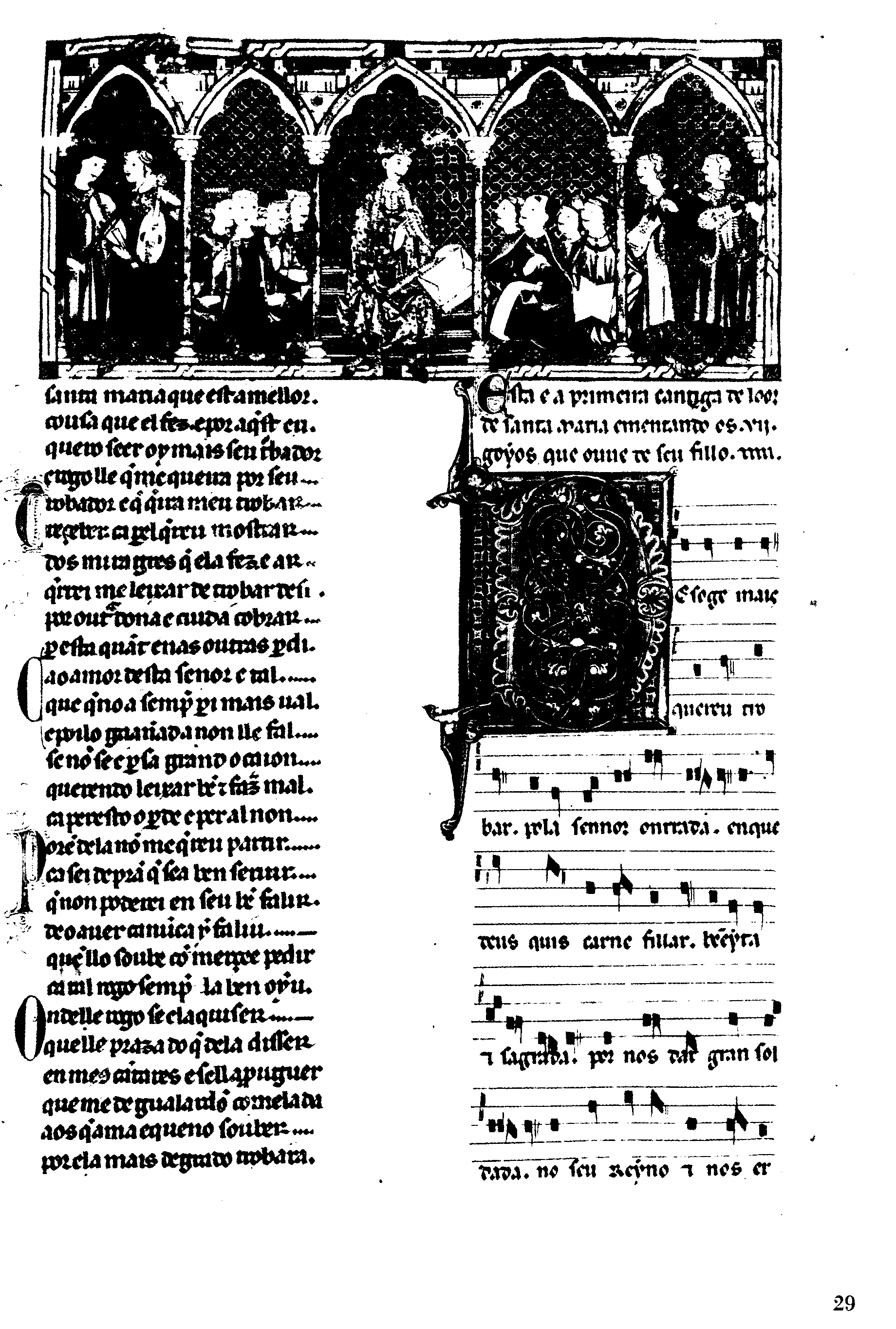
- a. 1284, Alfonso X of Castile, Cantigas de Santa Maria, Códice de los músicos, cantiga 1 (facsimile):
- Deſoge mais quereu trobar. pola ſennor onrrada
- From today on I wish to sing only to my honoured Lady
Conjugation
| infinitive | trobar | ||||||||
|---|---|---|---|---|---|---|---|---|---|
| gerund | simple | trobando | |||||||
| compound | gerund of haver or tẽer1 + past participle | ||||||||
| past participle | singular | plural | |||||||
| masculine | trobado | trobados | |||||||
| feminine | trobada | trobadas | |||||||
| present participle | trobante | trobantes | |||||||
| person | singular | plural | |||||||
| first | second | third | first | second | third | ||||
| indicative mood | eu ei |
tu | el~ele ela |
nos nos outros nos outras |
vos vos outros vos outras |
eles elas | |||
| simple tenses |
present | trobo | trobas | troba | trobamos | trobades, trobaes, trobais, trobaas, trobás | troban | ||
| imperfect | trobava | trobavas | trobava | trobavamos, trobávamos | trobavades, trobávades, trobávaes, trobávais, trobávees, trobáveis | trobavan | |||
| preterite | trobei | trobaste, trobasche, trobache | trobou | trobamos | trobastes | trobaron | |||
| pluperfect | trobara | trobaras | trobara | trobaramos, trobáramos | trobarades, trobárades, trobáraes, trobárais, trobárees, trobáreis | trobaran | |||
| future | trobarei | trobarás | trobará | trobaremos | trobaredes, trobarees, trobareis, trobarês | trobarán | |||
| conditional | trobaria | trobarias | trobaria | trobariamos, trobaríamos | trobariades, trobaríades, trobaríaes, trobaríais, trobaríees, trobaríeis | trobarian | |||
| compound tenses |
present perfect | present of haver or tẽer1 + past participle | |||||||
| pluperfect | imperfect of haver or tẽer1 + past participle | ||||||||
| past anterior | preterite of haver or tẽer1 + past participle | ||||||||
| pluperfect anterior | simple pluperfect of haver or tẽer1 + past participle | ||||||||
| future perfect | future of haver or tẽer1 + past participle | ||||||||
| conditional perfect | conditional of haver or tẽer1 + past participle | ||||||||
| subjunctive mood | eu ei |
tu | el~ele ela |
nos nos outros nos outras |
vos vos outros vos outras |
eles elas | |||
| simple tenses |
present | trobe | trobes | trobe | trobemos | trobedes, trobees, trobeis, trobês | troben | ||
| imperfect | trobasse | trobasses | trobasse | trobassemos, trobássemos | trobassedes, trobássedes, trobássees, trobásseis | trobassen | |||
| future | trobar | trobares | trobar | trobarmos | trobardes | trobaren | |||
| compound tenses |
present perfect | present subjunctive of haver or tẽer1 + past participle | |||||||
| pluperfect | imperfect subjunctive of haver or tẽer1 + past participle | ||||||||
| future perfect | future subjunctive of haver or tẽer1 + past participle | ||||||||
| imperative mood | — | tu | — | nos nos outros nos outras |
vos vos outros vos outras |
— | |||
| affirmative | — | troba | — | trobemos | trobade, trobae, trobai | — | |||
| negative | — | non trobes | — | non trobemos | non trobedes, non trobees, non trobeis, non trobês | — | |||
| personal infinitive | eu ei |
tu | el~ele ela |
nos nos outros nos outras |
vos vos outros vos outras |
eles elas | |||
| trobar | trobares | trobar | trobarmos | trobardes | trobaren | ||||
| 1 Haver is more common than tẽer. | |||||||||
Related terms
Descendants
Old Occitan
Etymology
Inherited from Vulgar Latin *tropāre. Attested in the Sainte Foy.[1] Compare Old French trover.
Verb
trobar
- to find
- c. 1000, author unknown, Boecis:
- Nos, e molz libres, o trobam legen
- We, in many books, find through reading
Related terms
- trobador
- trobaire
- trobairitz
Descendants
- Occitan: trobar
- → Italian: trovare (“to compose poetry”)
- → Old Galician-Portuguese: trobar
- → Old Spanish: trobar
- Spanish: trovar
References
- ^ Walther von Wartburg (1928–2002), “*tropare”, in Französisches Etymologisches Wörterbuch (in German), volume 13: To–Tyrus, page 319
Old Spanish
Etymology
Probably borrowed from Old Occitan trobar, from Vulgar Latin *tropāre.
Verb
trobar
- to find
- c. 1260, Gonzalo de Berceo, Milagros de Nuestra Señora:
- Nunca trobé en sieglo logar tan deleitoso
- I never found anywhere else such a delightful place
Descendants
- Spanish: trovar
- Aragonese terms derived from Vulgar Latin
- Aragonese lemmas
- Aragonese verbs
- Aragonese transitive verbs
- Aragonese intransitive verbs
- Catalan terms inherited from Old Catalan
- Catalan terms derived from Old Catalan
- Catalan terms with IPA pronunciation
- Catalan terms with audio pronunciation
- Rhymes:Catalan/a(ɾ)
- Rhymes:Catalan/a(ɾ)/2 syllables
- Catalan lemmas
- Catalan verbs
- Catalan first conjugation verbs
- Catalan transitive verbs
- Catalan terms with usage examples
- Catalan intransitive verbs
- Galician terms inherited from Old Galician-Portuguese
- Galician terms derived from Old Galician-Portuguese
- Galician terms derived from Old Occitan
- Galician terms derived from Vulgar Latin
- Galician lemmas
- Galician verbs
- Galician verbs ending in -ar
- Occitan terms inherited from Old Occitan
- Occitan terms derived from Old Occitan
- Occitan terms inherited from Vulgar Latin
- Occitan terms derived from Vulgar Latin
- Occitan terms with IPA pronunciation
- Occitan terms with audio pronunciation
- Occitan lemmas
- Occitan verbs
- Occitan first group verbs
- Occitan transitive verbs
- Old Galician-Portuguese terms derived from Ancient Greek
- Old Galician-Portuguese terms derived from Proto-Italic
- Old Galician-Portuguese terms derived from Proto-Indo-European
- Old Galician-Portuguese terms derived from Proto-Hellenic
- Old Galician-Portuguese terms borrowed from Old Occitan
- Old Galician-Portuguese terms derived from Latin
- Old Galician-Portuguese terms derived from Old Occitan
- Old Galician-Portuguese terms derived from Vulgar Latin
- Old Galician-Portuguese terms derived from the Proto-Indo-European root *trep-
- Old Galician-Portuguese terms with IPA pronunciation
- Rhymes:Old Galician-Portuguese/aɾ
- Rhymes:Old Galician-Portuguese/aɾ/2 syllables
- Old Galician-Portuguese lemmas
- Old Galician-Portuguese verbs
- Old Galician-Portuguese terms with quotations
- Old Galician-Portuguese terms with usage examples
- Old Galician-Portuguese verbs ending in -ar
- Old Occitan terms inherited from Vulgar Latin
- Old Occitan terms derived from Vulgar Latin
- Old Occitan lemmas
- Old Occitan verbs
- Old Occitan terms with quotations
- Old Spanish terms borrowed from Old Occitan
- Old Spanish terms derived from Old Occitan
- Old Spanish terms derived from Vulgar Latin
- Old Spanish lemmas
- Old Spanish verbs
- Old Spanish terms with quotations