mater
English
Etymology 1
From Latin māter (“mother”), partly via Late Middle English matere.[1] Doublet of mata and mother. Ancestor of matrix.
Pronunciation
- IPA(key): (Received Pronunciation) /ˈmeɪtə/[1]
Audio (Southern England): (file) - (US) IPA(key): /ˈmeɪtɚ/,[1] /ˈmɑtɚ/[1]
Audio (General American); /ˈmɑtɚ/: (file) - Rhymes: -eɪtə(ɹ)
Noun
mater (plural maters or matres)
- (formal or humorous)[1] Mother.
- Coordinate term: pater
- 1919 June 14, Pelham Grenville Wodehouse, “A Damsel in Distress”, in George Horace Lorimer, editor, The Saturday Evening Post, volume 191, number 50, Philadelphia, Pa.: The Curtis Publishing Company, →ISSN, chapter XX, page 57, column 1:
- Their maters are all pals of my mater’s, and I don’t want to get them into trouble for aiding and abetting my little show, if you understand what I mean.
- 1920, Agatha Christie, The Mysterious Affair at Styles, London: Pan Books, published 1954, page 5:
- “The mater will be delighted to see you again—after all those years,” he added.
- 1923, Warwick Deeping, “John Stretton”, in The Secret Sanctuary (The Scherz Phoenix Books), Berne: Alfred Scherz Publishers, published 1945, →OCLC, page 32:
- And then there’s the mater! Poor old mater! She goes about on tiptoe; she’s always watching me and pretending she’s not watching me; I believe she would like to have everything padded with feather beds. All the while she has been wanting me to do the goody book thing, get down on my knees and put my head in her lap and blub.
- 1985, Mick Hucknall, Neil Moss, “Holding Back the Years”, in Picture Book, performed by Simply Red:
- Strangled by the wishes of pater / Hoping for the arms of mater / Get to me the sooner or later
- 1997, Colleen McCullough, Caesar’s Women, page 17:
- “Mater, you look well.” / “I am well. And you,” she said in that dryly prosaic deep voice of hers, “look healed.”
- (anatomy) A meninx; the dura mater, arachnoid mater, or pia mater of the brain.
Related terms
Etymology 2
Pronunciation
- IPA(key): (Received Pronunciation) /ˈmeɪtə/[2]
- IPA(key): (US) /ˈmeɪtɚ/[2]
- Rhymes: -eɪtə(ɹ)
Noun
mater (plural maters)
Etymology 3
See 'mater.
Pronunciation
- (US) IPA(key): /ˈmeɪtɚ/
- Rhymes: -eɪtə(ɹ)
Noun
mater (plural maters)
- Alternative form of 'mater (“tomato”).
- 2015, Ann B. Ross, Miss Julia's Marvelous Makeover, →ISBN, page 28:
- "A mater sandwich would be better." Trixie said, "but I'll take it if that's all you got." As if we were woefully deprived of food. So Trixie had a tomato sandwich for lunch, carefully prepared by Lillian but for which she received no thanks.
Derived terms
References
Anagrams
Czech
Etymology
Pronunciation
- IPA(key): [ˈmatɛr]
- Rhymes: -atɛr
Noun
mater f (indeclinable)
- title of an abbess
Related terms
- imatrikulace
- imatrikulovat
- materialismus
- materialista
- materialistický
- materializovat
- materiál
- maternální
- maternita
- matérie
- matriarchální
- matriarchát
- matrice
- matrika
- matrikář
- matrikářka
- matrimoniální
- matrimonium
- matrix
- matrona
See also
Further reading
- “mater”, in Příruční slovník jazyka českého (in Czech), 1935–1957
- “mater”, in Slovník spisovného jazyka českého (in Czech), 1960–1971, 1989
- “mater”, in Internetová jazyková příručka (in Czech), 2008–2026
French
Pronunciation
- IPA(key): /ma.te/
Audio (Paris): (file) Audio (France (Vosges)): (file) Audio (France (Somain)): (file) Audio (France (Agen)): (file)
Etymology 1
Verb
mater
- (transitive) to checkmate
- (figuratively, transitive) to suppress, quell (a revolution, person, insurrection)
- 1997, “L'Empire du côté obscur”, in L'École du micro d'argent, performed by IAM:
- Adapter ma technique à la manière du caméléon / Sans pitié pour mater la rébellion
- (please add an English translation of this quotation)
Conjugation
| infinitive | simple | mater | |||||
|---|---|---|---|---|---|---|---|
| compound | avoir + past participle | ||||||
| present participle or gerund1 | simple | matant /ma.tɑ̃/ | |||||
| compound | ayant + past participle | ||||||
| past participle | maté /ma.te/ | ||||||
| singular | plural | ||||||
| first | second | third | first | second | third | ||
| indicative | je (j’) | tu | il, elle, on | nous | vous | ils, elles | |
| (simple tenses) |
present | mate /mat/ |
mates /mat/ |
mate /mat/ |
matons /ma.tɔ̃/ |
matez /ma.te/ |
matent /mat/ |
| imperfect | matais /ma.tɛ/ |
matais /ma.tɛ/ |
matait /ma.tɛ/ |
mations /ma.tjɔ̃/ |
matiez /ma.tje/ |
mataient /ma.tɛ/ | |
| past historic2 | matai /ma.te/ |
matas /ma.ta/ |
mata /ma.ta/ |
matâmes /ma.tam/ |
matâtes /ma.tat/ |
matèrent /ma.tɛʁ/ | |
| future | materai /ma.tʁe/ |
materas /ma.tʁa/ |
matera /ma.tʁa/ |
materons /ma.tʁɔ̃/ |
materez /ma.tʁe/ |
materont /ma.tʁɔ̃/ | |
| conditional | materais /ma.tʁɛ/ |
materais /ma.tʁɛ/ |
materait /ma.tʁɛ/ |
materions /ma.tə.ʁjɔ̃/ |
materiez /ma.tə.ʁje/ |
materaient /ma.tʁɛ/ | |
| (compound tenses) |
present perfect | present indicative of avoir + past participle | |||||
| pluperfect | imperfect indicative of avoir + past participle | ||||||
| past anterior2 | past historic of avoir + past participle | ||||||
| future perfect | future of avoir + past participle | ||||||
| conditional perfect | conditional of avoir + past participle | ||||||
| subjunctive | que je (j’) | que tu | qu’il, qu’elle | que nous | que vous | qu’ils, qu’elles | |
| (simple tenses) |
present | mate /mat/ |
mates /mat/ |
mate /mat/ |
mations /ma.tjɔ̃/ |
matiez /ma.tje/ |
matent /mat/ |
| imperfect2 | matasse /ma.tas/ |
matasses /ma.tas/ |
matât /ma.ta/ |
matassions /ma.ta.sjɔ̃/ |
matassiez /ma.ta.sje/ |
matassent /ma.tas/ | |
| (compound tenses) |
past | present subjunctive of avoir + past participle | |||||
| pluperfect2 | imperfect subjunctive of avoir + past participle | ||||||
| imperative | – | – | – | ||||
| simple | — | mate /mat/ |
— | matons /ma.tɔ̃/ |
matez /ma.te/ |
— | |
| compound | — | simple imperative of avoir + past participle | — | simple imperative of avoir + past participle | simple imperative of avoir + past participle | — | |
| 1 The French gerund is usable only with the preposition en. | |||||||
2 In less formal writing or speech, these tenses may be found to have been replaced in the following way:
(Christopher Kendris [1995], Master the Basics: French, pp. 77, 78, 79, 81). | |||||||
Etymology 2
Uncertain, perhaps from Spanish mata (“bush”).[1]
Verb
mater
- (slang, transitive) to ogle, to check out, to watch (e.g. an attractive person)
- Synonym: reluquer
- 1997, “Demain, c’est loin”, in L'École du micro d'argent, performed by IAM:
- Mater les photos, majeur aujourd'hui, poto / Pas mal d'amis se sont déjà tués en moto
- (please add an English translation of this quotation)
Conjugation
| infinitive | simple | mater | |||||
|---|---|---|---|---|---|---|---|
| compound | avoir + past participle | ||||||
| present participle or gerund1 | simple | matant /ma.tɑ̃/ | |||||
| compound | ayant + past participle | ||||||
| past participle | maté /ma.te/ | ||||||
| singular | plural | ||||||
| first | second | third | first | second | third | ||
| indicative | je (j’) | tu | il, elle, on | nous | vous | ils, elles | |
| (simple tenses) |
present | mate /mat/ |
mates /mat/ |
mate /mat/ |
matons /ma.tɔ̃/ |
matez /ma.te/ |
matent /mat/ |
| imperfect | matais /ma.tɛ/ |
matais /ma.tɛ/ |
matait /ma.tɛ/ |
mations /ma.tjɔ̃/ |
matiez /ma.tje/ |
mataient /ma.tɛ/ | |
| past historic2 | matai /ma.te/ |
matas /ma.ta/ |
mata /ma.ta/ |
matâmes /ma.tam/ |
matâtes /ma.tat/ |
matèrent /ma.tɛʁ/ | |
| future | materai /ma.tʁe/ |
materas /ma.tʁa/ |
matera /ma.tʁa/ |
materons /ma.tʁɔ̃/ |
materez /ma.tʁe/ |
materont /ma.tʁɔ̃/ | |
| conditional | materais /ma.tʁɛ/ |
materais /ma.tʁɛ/ |
materait /ma.tʁɛ/ |
materions /ma.tə.ʁjɔ̃/ |
materiez /ma.tə.ʁje/ |
materaient /ma.tʁɛ/ | |
| (compound tenses) |
present perfect | present indicative of avoir + past participle | |||||
| pluperfect | imperfect indicative of avoir + past participle | ||||||
| past anterior2 | past historic of avoir + past participle | ||||||
| future perfect | future of avoir + past participle | ||||||
| conditional perfect | conditional of avoir + past participle | ||||||
| subjunctive | que je (j’) | que tu | qu’il, qu’elle | que nous | que vous | qu’ils, qu’elles | |
| (simple tenses) |
present | mate /mat/ |
mates /mat/ |
mate /mat/ |
mations /ma.tjɔ̃/ |
matiez /ma.tje/ |
matent /mat/ |
| imperfect2 | matasse /ma.tas/ |
matasses /ma.tas/ |
matât /ma.ta/ |
matassions /ma.ta.sjɔ̃/ |
matassiez /ma.ta.sje/ |
matassent /ma.tas/ | |
| (compound tenses) |
past | present subjunctive of avoir + past participle | |||||
| pluperfect2 | imperfect subjunctive of avoir + past participle | ||||||
| imperative | – | – | – | ||||
| simple | — | mate /mat/ |
— | matons /ma.tɔ̃/ |
matez /ma.te/ |
— | |
| compound | — | simple imperative of avoir + past participle | — | simple imperative of avoir + past participle | simple imperative of avoir + past participle | — | |
| 1 The French gerund is usable only with the preposition en. | |||||||
2 In less formal writing or speech, these tenses may be found to have been replaced in the following way:
(Christopher Kendris [1995], Master the Basics: French, pp. 77, 78, 79, 81). | |||||||
Further reading
- “mater”, in Trésor de la langue française informatisé [Digitized Treasury of the French Language], 2012
References
- ^ Etymology and history of “mater”, in Trésor de la langue française informatisé [Digitized Treasury of the French Language], 2012
Anagrams
Latin

|
Click on blue labels in the image. |
Etymology
From Proto-Italic *mātēr, from Proto-Indo-European *méh₂tēr. Cognate with Old English mōdor (English mother).
Pronunciation
- (Classical Latin) IPA(key): [ˈmaː.tɛr]
- (modern Italianate Ecclesiastical) IPA(key): [ˈmaː.ter]
- Hyphenation: ma‧ter
Noun
māter f (genitive mātris); third declension
- mother (female parent)
- Synonym: genetrīx
- Nē, māter; suam. ― Weave, mother; [so that] I [can] sew.
- mother (source, origin)
- matron of a house
- honorific title
- woman
- nurse
- motherland
- maternity, motherhood
Declension
Third-declension noun.
| singular | plural | |
|---|---|---|
| nominative | māter | mātrēs |
| genitive | mātris | mātrum |
| dative | mātrī | mātribus |
| accusative | mātrem | mātrēs |
| ablative | mātre | mātribus |
| vocative | māter | mātrēs |
Derived terms
Related terms
Descendants
See also
References
- “mater”, in Charlton T. Lewis and Charles Short (1879), A Latin Dictionary, Oxford: Clarendon Press
- “mater”, in Charlton T. Lewis (1891), An Elementary Latin Dictionary, New York: Harper & Brothers
- Carl Meißner; Henry William Auden (1894), Latin Phrase-Book[1], London: Macmillan and Co.
- son of such and such a father, mother: patre, (e) matre natus
- son of such and such a father, mother: patre, (e) matre natus
Middle English
Noun
mater
- alternative form of matere
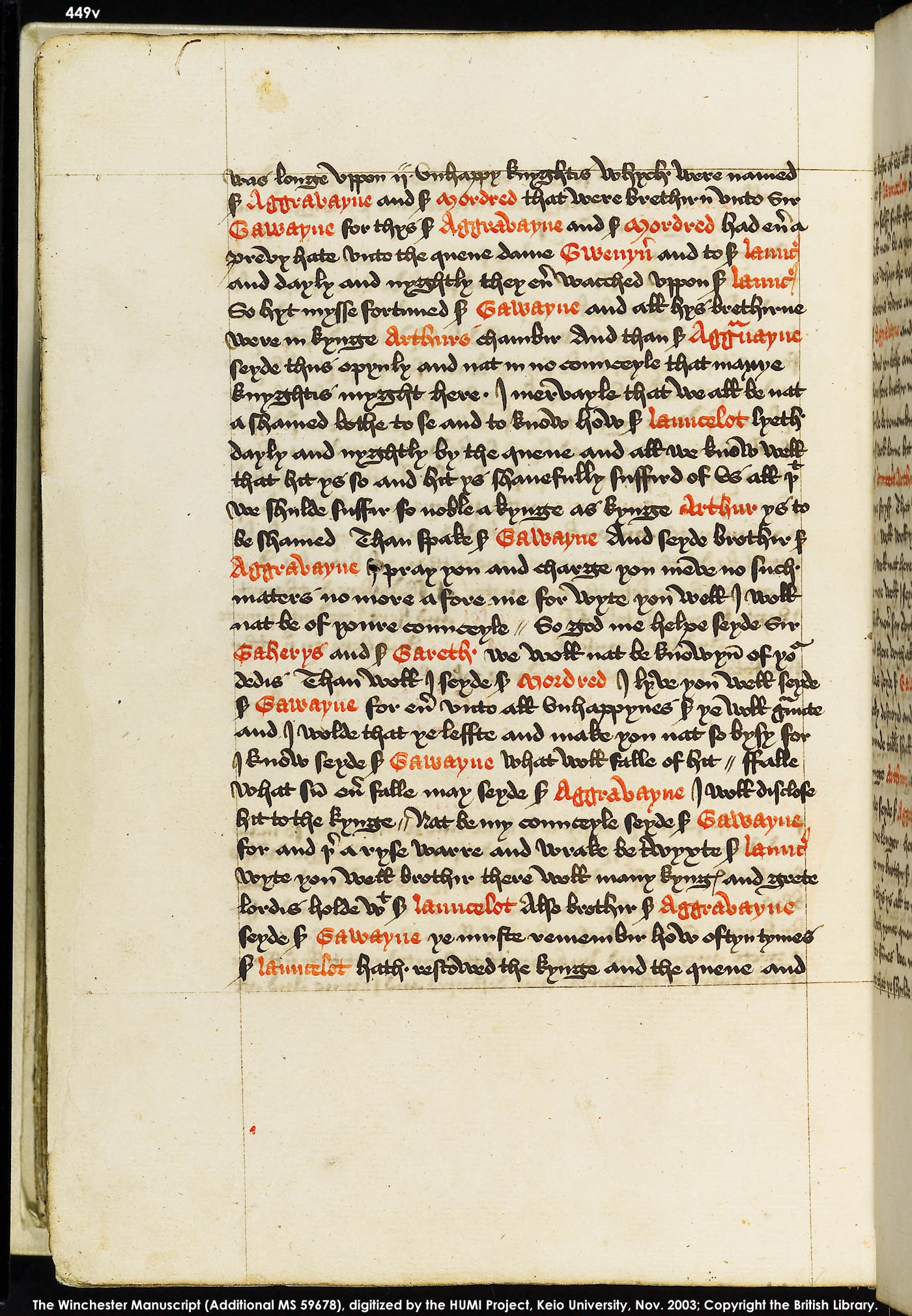
- 1470–1483 (date produced), Thom̃s Malleorre [i.e., Thomas Malory], “[Morte Arthur]”, in Le Morte Darthur (British Library Additional Manuscript 59678), [England: s.n.], folio 449, verso, lines 15–18:
- Than ſpake ẜ Gawayne And ſeyde brothir · ẜ Aggravayne I pray you and charge you meve no ſuch · maters no more a fore me fro wyte you well I woll nat be of youre counceyle //
- Then spoke Sir Gawain, and said, “Brother, Sir Agrivain, I pray you and charge you move not such matters any more before me, for be ye assured I will not be of your counsel.”
Norman
Verb
mater
- to kill
Norwegian Bokmål
Verb
mater
- present of mate
Serbo-Croatian
Noun
mater (Cyrillic spelling матер)
Anagrams
Slovak
Etymology
Inherited from Proto-Slavic *mati.
Pronunciation
- IPA(key): /ˈmacɛr/
Noun
mater f
Declension
This entry needs an inflection-table template.
Derived terms
- materčina
- materina dúška
- materinský
- materný
- materský
- materstvo
Further reading
- “mater”, in Slovníkový portál Jazykovedného ústavu Ľ. Štúra SAV [Dictionary portal of the Ľ. Štúr Institute of Linguistics, Slovak Academy of Science] (in Slovak), https://slovnik.juls.savba.sk, 2003–2026
Welsh
Etymology
Noun
mater m (plural materion)
Derived terms
- cyflwr mater (“state of matter”)
- difater (“indifferent, apathetic”)
- gwrthfater (“antimatter”)
- mater tywyll (“dark matter”)
- materol (“material”)
- materydd (“philosophical materialist”)
Mutation
| radical | soft | nasal | aspirate |
|---|---|---|---|
| mater | fater | unchanged | unchanged |
Note: Certain mutated forms of some words can never occur in standard Welsh.
All possible mutated forms are displayed for convenience.
Further reading
- D. G. Lewis, N. Lewis, editors (2005–present), “mater”, in Gweiadur: the Welsh–English Dictionary, Gwerin
- R. J. Thomas, G. A. Bevan, P. J. Donovan, A. Hawke, et al., editors (1950–present), “mater”, in Geiriadur Prifysgol Cymru Online (in Welsh), University of Wales Centre for Advanced Welsh & Celtic Studies
- English terms borrowed from Latin
- English terms derived from Latin
- English terms inherited from Middle English
- English terms derived from Middle English
- English doublets
- English 2-syllable words
- English terms with IPA pronunciation
- English terms with audio pronunciation
- Rhymes:English/eɪtə(ɹ)
- Rhymes:English/eɪtə(ɹ)/2 syllables
- English lemmas
- English nouns
- English countable nouns
- English nouns with irregular plurals
- English formal terms
- English humorous terms
- English terms with quotations
- en:Anatomy
- English terms suffixed with -er
- en:Biology
- en:Female family members
- Czech terms derived from the Proto-Indo-European word *méh₂tēr
- Czech terms derived from Latin
- Czech terms derived from Proto-Indo-European
- Czech terms derived from Proto-Italic
- Czech terms with IPA pronunciation
- Rhymes:Czech/atɛr
- Rhymes:Czech/atɛr/2 syllables
- Czech lemmas
- Czech nouns
- Czech indeclinable nouns
- Czech feminine nouns
- French 2-syllable words
- French terms with IPA pronunciation
- French terms with audio pronunciation
- French terms suffixed with -er (verbal)
- French lemmas
- French verbs
- French transitive verbs
- French terms with quotations
- French verbs with conjugation -er
- French first group verbs
- French terms derived from Late Latin
- French terms derived from Punic
- French terms derived from Phoenician
- French terms derived from Spanish
- French terms with unknown etymologies
- French slang
- Visual dictionary
- Latin terms inherited from Proto-Indo-European
- Latin terms derived from the Proto-Indo-European word *méh₂tēr
- Latin terms derived from Proto-Italic
- Latin terms inherited from Proto-Italic
- Latin terms derived from Proto-Indo-European
- Latin 2-syllable words
- Latin terms with IPA pronunciation
- Latin lemmas
- Latin nouns
- Latin third declension nouns
- Latin feminine nouns in the third declension
- Latin feminine nouns
- Latin terms with usage examples
- Latin words in Meissner and Auden's phrasebook
- la:Female family members
- la:Parents
- Middle English variant lemmas
- Middle English terms with quotations
- Norman lemmas
- Norman verbs
- Norwegian Bokmål non-lemma forms
- Norwegian Bokmål verb forms
- Serbo-Croatian non-lemma forms
- Serbo-Croatian noun forms
- Regional Serbo-Croatian
- Slovak terms inherited from Proto-Indo-European
- Slovak terms derived from Proto-Indo-European
- Slovak terms derived from Proto-Slavic
- Slovak terms derived from Proto-Balto-Slavic
- Slovak terms inherited from Proto-Slavic
- Slovak terms derived from the Proto-Indo-European word *méh₂tēr
- Slovak terms inherited from Proto-Balto-Slavic
- Slovak 2-syllable words
- Slovak terms with IPA pronunciation
- Slovak lemmas
- Slovak nouns
- Slovak feminine nouns
- Welsh terms borrowed from English
- Welsh terms derived from English
- Welsh lemmas
- Welsh nouns
- Welsh countable nouns
- Welsh masculine nouns
- cy:Physics