rei
Aragonese • Asturian • Catalan • Chuukese • Dutch • Galician • Italian • Japanese • Kabuverdianu • Ladin • Latin • Leonese • Luxembourgish • Mirandese • Mizo • Mokilese • Norman • Norwegian Bokmål • Norwegian Nynorsk • Occitan • Old French • Old Galician-Portuguese • Old Occitan • Papiamentu • Pohnpeian • Polish • Portuguese • Rapa Nui • Swahili • Ternate
Page categories
Translingual
Etymology
Symbol
rei
See also
- Wiktionary’s coverage of Reli terms
English
Alternative forms
Etymology
Incorrect back-formation of Portuguese plural réis. The correct singular is real.
Noun
rei (plural reis)
- (nonstandard or obsolete) A Portuguese real.
Related terms
References
- “rei”, in Webster’s Revised Unabridged Dictionary, Springfield, Mass.: G. & C. Merriam, 1913, →OCLC.
Anagrams
Aragonese
Etymology
Akin to Spanish rey, from Latin rex.
Pronunciation
- IPA(key): /ˈrei̯/
- Rhymes: -ei̯
- Syllabification: rei
Noun
rei m (plural reis)
Asturian
Alternative forms
Etymology
From Latin rēx, rēgem.
Pronunciation
- IPA(key): /ˈrei̯/ [ˈrei̯]
- Rhymes: -ei̯
- Syllabification: rei
Noun
rei m (plural reis)
- king
- ladybird, ladybug
- Synonyms: see Thesaurus:perrín de Dios
Related terms
Further reading
- García Arias, Xosé Lluis (2002–2004), “rei”, in Diccionario general de la lengua asturiana [General Dictionary of the Asturian Language] (overall work in Spanish), Editorial Prensa Asturiana, →ISBN
- “rei”, in Diccionariu de la llingua asturiana [Dictionary of the Asturian Language] (in Asturian), 1st edition, Academy of the Asturian Language [Asturian: Academia de la Llingua Asturiana], 2000, →ISBN
Catalan
Etymology
Inherited from Old Catalan rei, reig, from Latin rēgem, from Proto-Indo-European *h₃rḗǵs (“ruler”).
Pronunciation
- IPA(key): (Northern) [ˈre̞j]
- IPA(key): (Balearic, Valencia, Northwestern) [ˈrej]
- IPA(key): (Central) [ˈrej], (Girona) [ˈrɛj]
Audio (Catalonia): (file) - Rhymes: -ej
- Hyphenation: rei
Noun
rei m (plural reis, feminine reina, feminine plural reines)
Derived terms
Related terms
See also
| Chess pieces in Catalan · peces d'escacs (layout · text) | |||||
|---|---|---|---|---|---|

|

|

|

|

|

|
| rei | reina, dama | torre | alfil | cavall | peó |
Chuukese
Etymology
Preposition
rei
- with me
Dutch
Etymology
From Middle Dutch rei, from Picard rey, from Old French raie, roie. Cognate to German Reigen, English ray.
Pronunciation
- IPA(key): /rɛi̯/
Audio: (file) - Hyphenation: rei
- Rhymes: -ɛi̯
Noun
rei m (plural reien, diminutive reitje n)
- circle dance, dance in which the participants form a circle, walk or dance rhythmically and sing or chant
Synonyms
References
- van der Sijs, Nicoline, editor (2010), “rei1”, in Etymologiebank, Meertens Institute
Galician

Etymology
Inherited from Old Galician-Portuguese rei, from Latin rēgem (“king”), from Proto-Indo-European *h₃rḗǵs (“rules”). Compare Portuguese and Fala rei.
Pronunciation
- IPA(key): /ˈrej/ [ˈrej]
- Rhymes: -ej
- Hyphenation: rei
Noun
rei m (plural reis or reises, feminine raíña, feminine plural raíñas)
Usage notes
In archaic or very formal usage, the definite form (“the King”) may be expressed as el rei instead of o rei.
Related terms
See also
| Chess pieces in Galician · pezas de xadrez (layout · text) | |||||
|---|---|---|---|---|---|
|
|
|
|
|
|
|
| rei | dama, raíña | torre, roque | alfil | cabalo | peón |
References
- Seoane, Ernesto Xosé González; Granja, María Álvarez de la; Agrelo, Ana Isabel Boullón (2006–2022), “rei”, in Dicionario de Dicionarios do galego medieval [Dictionary of dictionaries of Medieval Galician] (in Galician), Santiago de Compostela: Instituto da Lingua Galega
- Antón Santamarina, Ernesto X. González Seoane, María Álvarez de la Granja, editors (2003–2018), “rei”, in Tesouro informatizado da lingua galega (in Galician), Santiago de Compostela: Instituto da Lingua Galega
- Rosario Álvarez Blanco, editor (2014–2024), “rei”, in Tesouro do léxico patrimonial galego e portugués (in Galician), Santiago de Compostela: Instituto da Lingua Galega, →ISSN
Italian
Pronunciation
- IPA(key): /ˈrɛ.i/
- Rhymes: -ɛi
- Hyphenation: rè‧i
Adjective
rei
- masculine plural of reo
Anagrams
Japanese
Romanization
rei
Kabuverdianu
Etymology
Derived from Portuguese rei.
Noun
rei
References
- Gonçalves, Manuel (2015), Capeverdean Creole-English dictionary (overall work in English), Mili Mila, →ISBN
Ladin
Alternative forms
- rëi
Etymology
Noun
rei f (plural reies)
Latin
Pronunciation
- (Classical Latin) IPA(key): [ˈre.iː]
- (modern Italianate Ecclesiastical) IPA(key): [ˈrɛː.i]
Etymology 1
Noun
reī f
- genitive/dative singular of rēs
Etymology 2
Adjective
reī
- inflection of reus:
- genitive masculine/neuter singular
- nominative/vocative masculine plural
Noun
reī m
- inflection of reus:
- genitive singular
- nominative/vocative plural
Leonese
Etymology
(This etymology is missing or incomplete. Please add to it, or discuss it at the Etymology scriptorium.)
Noun
rei m
References
- “rei”, in Pallabreiru Llïonés [Leonese Dictionary] (in Spanish), 2026
Luxembourgish
Verb
rei
- second-person singular imperative of reien
Mirandese
Etymology
From Latin rēx, rēgem.
Noun
rei m (plural reis)
Mizo
Etymology
From Proto-Kuki-Chin *ray.
Verb
rei
Further reading
- Lorrain, J. Herbert (1940), “rei”, in Dictionary of the Lushai language, Calcutta: Asiatic Society
Mokilese
Verb
rei
- (stative) to be faded
Derived terms
- ni rei (“yellow coconut”)
References
- Harrison, Sheldon P.; Albert, Salich Y. (1977), Mokilese-English Dictionary[1], Honolulu: The University Press of Hawaii, →ISBN, page 222
Norman
Etymology
From Old French roi, from Latin rex.
Pronunciation
Noun
rei m (plural reis)
Related terms
Norwegian Bokmål
Pronunciation
- IPA(key): /ræɪ/
- Rhymes: -æɪ
- Hyphenation: rei
Etymology 1
Inherited from Old Norse reiðr (“roadstead, anchorage”), from Middle Low German rēde (“roadstead, anchorage”) and reide (“roadstead, anchorage”).
Compare Danish red (“roadstead, anchorage”).
Noun
rei f (definite singular reia, indefinite plural reier, definite plural reiene)
- (dialectal) a roadstead; an open anchorage outside a harbour, coast, river mouth, or similar place
- 1976, Torfinn Haukås, Svindlere, page 186:
- ei natt da vi lå på reia i Santos og venta på kaffelast
- one night when we lay in the roadstead at Santos waiting for a cargo of coffee
Etymology 2
Inherited from Old Norse reið (“riding, ride; riding party”), from Proto-Germanic *raidō (“ride, journey”), from Proto-Germanic *rīdaną (“to ride”).
Compare Norwegian Nynorsk rei (“riding party, troop of wights”), Icelandic reið (“ride, riding; wagon”), Faroese reið (“ride, riding”), Swedish ritt (“ride”) and English road.
Noun
rei f or m (definite singular reia or reien, indefinite plural reier, definite plural reiene)
- (chiefly dialectal) a riding retinue, company, or travelling troop
- 1921, Sigrid Undset, Husfrue, page 41:
- hun husket faren sprænge forbi paa sin guldfarvede grahest … – hele reien dundrende efter
- she remembered her father galloping past on his golden-grey horse … the whole company thundering after
- (folklore) a troop of wights or supernatural beings
- 1935, Magnhild Haalke, Allis sønn, page 49:
- det rikset og skrek i vognene som det var selve reien som fór
- the wagons rattled and shrieked as if the wild troop itself was passing
- a large flock, swarm, or crowd
- 1917, Gabriel Scott, Enok Rubens levnetsløp, page 211:
- her var blit som en valfart til Kvaase, en rei av friere lørdagskvelden
- there had been something like a pilgrimage to Kvaase, a whole swarm of suitors on Saturday evening
Derived terms
- julerei (“Christmas ride, supernatural Christmas troop”)
- oskorei (“Wild Hunt”)
- åsgårdsrei (“Wild Hunt”)
Related terms
Etymology 3
See the etymology of the corresponding lemma form.
Alternative forms
- red (simple past of the riding verb)
Verb
rei
- past of ri (“to ride; to plague; to take advantage of”)
- past of ride (“to ride; to plague; to take advantage of”)
Etymology 4
See the etymology of the corresponding lemma form.
Alternative forms
- ridde (simple past of the nautical verb)
Verb
rei
- past of ri (“to tighten, lash”)
Anagrams
References
- “rei” in The Bokmål Dictionary.
- “ri” in The Bokmål Dictionary.
- “rei_1” in Norwegian Academy Dictionary (NAOB).
- “rei_2” in Norwegian Academy Dictionary (NAOB).
- “ri_1” in Norwegian Academy Dictionary (NAOB).
- “ri_3” in Norwegian Academy Dictionary (NAOB).
Norwegian Nynorsk
Etymology 1
From Old Norse reið, Proto-Germanic *raidō. Doublet of raide.
Noun
rei f (definite singular reia, indefinite plural reier, definite plural reiene)
Derived terms
- julerei f, jolerei f
- oskorei f
Etymology 2
See the etymology of the corresponding lemma form.
Verb
rei
- past tense of ri
References
- “rei” in The Nynorsk Dictionary.
Anagrams
Occitan
Etymology
From Old Occitan rei, from Latin rex (“king”).
Pronunciation
Noun
rei m (plural reis)
Derived terms
Related terms
Dialectal variants
Old French
Noun
rei oblique singular, m (oblique plural reis, nominative singular reis, nominative plural rei)
- (Anglo-Norman) alternative form of roi
- 13th century, Herman de Valenciennes, Assomption Nostre Dame, page 6, column 2, line 26:
- li trei rei t'aourent d'estrange regiun
- the three kings from a strange land worshipped you
Old Galician-Portuguese
Etymology
Inherited from Latin rēgem (“king”), from Proto-Indo-European *h₃rḗǵs (“rules”).
Pronunciation
- IPA(key): /ˈrej/
Noun
rei m (plural reis, feminine reinha, feminine plural reinhas)
- king (male ruler of a kingdom)
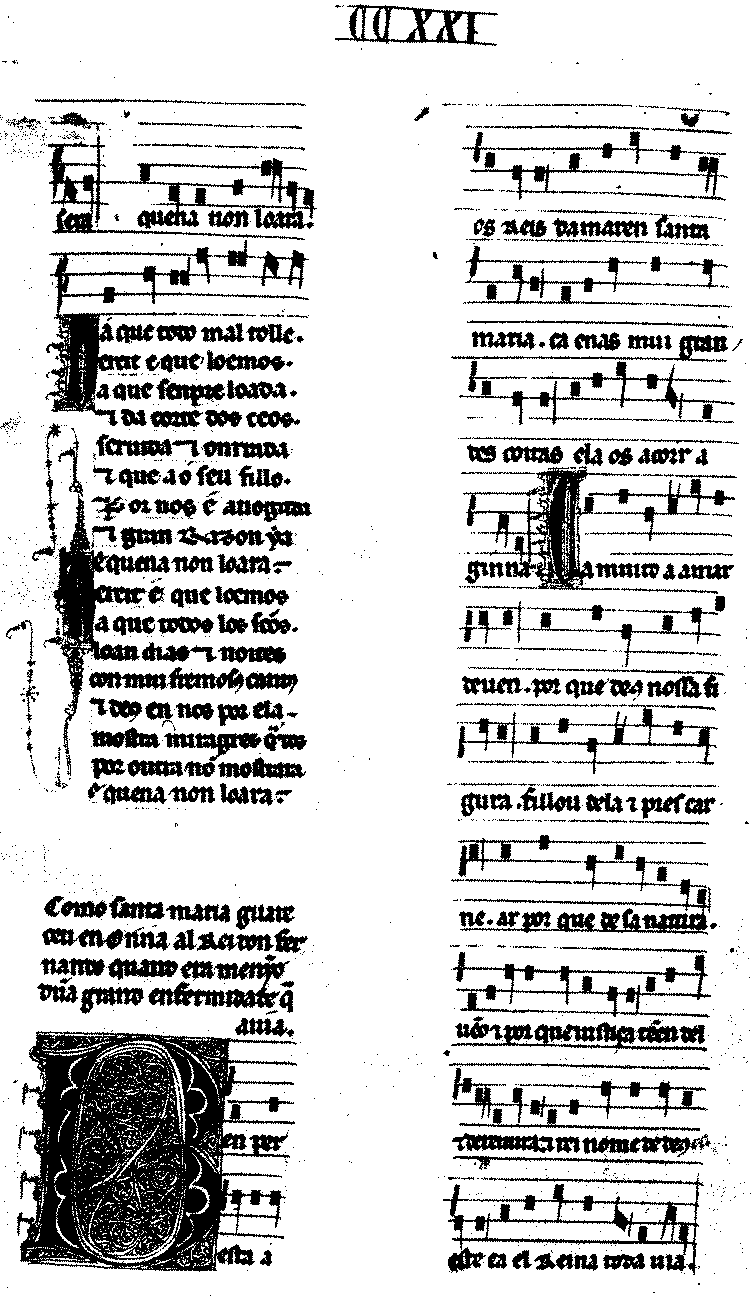
- a. 1284, Alfonso X of Castile, Cantigas de Santa Maria, Códice de los músicos, cantiga 221 (facsimile):
- Como ſanta maria guareceu en Onna al Rei don fernando quand era menỹo dũa grand enfermidade q̇ auia.
- How Holy Mary cured King Ferdinand in Oña of a great sickness that he had when he was a child.
- 1261, A. Martínez Salazar, editor, Documentos gallegos de los siglos XIII al XVI, A Coruña: Casa de la Misericordia, page 33:
- Auos Joã Perez de Salto Juiz del Rey na terra de Pruços. ea uos Roy Martijz meu merino de Nendos et de Pruços. ea uos Pedro Suarez de Betanços saude et graça. sabades que eu receby carta del Rey aque uos enuyo ensarrada éésta mya et mandouos que Logo enpresente ueyades esta carta del Rey et que cumprades todalas cousas que éénla manda
- To you, Xoán Pérez de Salto, King's judge in the land of Pruzos; and to you, Roi Martís, my official in Nendos and Pruzos; and to you, Pedro Suárez de Betanzos; health and grace.
You must know that I have received a letter of the King, which I send to you enclosed in this one of mine, and I order you to promptly watch this letter of the King and to accomplish everything ordered in it
- To you, Xoán Pérez de Salto, King's judge in the land of Pruzos; and to you, Roi Martís, my official in Nendos and Pruzos; and to you, Pedro Suárez de Betanzos; health and grace.
Usage notes
This word was usually preceded by the definite article el, instead of o, when in reference to the respective ruling kings in both Galicia and Portugal.
Related terms
Descendants
See also
Further reading
- Ferreiro, Manuel (2014–2026), “rei”, in Universo Cantigas: edición crítica da poesía medieval galego-portuguesa [Universo Cantigas: critical edition of Galician-Portuguese medieval poetry] (in Galician), A Coruña: University of A Coruña, →ISSN
- Seoane, Ernesto Xosé González; Granja, María Álvarez de la; Agrelo, Ana Isabel Boullón (2006–2022), “rei”, in Dicionario de Dicionarios do galego medieval [Dictionary of dictionaries of Medieval Galician] (in Galician), Santiago de Compostela: Instituto da Lingua Galega
Old Occitan
Alternative forms
Etymology
From Latin rēx, rēgem.
Noun
rei m (oblique plural reis, nominative singular reis, nominative plural rei)
- king (male monarch)
Coordinate terms
- reina (“queen”)
Descendants
Papiamentu

Etymology
Derived from Portuguese rei.
Noun
rei
Pohnpeian
Etymology
(This etymology is missing or incomplete. Please add to it, or discuss it at the Etymology scriptorium.)
Pronunciation
- IPA(key): /rɛj/
- Rhymes: -ɛj
Verb
rei (transitive reid) (intransitive)
Derived terms
- Reilap
- reirei
References
- “rei”, in New Pohnpeian-English Online Dictionary[2], Honolulu, HI: University of Hawaiʻi
Polish
Pronunciation
- IPA(key): /ˈrɛ.i/
- Rhymes: -ɛi
- Syllabification: re‧i
Noun
rei
- inflection of reja:
- genitive singular/plural
- dative/locative singular
Portuguese

Alternative forms
- rey (obsolete)
Etymology
Inherited from Old Galician-Portuguese rei, from Latin rēgem (“king”), from Proto-Indo-European *h₃rḗǵs (“rules”). Compare Galician and Fala rei.
Pronunciation
- (Brazil) IPA(key): /ˈʁej/ [ˈheɪ̯]
- (Rio de Janeiro) IPA(key): /ˈʁej/ [ˈχeɪ̯]
- (Portugal) IPA(key): /ˈʁɐj/
- (Northern Portugal) IPA(key): /ˈʁej/
- (Central Portugal) IPA(key): /ˈʁej/
- (Southern Portugal) IPA(key): /ˈʁe/
Noun
rei m (plural reis, feminine rainha, feminine plural rainhas)
- king (male monarch)
- (chess) king (chess piece)
- (card games) king (playing card)
Usage notes
Derived terms
- à-d'el-rei
- aqui-d'el-rei
- aqui-d'el-rei, aqui-del-rei
- astro-rei
- bolo-rei
- charuto-do-rei
- círio-do-rei
- desporto-rei
- Dia de Reis
- el-rei
- falar com o rei na barriga
- milho-rei
- pássaro-rei
- peixe-rei
- rei morto, rei posto
- roxo-rei
- sem rei nem roque
- semirrei
- solho-rei
- tentilhão-rei-cinzento
- tentilhão-rei-vermelho
- vice-rei
- vizo-rei
Related terms
Descendants
See also
| Chess pieces in Portuguese · peças de xadrez (layout · text) | |||||
|---|---|---|---|---|---|
|
|
|
|
|
|
|
| rei | rainha, dama | torre | bispo | cavalo | peão |
| Playing cards in Portuguese · cartas de baralho (layout · text) | ||||||
|---|---|---|---|---|---|---|

|
|
|
|
|
|
|
| ás | dois, duque | três, terno | quatro, quadra | cinco, quina | seis, sena | sete, bisca, manilha |

|
|
|
|
|
|

|
| oito | nove | dez | valete | dama, rainha | rei | jóquer, curinga |
Further reading
- “rei”, in Dicionário Aulete Digital (in Portuguese), Rio de Janeiro: Lexikon Editora Digital, 2008–2026
- “rei”, in Dicionário Infopédia da Língua Portuguesa (in Portuguese), Porto: Porto Editora, 2003–2026
- “rei”, in Michaelis Dicionário Brasileiro da Língua Portuguesa (in Portuguese), São Paulo: Editora Melhoramentos, 2015–2026, →ISBN
- “rei”, in Dicionário Priberam da Língua Portuguesa (in Portuguese), Lisbon: Priberam, 2008–2026
Rapa Nui
Noun
rei
Derived terms
Swahili
Pronunciation
Audio (Kenya): (file)
Noun
rei class IX (plural rei class X)
- alternative form of ree
See also
| Playing cards in Swahili · karata za kucheza (layout · text) | ||||||
|---|---|---|---|---|---|---|
|
|
|
|
|
|
|
|
| ree, rea, rei | mbili | tatu | nne | tano | sita | saba |
|
|
|
|
|
|
|
|
| nane | tisa | kumi | ghulamu, mzungu wa tatu | malkia, mzungu wa pili, bibi | mfalme, mzungu wa nne, basha | jokari |
Ternate
Pronunciation
- IPA(key): [ˈɾe.i]
Verb
rei
- (stative) to be lined up
Conjugation
| singular | plural | |||
|---|---|---|---|---|
| inclusive | exclusive | |||
| 1st person | torei | forei | mirei | |
| 2nd person | norei | nirei | ||
| 3rd person |
masculine | orei | irei yorei (archaic) | |
| feminine | morei | |||
| neuter | irei | |||
References
- Rika Hayami-Allen (2001), A descriptive study of the language of Ternate, the northern Moluccas, Indonesia, University of Pittsburgh
- Translingual terms derived from English
- Translingual abbreviations
- Translingual lemmas
- Translingual symbols
- ISO 639-3
- English terms derived from Portuguese
- English lemmas
- English nouns
- English countable nouns
- English nonstandard terms
- English terms with obsolete senses
- en:Historical currencies
- en:Portugal
- Aragonese terms inherited from Latin
- Aragonese terms derived from Latin
- Aragonese terms with IPA pronunciation
- Rhymes:Aragonese/ei̯
- Rhymes:Aragonese/ei̯/1 syllable
- Aragonese lemmas
- Aragonese nouns
- Aragonese countable nouns
- Aragonese masculine nouns
- an:Monarchy
- an:People
- Asturian terms inherited from Latin
- Asturian terms derived from Latin
- Asturian terms with IPA pronunciation
- Rhymes:Asturian/ei̯
- Rhymes:Asturian/ei̯/1 syllable
- Asturian lemmas
- Asturian nouns
- Asturian masculine nouns
- ast:Monarchy
- ast:People
- ast:Insects
- Catalan terms inherited from Old Catalan
- Catalan terms derived from Old Catalan
- Catalan terms inherited from Latin
- Catalan terms derived from Latin
- Catalan terms inherited from Proto-Indo-European
- Catalan terms derived from Proto-Indo-European
- Catalan terms with IPA pronunciation
- Catalan terms with audio pronunciation
- Rhymes:Catalan/ej
- Rhymes:Catalan/ej/1 syllable
- Catalan lemmas
- Catalan nouns
- Catalan countable nouns
- Catalan masculine nouns
- ca:Chess
- Catalan endearing terms
- ca:Monarchy
- ca:Occupations
- Chuukese terms prefixed with re-
- Chuukese terms suffixed with -ei
- Chuukese lemmas
- Chuukese prepositions
- Dutch terms inherited from Middle Dutch
- Dutch terms derived from Middle Dutch
- Dutch terms derived from Picard
- Dutch terms derived from Old French
- Dutch terms with IPA pronunciation
- Dutch terms with audio pronunciation
- Rhymes:Dutch/ɛi̯
- Rhymes:Dutch/ɛi̯/1 syllable
- Dutch lemmas
- Dutch nouns
- Dutch nouns with plural in -en
- Dutch countable nouns
- Dutch masculine nouns
- Galician terms inherited from Old Galician-Portuguese
- Galician terms derived from Old Galician-Portuguese
- Galician terms inherited from Latin
- Galician terms derived from Latin
- Galician terms inherited from Proto-Indo-European
- Galician terms derived from Proto-Indo-European
- Galician terms with IPA pronunciation
- Rhymes:Galician/ej
- Rhymes:Galician/ej/1 syllable
- Galician lemmas
- Galician nouns
- Galician countable nouns
- Galician nouns with multiple plurals
- Galician masculine nouns
- gl:Chess
- gl:Monarchy
- gl:People
- Italian 2-syllable words
- Italian terms with IPA pronunciation
- Rhymes:Italian/ɛi
- Rhymes:Italian/ɛi/2 syllables
- Italian non-lemma forms
- Italian adjective forms
- Japanese non-lemma forms
- Japanese romanizations
- Kabuverdianu terms derived from Portuguese
- Kabuverdianu terms derived from the Proto-Indo-European root *h₃reǵ-
- Kabuverdianu terms derived from Proto-Indo-European
- Kabuverdianu terms derived from Proto-Italic
- Kabuverdianu terms derived from Latin
- Kabuverdianu terms derived from Old Galician-Portuguese
- Kabuverdianu terms derived from the Proto-Indo-European word *h₃rḗǵs
- Kabuverdianu lemmas
- Kabuverdianu nouns
- kea:Fish
- Ladin terms inherited from Latin
- Ladin terms derived from Latin
- Ladin lemmas
- Ladin nouns
- Ladin feminine nouns
- Latin 2-syllable words
- Latin terms with IPA pronunciation
- Latin non-lemma forms
- Latin noun forms
- Latin adjective forms
- Leonese lemmas
- Leonese nouns
- Leonese masculine nouns
- Luxembourgish non-lemma forms
- Luxembourgish verb forms
- Mirandese terms inherited from Latin
- Mirandese terms derived from Latin
- Mirandese lemmas
- Mirandese nouns
- Mirandese countable nouns
- Mirandese masculine nouns
- Mizo terms inherited from Proto-Kuki-Chin
- Mizo terms derived from Proto-Kuki-Chin
- Mizo lemmas
- Mizo verbs
- Mokilese lemmas
- Mokilese verbs
- Mokilese stative verbs
- Norman terms inherited from Old French
- Norman terms derived from Old French
- Norman terms inherited from Latin
- Norman terms derived from Latin
- Norman lemmas
- Norman nouns
- Norman masculine nouns
- Norwegian Bokmål terms with IPA pronunciation
- Rhymes:Norwegian Bokmål/æɪ
- Rhymes:Norwegian Bokmål/æɪ/1 syllable
- Norwegian Bokmål terms inherited from Old Norse
- Norwegian Bokmål terms derived from Old Norse
- Norwegian Bokmål terms derived from Middle Low German
- Norwegian Bokmål lemmas
- Norwegian Bokmål nouns
- Norwegian Bokmål feminine nouns
- Norwegian Bokmål dialectal terms
- Norwegian Bokmål terms with quotations
- Norwegian Bokmål terms inherited from Proto-Germanic
- Norwegian Bokmål terms derived from Proto-Germanic
- Norwegian Bokmål masculine nouns
- Norwegian Bokmål nouns with multiple genders
- nb:Folklore
- Norwegian Bokmål non-lemma forms
- Norwegian Bokmål verb forms
- Norwegian Nynorsk terms inherited from Old Norse
- Norwegian Nynorsk terms derived from Old Norse
- Norwegian Nynorsk terms inherited from Proto-Germanic
- Norwegian Nynorsk terms derived from Proto-Germanic
- Norwegian Nynorsk doublets
- Norwegian Nynorsk lemmas
- Norwegian Nynorsk nouns
- Norwegian Nynorsk feminine nouns
- Norwegian Nynorsk terms with archaic senses
- Norwegian Nynorsk poetic terms
- nn:Folklore
- Norwegian Nynorsk non-lemma forms
- Norwegian Nynorsk verb forms
- Occitan terms inherited from Old Occitan
- Occitan terms derived from Old Occitan
- Occitan terms inherited from Latin
- Occitan terms derived from Latin
- Occitan terms with IPA pronunciation
- Occitan terms with audio pronunciation
- Occitan lemmas
- Occitan nouns
- Occitan countable nouns
- Occitan masculine nouns
- Old French lemmas
- Old French nouns
- Old French masculine nouns
- Anglo-Norman
- Old French terms with quotations
- Old Galician-Portuguese terms derived from the Proto-Indo-European root *h₃reǵ-
- Old Galician-Portuguese terms derived from the Proto-Indo-European word *h₃rḗǵs
- Old Galician-Portuguese terms inherited from Proto-Indo-European
- Old Galician-Portuguese terms derived from Proto-Indo-European
- Old Galician-Portuguese terms derived from Proto-Italic
- Old Galician-Portuguese terms derived from Latin
- Old Galician-Portuguese terms inherited from Latin
- Old Galician-Portuguese terms inherited from Proto-Italic
- Old Galician-Portuguese terms with IPA pronunciation
- Old Galician-Portuguese lemmas
- Old Galician-Portuguese nouns
- Old Galician-Portuguese masculine nouns
- Old Galician-Portuguese terms with quotations
- roa-opt:Monarchy
- roa-opt:Nobility
- Old Occitan terms inherited from Latin
- Old Occitan terms derived from Latin
- Old Occitan lemmas
- Old Occitan nouns
- Old Occitan masculine nouns
- Papiamentu terms derived from Proto-Indo-European
- Papiamentu terms derived from Old Galician-Portuguese
- Papiamentu terms derived from Latin
- Papiamentu terms derived from Portuguese
- Papiamentu terms derived from the Proto-Indo-European word *h₃rḗǵs
- Papiamentu terms derived from the Proto-Indo-European root *h₃reǵ-
- Papiamentu terms derived from Proto-Italic
- Papiamentu lemmas
- Papiamentu nouns
- Pohnpeian terms with IPA pronunciation
- Rhymes:Pohnpeian/ɛj
- Rhymes:Pohnpeian/ɛj/1 syllable
- Pohnpeian lemmas
- Pohnpeian verbs
- Pohnpeian intransitive verbs
- Polish 2-syllable words
- Polish terms with IPA pronunciation
- Rhymes:Polish/ɛi
- Rhymes:Polish/ɛi/2 syllables
- Polish non-lemma forms
- Polish noun forms
- Portuguese terms derived from Latin
- Portuguese terms inherited from Old Galician-Portuguese
- Portuguese terms inherited from Latin
- Portuguese terms derived from Proto-Italic
- Portuguese terms derived from the Proto-Indo-European word *h₃rḗǵs
- Portuguese terms inherited from Proto-Indo-European
- Portuguese terms derived from Proto-Indo-European
- Portuguese terms derived from the Proto-Indo-European root *h₃reǵ-
- Portuguese terms inherited from Proto-Italic
- Portuguese terms derived from Old Galician-Portuguese
- Portuguese 1-syllable words
- Portuguese terms with IPA pronunciation
- Portuguese terms with audio pronunciation
- Rhymes:Portuguese/ej
- Rhymes:Portuguese/ej/1 syllable
- Rhymes:Portuguese/ɐj
- Rhymes:Portuguese/ɐj/1 syllable
- Portuguese lemmas
- Portuguese nouns
- Portuguese countable nouns
- Portuguese masculine nouns
- pt:Chess
- pt:Card games
- pt:Heads of state
- pt:Monarchy
- Rapa Nui lemmas
- Rapa Nui nouns
- Swahili terms with audio pronunciation
- Swahili lemmas
- Swahili nouns
- Swahili class IX nouns
- sw:Card games
- Ternate terms with IPA pronunciation
- Ternate lemmas
- Ternate verbs
- Ternate stative verbs