fogo
English
Noun
fogo (plural fogos)
- Alternative form of hogo (“strong unpleasant smell”).
- 1824, The New England Farmer, volume 2, page 176:
- And then while you're a cooking, they say, / Such a fogo beclouds all the room, / That the girls have to group out the way, / In search of the tongs or the broom.
References
- “Hogo” in [John Camden Hotten], The Slang Dictionary […], 5th edition, London: Chatto and Windus, 1874, page 193.
Anagrams
Catalan
Pronunciation
- IPA(key): (Northern) [ˈfo̞.ɣu]
- IPA(key): (Balearic, Valencia, Northwestern) [ˈfɔ.ɣo]
- IPA(key): (Central) [ˈfɔ.ɣu]
Verb
fogo
- first-person singular present indicative of fogar
Galician

Alternative forms
- fougo (Galician-Asturian)
Etymology
Inherited from Old Galician-Portuguese fogo, from Latin focum.
Pronunciation
- IPA(key): (standard) /ˈfɔɡo/ [ˈfɔ.ɣ̞ʊ]
- IPA(key): (gheada) /ˈfɔħo/ [ˈfɔ.ħʊ]
- (standard) Rhymes: -ɔɡo
- (gheada) Rhymes: -ɔħo
- Hyphenation: fo‧go
Noun
fogo m (plural fogos)
Related terms
References
- Antón Santamarina, editor (2006–2013), “fogo”, in Dicionario de Dicionarios da lingua galega [Dictionary of Dictionaries of the Galician language] (in Galician), Santiago de Compostela: Instituto da Lingua Galega
- Antón Santamarina, Ernesto X. González Seoane, María Álvarez de la Granja, editors (2003–2018), “fogo”, in Tesouro informatizado da lingua galega (in Galician), Santiago de Compostela: Instituto da Lingua Galega
- Rosario Álvarez Blanco, editor (2014–2024), “fogo”, in Tesouro do léxico patrimonial galego e portugués (in Galician), Santiago de Compostela: Instituto da Lingua Galega, →ISSN
Italian
Etymology
Akin to affogare (“to drown”).
Pronunciation
- IPA(key): /ˈfo.ɡo/
- Rhymes: -oɡo
- Hyphenation: fó‧go
Noun
fogo m (uncountable) (Tuscany)
- suffocation
- Synonym: soffocamento
- a sense of suffocation
Further reading
- “fogo”, in Vocabolario Treccani on line (in Italian), Istituto dell'Enciclopedia Italiana, 2026
Macanese
Etymology
Derived from Portuguese fogo.
Noun
fogo
Old Galician-Portuguese
Alternative forms
- ffogo, foguo
Etymology
Inherited from Latin focum. Cognate with Old Spanish fuego, Old Occitan foc, Old French feu and Old Italian foco.
Pronunciation
Noun
fogo m (plural fogos)
- fire
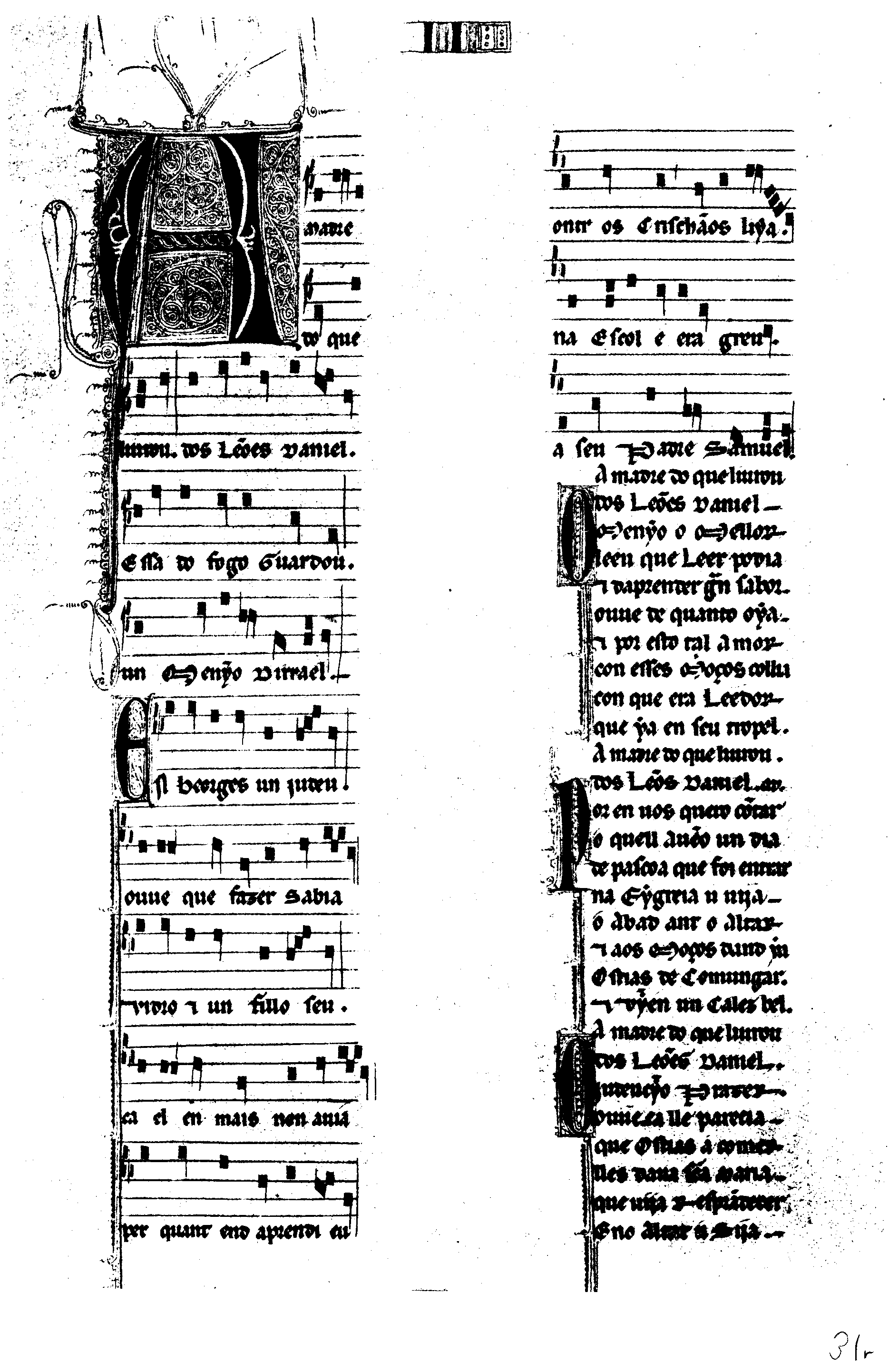
- a. 1284, Alfonso X of Castile, Cantigas de Santa Maria, Códice de los músicos, cantiga 4 (facsimile):
- A madre do que liurou / dos Leões Daniel / Eſſa do fogo Guardou / un Menỹo Dirrael.
- The Mother of Him who delivered Daniel from the lions saved a little boy of the tribe of Israel from the fire.
Descendants
References
Portuguese

Etymology
Inherited from Old Galician-Portuguese fogo, from Latin focum. Cognate with Galician fogo, Spanish fuego, Catalan foc, Occitan fuòc, French feu, Italian fuoco and Romanian foc. Doublet of foco.
Pronunciation
- (Brazil) IPA(key): /ˈfo.ɡu/
- (Portugal) IPA(key): /ˈfo.ɡu/ [ˈfo.ɣu]
- (Southern Portugal) IPA(key): /ˈfo.ɡu/
- (Rural Central Brazil) IPA(key): /ˈfo.ɡʷ/
Audio (Brazil): (file) Audio (Portugal (Porto)): (file) - Rhymes: -oɡu
- Hyphenation: fo‧go
Noun
fogo m (plural fogos, metaphonic)
- (uncountable) fire (chemical reaction producing a flame)
- A criança aprendeu a não colocar a mão no fogo da maneira mais difícil.
- The child learned not to put his hand in the fire the hard way.
- fire (destructive occurrence of fire in a certain place)
- Synonym: incêndio
- Um fogo destruiu várias lojas no centro. ― A fire destroyed several shops downtown.
- house, family
- (military) fire (projectiles in mid-air)
- Os soldados avançaram sob fogo pesado. ― The soldiers advanced under heavy fire.
- (poetic) flame (intense emotions)
- a. 1580, Luís Vaz de Camões, “Amor é fogo que arde sem se ver”, in Obras completas de Luis de Camões, published 1843, Rimas:
- Amor he hum fogo que arde ſem ſe ver
- [Amor é um fogo que arde sem se ver]
- Love is a fire that burns unseen
- a device that produces a flame; a lighter or match
- O fumante viu que não tinha fogo. ― The smoker noticed that he didn’t have a lighter.
- (colloquial) heat (tense situation)
- (Brazil, uncountable) pain in the ass (someone or something that is hard to deal with)
- Synonym: fogo na roupa
- Seu filho é fogo. ― Your kid is a pain in the ass.
- (chiefly in the plural) ellipsis of fogo de artifício
Derived terms
- a fogo lento
- abrir fogo
- botar fogo na canjica
- brincar com fogo
- cuspir fogo
- de fogo morto
- entre dois fogos
- entre o fogo e a frigideira
- fogaça
- fogão
- fogaréu
- fogo amigo
- fogo cruzado
- fogo de artifício
- fogo de bilbode
- fogo de monturo
- fogo de palha
- fogo de Santelmo
- fogo de vista
- fogo eterno
- fogo grego
- fogo na roupa
- fogo no parquinho
- fogo no rabo
- fogo posto
- fogo primário
- fogo pulado
- fogo sagrado
- fogo secundário
- fogo selvagem
- fogo-apagou
- fogo-fátuo
- fogoso
- fogueira
- fogueiro
- foguinho
- mentir fogo
- negar fogo
- parede corta-fogo
- pegar fogo
- puxar fogo
- tacar fogo
Related terms
Descendants
- Guinea-Bissau Creole: fugu
- Kabuverdianu: fogu
- Korlai Creole Portuguese: fog
- Kristang: fogu
- Macanese: fogo
Interjection
fogo!
- (military) fire! (an order for soldiers to shoot)
- (Portugal, colloquial) euphemistic form of foda-se
Further reading
- “fogo”, in Dicionário Aulete Digital (in Portuguese), Rio de Janeiro: Lexikon Editora Digital, 2008–2026
- “fogo”, in Dicionário Eletrônico Houaiss [Houaiss Electronic Dictionary] (in Portuguese), São Paulo: UOL, 2004–present
- “fogo”, in Dicionário Infopédia da Língua Portuguesa (in Portuguese), Porto: Porto Editora, 2003–2026
- “fogo”, in Michaelis Dicionário Brasileiro da Língua Portuguesa (in Portuguese), São Paulo: Editora Melhoramentos, 2015–2026, →ISBN
- “fogo”, in Dicionário Priberam da Língua Portuguesa (in Portuguese), Lisbon: Priberam, 2008–2026
Rotuman
Etymology
From Proto-Central Pacific *toŋo, from Proto-Oceanic *toŋoʀ, from Proto-Eastern Malayo-Polynesian *toŋəʀ, from Proto-Central-Eastern Malayo-Polynesian *təŋəʀ, from Proto-Malayo-Polynesian *təŋəʀ. Cognate with Fijian dogo.
Noun
fogo (construct form fog)
- mangrove, particularly:
References
- Churchward, C.M. (1940), “fogo”, in Rotuman Grammar and Dictionary[1], Sydney, Australia: Methodist Church of Australasia, →ISBN, page 204
- Inia, Elizabeth K.; Arntsen, Sofie; Schmidt, Hans; Rensel, Jan; Howard, Alan (1998), “mangrove (Bruguiera gymnorhiza and Rhizophora sp.) fogo; Rhizophora sp. (mangrove) fogo”, in A New Rotuman Dictionary: An English–Rotuman Wordlist[2], Suva, Fiji: Institute of Pacific Studies, University of the South Pacific, →ISBN, pages 83, 112, revision of Rotuman Grammar and Dictionary by Churchward, C.M.
Venetan

Alternative forms
- fógo (obsolete)
Etymology
Pronunciation
- IPA(key): /ˈfo.ɡo/
Noun
fogo m (plural foghi)
- fire
- El fogo el fa całor.
- Fire gives heat.
Derived terms
- fogaron (bonfire, stake)
- foghera (brazier)
- foghista (stoker)
- fogołaro (hearth, fireplace)
- fogozo (passionate, luxurious)
- English lemmas
- English nouns
- English countable nouns
- English terms with quotations
- Catalan terms with IPA pronunciation
- Catalan non-lemma forms
- Catalan verb forms
- Galician terms derived from the Proto-Indo-European root *dʰegʷʰ-
- Galician terms derived from Old Galician-Portuguese
- Galician terms derived from the Proto-Indo-European root *bʰeh₂- (shine)
- Galician terms derived from Latin
- Galician terms inherited from Old Galician-Portuguese
- Galician terms derived from Proto-Indo-European
- Galician terms inherited from Latin
- Galician terms with IPA pronunciation
- Rhymes:Galician/ɔɡo
- Rhymes:Galician/ɔɡo/2 syllables
- Rhymes:Galician/ɔħo
- Rhymes:Galician/ɔħo/2 syllables
- Galician lemmas
- Galician nouns
- Galician countable nouns
- Galician masculine nouns
- gl:Fire
- Italian 2-syllable words
- Italian terms with IPA pronunciation
- Rhymes:Italian/oɡo
- Rhymes:Italian/oɡo/2 syllables
- Italian lemmas
- Italian nouns
- Italian uncountable nouns
- Italian masculine nouns
- Tuscan Italian
- Macanese terms derived from Proto-Indo-European
- Macanese terms derived from Portuguese
- Macanese terms derived from the Proto-Indo-European root *dʰegʷʰ-
- Macanese terms derived from the Proto-Indo-European root *bʰeh₂- (shine)
- Macanese terms derived from Old Galician-Portuguese
- Macanese terms derived from Latin
- Macanese lemmas
- Macanese nouns
- mzs:Fire
- Old Galician-Portuguese terms derived from Latin
- Old Galician-Portuguese terms derived from the Proto-Indo-European root *bʰeh₂- (shine)
- Old Galician-Portuguese terms derived from the Proto-Indo-European root *dʰegʷʰ-
- Old Galician-Portuguese terms inherited from Latin
- Old Galician-Portuguese terms derived from Proto-Indo-European
- Old Galician-Portuguese terms with IPA pronunciation
- Rhymes:Old Galician-Portuguese/ɔɡo
- Rhymes:Old Galician-Portuguese/ɔɡo/2 syllables
- Old Galician-Portuguese lemmas
- Old Galician-Portuguese nouns
- Old Galician-Portuguese masculine nouns
- Old Galician-Portuguese terms with quotations
- roa-opt:Fire
- Portuguese terms derived from the Proto-Indo-European root *bʰeh₂- (shine)
- Portuguese terms derived from the Proto-Indo-European root *dʰegʷʰ-
- Portuguese terms derived from Latin
- Portuguese terms inherited from Old Galician-Portuguese
- Portuguese terms inherited from Latin
- Portuguese terms derived from Proto-Indo-European
- Portuguese terms derived from Old Galician-Portuguese
- Portuguese doublets
- Portuguese 2-syllable words
- Portuguese terms with IPA pronunciation
- Portuguese 1-syllable words
- Portuguese terms with audio pronunciation
- Rhymes:Portuguese/oɡu
- Rhymes:Portuguese/oɡu/2 syllables
- Portuguese lemmas
- Portuguese nouns
- Portuguese countable nouns
- Portuguese nouns with metaphony
- Portuguese masculine nouns
- Portuguese uncountable nouns
- Portuguese terms with usage examples
- pt:Military
- Portuguese poetic terms
- Portuguese colloquialisms
- Brazilian Portuguese
- Portuguese ellipses
- Portuguese interjections
- European Portuguese
- Portuguese euphemisms
- pt:Fire
- Rotuman terms inherited from Proto-Oceanic
- Rotuman terms derived from Proto-Oceanic
- Rotuman terms inherited from Proto-Eastern Malayo-Polynesian
- Rotuman terms derived from Proto-Eastern Malayo-Polynesian
- Rotuman terms inherited from Proto-Central-Eastern Malayo-Polynesian
- Rotuman terms derived from Proto-Central-Eastern Malayo-Polynesian
- Rotuman terms inherited from Proto-Malayo-Polynesian
- Rotuman terms derived from Proto-Malayo-Polynesian
- Rotuman lemmas
- Rotuman nouns
- rtm:Malpighiales order plants
- Venetan terms inherited from Latin
- Venetan terms derived from Latin
- Venetan terms with IPA pronunciation
- Venetan lemmas
- Venetan nouns
- Venetan masculine nouns
- Venetan terms with usage examples