done
English
Etymology 1
From Middle English don, idon, ydon, ȝedon, gedon, from Old English dōn, ġedōn, from Proto-West Germanic *dān, from Proto-Germanic *dēnaz (past participle of *dōną (“to do”)). Equivalent to do + -en (past participle ending). Cognate with Scots dune, deen, dene, dane (“done”), Saterland Frisian däin (“done”), West Frisian dien (“done”), Dutch gedaan (“done”), German Low German daan (“done”), German getan (“done”). More at do.
Alternative forms
Pronunciation
- (Received Pronunciation, US) IPA(key): /dʌn/, enPR: dŭn
- (Northern England, Ireland) IPA(key): /dʊn/
- (Early Modern) IPA(key): /dʊn/, (rare or dialectal) /duːn/[1]
Audio (Canada): (file) - Rhymes: -ʌn
- Homophones: dun, Donn, Donne, Dunn, Dunne
Adjective
done (comparative more done, superlative most done)
- Having completed or finished an activity.
- (of an activity or task) Completed or finished.
- Synonyms: completed, concluded, finished, in the books; see also Thesaurus:finished
- I'll text you when the movie's done.
- (of food) Ready, fully cooked.
- As soon as the potatoes are done we can sit down and eat.
- Being exhausted, used up, or fully spent.
- When the water is done we will only be able to go on for a few days.
- Without hope or prospect of completion or success.
- Synonyms: accursed, fey, undone; see also Thesaurus:doomed
- He is done, after three falls there is no chance he will be able to finish.
- Fashionable, socially acceptable, tasteful.
- Synonyms: a la mode, natty, trendy; see also Thesaurus:fashionable
- I can't believe he just walked up and spoke to her like that, those kind of things just aren't done!
- What is the done thing these days? I can't keep up!
- (Canada, Philadelphia, Scotland, predicative) Finished with (something).
- I'm done my homework.
- (colloquial) Punished.
- Synonyms: chastised; see also Thesaurus:punished
- 2012 May 1, Liam Houlihan, Return To The Badlands: Twelve Enthralling True Cases Of Crooks, Cults And Crackpots, Melbourne Univ. Publishing, →ISBN:
- I can say what I like now because I am mental and I can't get done for it.
- 2021, Brooke van Velden, comments in the New Zealand Parliament regarding the COVID-19 Response (Management Measures) Legislation Bill:
- Normally, when you pass a law in New Zealand, you can't be done for it if you broke the law in the past.
Derived terms
- after all is said and done
- and be done with it
- and have done with it
- a woman's work is never done
- bedone
- be done for
- be done with
- be done with it
- Bidone
- consider it done
- done and dusted
- done brown
- done deal
- done dotta
- done for
- done gone
- done like a dinner
- doneness
- doner
- donesies
- done thing
- done up
- done up like a dog's dinner
- done up like a kipper
- dunzo
- easier said than done
- fordone
- get done for
- get 'er done
- get the job done
- get work done
- half-done
- hard done by
- have done
- have done with
- have work done
- no harm done
- no sooner said than done
- not done
- one-and-done
- over and done
- over and done with
- overdone
- predone
- said and done
- that's done it
- the damage is done
- underdone
- undone
- well begun is half done
- well done
- well-done
- what has someone done
- what's done is done
- when all is said and done
Translations
|
|
|
Verb
done
- past participle of do
- There's nothing to be done.
- (nonstandard, dialectal) simple past of do; did.
- 1985 December 14, Jack Leck, “Stick Together”, in Gay Community News, volume 13, number 22, page 4:
- I knew I done the right thing and I'd do it all over again.
- (Can we date this quote?) Be Still... and Know That I Am God: Devotions for Every Day of the Year
- She opened it up to find a quarter and a note scrawled in childish letters that said, "I done it for love."
- (African-American Vernacular, Southern US, Cockney, auxiliary, taking a past tense) Used in forming the perfective aspect; have.
- I woke up and found out she done left.
- 2020, Moneybagg Yo, “Thug Cry”:
- I done made some real bad choices with my life
- 2022, Nas, “Legit”, in King's Disease III:
- On my soul, this for my kids and the cold shit I done did
Interjection
done
- Expresses that a task has been completed.
- Expresses agreement to and conclusion of a proposal, a set of terms, a sale, a request, etc.
- 1994, René Echevarria, “Firstborn”, in Star Trek: The Next Generation, season 7, episode 21, Jonathan Frakes and Joel Swetow (actors):
- Riker: Would you be interested in selling me the ore you're carrying? / Yog: No. I have a buyer. / Riker: You haven't heard my offer. Half a gram of Anjoran biomimetic gel. / Yog: Done.
Synonyms
- (on finishing a task): all done, finished, there, voilà
- (on agreeing to a deal): agreed, done and done, you have a deal
Translations
Etymology 2
From Middle English don; equivalent to do + -en (plural simple present ending).
Verb
done
- (obsolete) plural simple present of do
- 1579, Immeritô [pseudonym; Edmund Spenser], “Maye. Ægloga Quinta.”, in The Shepheardes Calender: […], London: […] Hugh Singleton, […], →OCLC, folio 18, verso:
- The while their Foes done eache of hem ſcoꝛne.
- 1606, N[athaniel] B[axter], Sir Philip Sydneys Ouránia, That Is, Endimions Song and Tragedie, Containing All Philosophie, London: […] Ed. Allde, for Edward White, […], →OCLC, signature D2, recto:
- O you Cæleſtiall euer-liuing fires,
That done inflame our hearts with high deſires; […]
- 1647, Henry More, “[Philosophical Poems.] Antipsychopannychia or The Third Book of the Song of the Soul: Containing a Confutation of the Sleep of the Soul after Death. The Præexistency of the Soul, […].”, in Alexander B[alloch] Grosart, editor, The Complete Poems of Dr. Henry More (1614–1687) […] (Chertsey Worthies’ Library), [Edinburgh: […] Edinburgh University Press; Thomas and Archibald Constable, […]] for private circulation, published 1878, →OCLC, stanza 63, page 125, column 1:
- The soul of Naboth lies to Ahab told,
As done the learnèd Hebrew Doctours write, […]
Etymology 3
Alternative forms
- 'done
Pronunciation
- IPA(key): /dəʊn/
Noun
done (uncountable)
- (slang) Clipping of methadone.
- on the done
Etymology 4
Noun
done (plural dones)
- Alternative form of dhoni.
References
- “done”, in OneLook Dictionary Search.
- ^ Dobson, E[ric] J. (1957), English pronunciation 1500-1700[1], second edition, volume II: Phonology, Oxford: Clarendon Press, published 1968, →OCLC, § 4, page 452.
Anagrams
Basque
Etymology
From a Romance development of Latin domine. Compare Spanish don.
Pronunciation
Audio: (file)
- IPA(key): /done/ [d̪o.ne]
- Rhymes: -one, -e
- Hyphenation: do‧ne
Adjective
done (not comparable)
Declension
| indefinite | singular | plural | proximal plural | ||
|---|---|---|---|---|---|
| absolutive | done | donea | doneak | doneok | |
| ergative | donek | doneak | doneek | doneok | |
| dative | doneri | doneari | doneei | doneoi | |
| genitive | doneren | donearen | doneen | doneon | |
| comitative | donerekin | donearekin | doneekin | doneokin | |
| causative | donerengatik | donearengatik | doneengatik | doneongatik | |
| benefactive | donerentzat | donearentzat | doneentzat | doneontzat | |
| instrumental | donez | doneaz | doneez | doneotaz | |
| inessive | anim. | donerengan | donearengan | doneengan | doneongan |
| inan. | donetan | donean | doneetan | doneotan | |
| locative | anim. | — | — | — | — |
| inan. | donetako | doneko | doneetako | doneotako | |
| allative | anim. | donerengana | donearengana | doneengana | doneongana |
| inan. | donetara | donera | doneetara | doneotara | |
| terminative | anim. | donerenganaino | donearenganaino | doneenganaino | doneonganaino |
| inan. | donetaraino | doneraino | doneetaraino | doneotaraino | |
| directive | anim. | donerenganantz | donearenganantz | doneenganantz | doneonganantz |
| inan. | donetarantz | donerantz | doneetarantz | doneotarantz | |
| destinative | anim. | donerenganako | donearenganako | doneenganako | doneonganako |
| inan. | donetarako | donerako | doneetarako | doneotarako | |
| ablative | anim. | donerengandik | donearengandik | doneengandik | doneongandik |
| inan. | donetatik | donetik | doneetatik | doneotatik | |
| partitive | donerik | — | — | — | |
| prolative | donetzat | — | — | — | |
Noun
done anim
Declension
| indefinite | singular | plural | proximal plural | |
|---|---|---|---|---|
| absolutive | done | donea | doneak | doneok |
| ergative | donek | doneak | doneek | doneok |
| dative | doneri | doneari | doneei | doneoi |
| genitive | doneren | donearen | doneen | doneon |
| comitative | donerekin | donearekin | doneekin | doneokin |
| causative | donerengatik | donearengatik | doneengatik | doneongatik |
| benefactive | donerentzat | donearentzat | doneentzat | doneontzat |
| instrumental | donez | doneaz | doneez | doneotaz |
| inessive | donerengan | donearengan | doneengan | doneongan |
| locative | — | — | — | — |
| allative | donerengana | donearengana | doneengana | doneongana |
| terminative | donerenganaino | donearenganaino | doneenganaino | doneonganaino |
| directive | donerenganantz | donearenganantz | doneenganantz | doneonganantz |
| destinative | donerenganako | donearenganako | doneenganako | doneonganako |
| ablative | donerengandik | donearengandik | doneengandik | doneongandik |
| partitive | donerik | — | — | — |
| prolative | donetzat | — | — | — |
Derived terms
- donetasun (“sainthood”)
- donetu (“to sanctify”)
Further reading
- “done”, in Euskaltzaindiaren Hiztegia [Dictionary of the Basque Academy] (in Basque), Euskaltzaindia [Royal Academy of the Basque Language]
- “done”, in Orotariko Euskal Hiztegia [General Basque Dictionary], Euskaltzaindia, 1987–2005
Czech
Pronunciation
- IPA(key): [ˈdonɛ]
- Rhymes: -onɛ
- Hyphenation: do‧ne
Noun
done
- vocative singular of don
Anagrams
Dogrib
Etymology
From Proto-Athabaskan *dəneˑ
Noun
done
Ligurian
Etymology
See the etymology of the corresponding lemma form.
Pronunciation
- IPA(key): /ˈdo.ne/
- Rhymes: -one
- Hyphenation: do‧ne
Noun
done
- plural of dona
Middle English
Etymology 1
From Old French don.
Noun
done
- (rare) gift, present
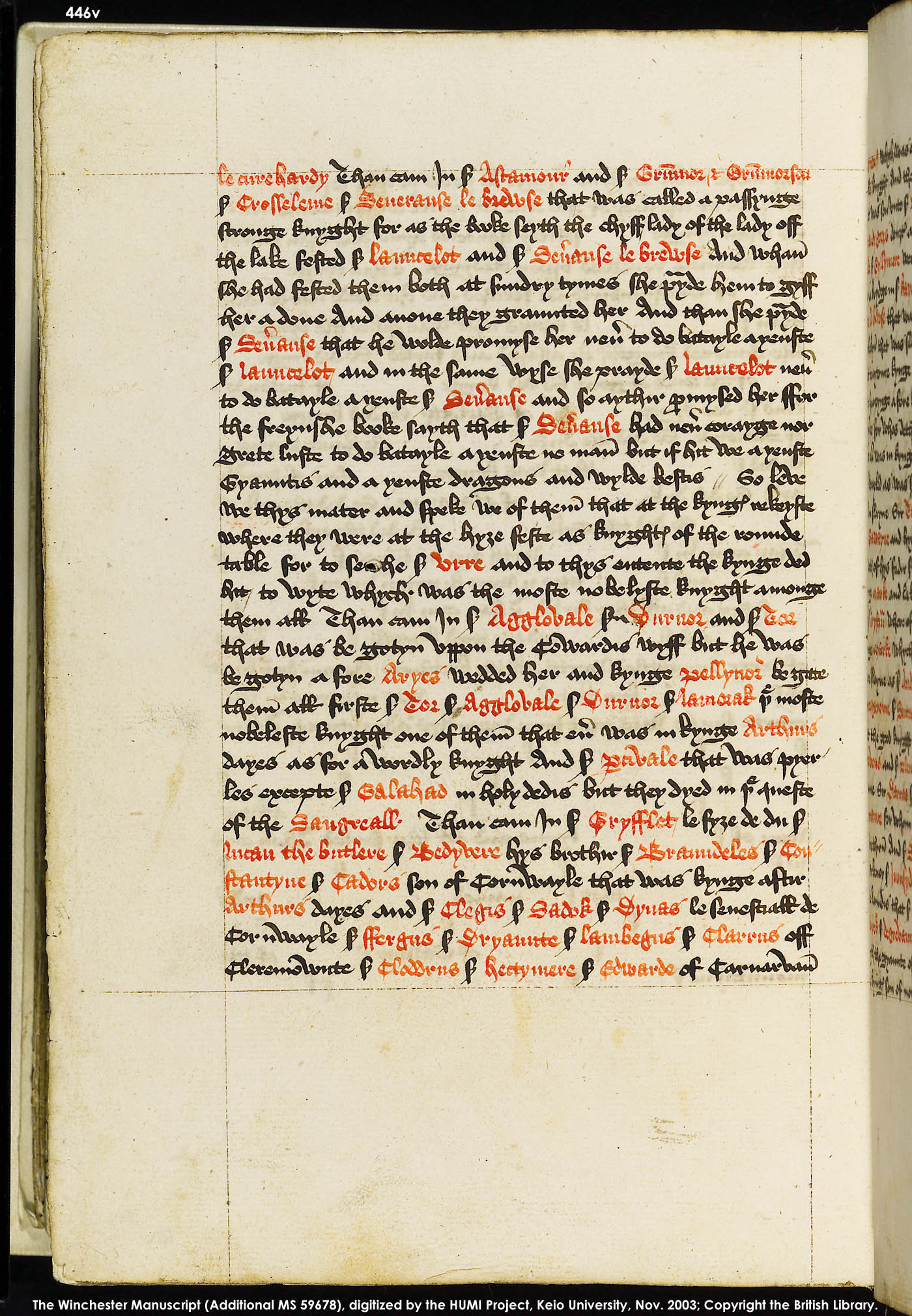
- 1470–1483 (date produced), Thom̃s Malleorre [i.e., Thomas Malory], “[Launcelot and Guinevere]”, in Le Morte Darthur (British Library Additional Manuscript 59678), [England: s.n.], folio 446, verso, lines 1–6:
- Than cam In ẜ Aſcamour and ẜ Grūmor ⁊ Grūmorſon ẜ Croſſeleme ẜ Seuerauſe le brewſe that was called a paſſynge ſtronge knyght for as the booke ſeyth the chyff lady of the lady off the lake feſted ẜ Launcelot and ẜ Seu[er]auſe le brewſe And whan ſhe had feſted them both at ſundry tymes ſhe þ[ra]yde hem to gyff her a done
- Then came in Sir Astamor, and Sir Gromere, Grummor’s son, Sir Crosselm, Sir Servause le Breuse, that was called a passing strong knight, for as the book saith, the chief Lady of the Lake feasted Sir Launcelot and Servause le Breuse, and when she had feasted them both at sundry times she prayed them to give her a boon.
Etymology 2
Noun
done
- (West Midland) alternative form of dyne
Spanish
Verb
done
- inflection of donar:
- first/third-person singular present subjunctive
- third-person singular imperative
Venetan
Noun
done
- plural of dona
- English terms derived from the Proto-Indo-European root *dʰeh₁-
- English terms inherited from Proto-West Germanic
- English terms derived from Proto-Indo-European
- English terms derived from Middle English
- English terms derived from Proto-Germanic
- English terms inherited from Middle English
- English terms derived from Old English
- English terms derived from Proto-West Germanic
- English terms inherited from Proto-Indo-European
- English terms inherited from Proto-Germanic
- English terms inherited from Old English
- English terms suffixed with -en (past participle)
- English 1-syllable words
- English terms with IPA pronunciation
- English terms with audio pronunciation
- Rhymes:English/ʌn
- Rhymes:English/ʌn/1 syllable
- English terms with homophones
- English lemmas
- English adjectives
- English terms with usage examples
- Canadian English
- Philadelphia English
- Scottish English
- English colloquialisms
- English terms with quotations
- English non-lemma forms
- English verb forms
- English nonstandard terms
- English dialectal terms
- African-American Vernacular English
- Southern US English
- Cockney English
- English auxiliary verbs
- English interjections
- English terms suffixed with -en (plural present)
- English terms with obsolete senses
- English nouns
- English uncountable nouns
- English slang
- English clippings
- English countable nouns
- English irregular past participles
- Basque terms borrowed from Romance languages
- Basque terms derived from Romance languages
- Basque terms derived from Latin
- Basque terms with audio pronunciation
- Basque 2-syllable words
- Basque terms with IPA pronunciation
- Rhymes:Basque/one
- Rhymes:Basque/one/2 syllables
- Rhymes:Basque/e
- Rhymes:Basque/e/2 syllables
- Basque lemmas
- Basque adjectives
- Basque uncomparable adjectives
- Basque nouns
- Basque animate nouns
- Czech terms with IPA pronunciation
- Rhymes:Czech/onɛ
- Rhymes:Czech/onɛ/2 syllables
- Czech non-lemma forms
- Czech noun forms
- Dogrib terms inherited from Proto-Athabaskan
- Dogrib terms derived from Proto-Athabaskan
- Dogrib lemmas
- Dogrib nouns
- Ligurian terms with IPA pronunciation
- Rhymes:Ligurian/one
- Rhymes:Ligurian/one/2 syllables
- Ligurian non-lemma forms
- Ligurian noun forms
- Middle English terms derived from the Proto-Indo-European root *deh₃-
- Middle English terms derived from Proto-Indo-European
- Middle English terms derived from Archaic Latin
- Middle English terms derived from Old French
- Middle English terms derived from Proto-Italic
- Middle English terms borrowed from Old French
- Middle English terms derived from Latin
- Middle English lemmas
- Middle English nouns
- Middle English rare terms
- Middle English terms with quotations
- Middle English variant lemmas
- West Midland Middle English
- Spanish non-lemma forms
- Spanish verb forms
- Venetan non-lemma forms
- Venetan noun forms