vea
See also: Appendix:Variations of "vea"
Ese
Noun
vea
Estonian
Noun
vea
- genitive singular of viga
Fala
Pronunciation
- IPA(key): /ˈbea/
- Rhymes: -ea
- Syllabification: ve‧a
Etymology 1
Etymology tree
Alternative forms
- veda (Lagarteiru, Valverdeñu)
Noun
vea f (plural veas)
- prohibition, ban
- closed season (period during which hunting is prohibited)
Etymology 2
Inherited from Old Galician-Portuguese vẽa, from Latin vēna.
Noun
vea f (plural veas)
Etymology 3
Inherited from Old Galician-Portuguese avẽa, from Latin avēna (“oats”).
Alternative forms
- avea (Valverdeñu)
Noun
vea f (plural veas)
- (Lagarteiru, Mañegu) oats
References
- Valeš, Miroslav (2021), Diccionariu de A Fala: lagarteiru, mañegu, valverdeñu (web), 2nd edition, Minde, Portugal: CIDLeS, published 2022, →ISBN, page 279
Galician
Etymology
From Old Galician-Portuguese vẽa, vea (13th century, Cantigas de Santa Maria), from Latin vēna. Cognate with Portuguese veia and Spanish vena.
Pronunciation
- IPA(key): /ˈbe.a̝/
Noun
vea f (plural veas)
- (anatomy) vein
- 1390, J. L. Pensado Tomé, editor, Os Miragres de Santiago. Versión gallega del Códice latino del siglo XII atribuido al papa Calisto I, Madrid: C.S.I.C., page 136:
- Et moy rregeo tãgeo o corno que pero que era de marfil que o fendeu cõ o bafo, et al quebrantouselle as veas do pescoço et os nerueos
- And very strongly he blew the horn, but since it was made of ivory he broke it with the puff, and also he broke the veins of the neck and the nerves
- 1409, José Luis Pensado Tomé, editor, Rufus, Jordanus: Tratado de Albeitaria, Santiago de Compostela: Centro Ramón Piñeiro, page 141:
- et dos ditos poos deuen vsar nos llugarres neruossos et jntrincados de veas et darterias porque se deuen cauidar de fazer en taes lugares talladuras nen queimaduras a nehua gisa
- and the aforementioned powders must be used in the [horse's] parts with nerves and entangled with veins and arteries, because one must refrain from cutting and burning those place in any way
- (geology) vein
- vein (a stripe or streak of a different colour or composition)
Derived terms
- vea da arca (basilic vein)
- vea da ouriña (urethra)
Related terms
- venoso
- Vieiro
References
- Seoane, Ernesto Xosé González; Granja, María Álvarez de la; Agrelo, Ana Isabel Boullón (2006–2022), “vea”, in Dicionario de Dicionarios do galego medieval [Dictionary of dictionaries of Medieval Galician] (in Galician), Santiago de Compostela: Instituto da Lingua Galega
- Barreiro, Xavier Varela; Guinovart, Xavier Gómez (2006–2018), “vea”, in Corpus Xelmírez: corpus lingüístico da Galicia medieval [Corpus Xelmírez: linguistic corpus of Medieval Galicia] (in Galician), Santiago de Compostela: Instituto da Lingua Galega
- Antón Santamarina, editor (2006–2013), “vea”, in Dicionario de Dicionarios da lingua galega [Dictionary of Dictionaries of the Galician language] (in Galician), Santiago de Compostela: Instituto da Lingua Galega
- Antón Santamarina, Ernesto X. González Seoane, María Álvarez de la Granja, editors (2003–2018), “vea”, in Tesouro informatizado da lingua galega (in Galician), Santiago de Compostela: Instituto da Lingua Galega
Norwegian Bokmål
Noun
vea n
- definite plural of ve
Norwegian Nynorsk
Pronunciation
- Homophone: veda
Noun
vea n
- definite plural of ve
Old Galician-Portuguese
Etymology 1
From Latin vela, plural of vēlum (“sail of a ship”), from Proto-Indo-European *weg (“to weave a web”).
Alternative forms
Pronunciation
- IPA(key): /ˈβe.a/
Noun
vea f (plural veas)
- (nautical) sail
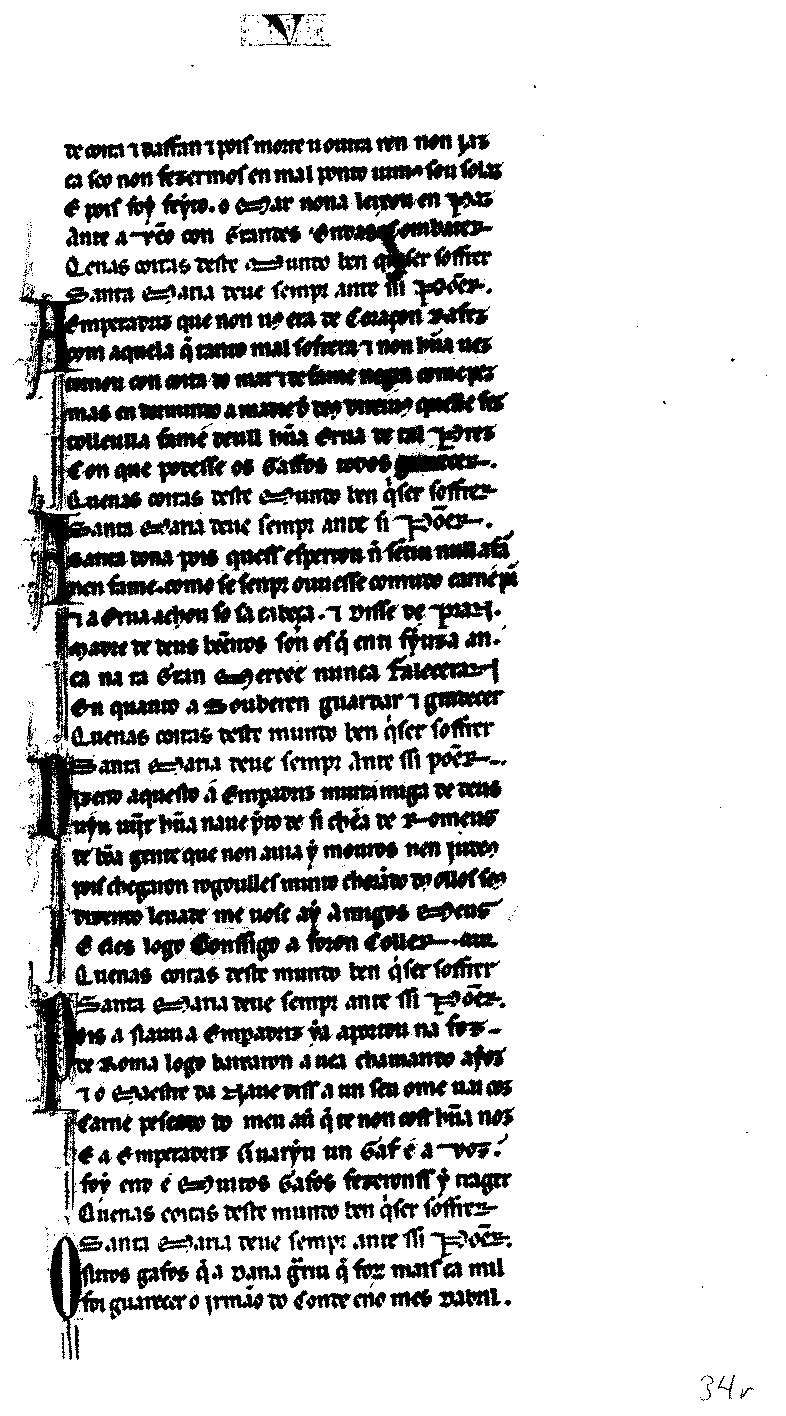
- a. 1284, Alfonso X of Castile, Cantigas de Santa Maria, Códice de los músicos, cantiga 5 (facsimile):
- baixaron a uea
- (they) lowered the sail
- baixaron a uea
Etymology 2
Noun
vea f (plural veas)
- alternative form of vẽa
Spanish
Pronunciation
- IPA(key): /ˈbea/ [ˈbe.a]
- Rhymes: -ea
- Syllabification: ve‧a
Verb
vea
- inflection of ver:
- first/third-person singular present subjunctive
- third-person singular imperative
Walloon
Etymology
From Old French veel, vedel, inherited from Latin vitellus.
Pronunciation
- IPA(key): /vja/, /vɛː/
Audio: (file) Audio: (file)
Noun
vea
- (animal) calf
Categories:
- Ese lemmas
- Ese nouns
- Estonian non-lemma forms
- Estonian noun forms
- Fala terms with IPA pronunciation
- Rhymes:Fala/ea
- Rhymes:Fala/ea/2 syllables
- Fala terms derived from Old Spanish
- Fala terms derived from the Proto-Indo-European root *weth₂-
- Fala terms derived from Spanish
- Fala terms borrowed from Spanish
- Fala terms derived from Old Latin
- Fala terms derived from Proto-Indo-European
- Fala terms derived from Latin
- Fala lemmas
- Fala nouns
- Fala countable nouns
- Fala feminine nouns
- Fala terms inherited from Latin
- Fala terms derived from Old Galician-Portuguese
- Fala terms inherited from Old Galician-Portuguese
- fax:Anatomy
- Lagarteiru Fala
- Mañegu Fala
- Galician terms inherited from Old Galician-Portuguese
- Galician terms derived from Old Galician-Portuguese
- Galician terms inherited from Latin
- Galician terms derived from Latin
- Galician terms with IPA pronunciation
- Galician lemmas
- Galician nouns
- Galician countable nouns
- Galician feminine nouns
- gl:Anatomy
- Galician terms with quotations
- gl:Geology
- Norwegian Bokmål non-lemma forms
- Norwegian Bokmål noun forms
- Norwegian Nynorsk terms with homophones
- Norwegian Nynorsk non-lemma forms
- Norwegian Nynorsk noun forms
- Old Galician-Portuguese terms derived from Latin
- Old Galician-Portuguese terms derived from Proto-Indo-European
- Old Galician-Portuguese terms with IPA pronunciation
- Old Galician-Portuguese lemmas
- Old Galician-Portuguese nouns
- Old Galician-Portuguese feminine nouns
- roa-opt:Nautical
- Old Galician-Portuguese terms with quotations
- Spanish 2-syllable words
- Spanish terms with IPA pronunciation
- Rhymes:Spanish/ea
- Rhymes:Spanish/ea/2 syllables
- Spanish non-lemma forms
- Spanish verb forms
- Walloon terms inherited from Old French
- Walloon terms derived from Old French
- Walloon terms inherited from Latin
- Walloon terms derived from Latin
- Walloon terms with IPA pronunciation
- Walloon terms with audio pronunciation
- Walloon lemmas
- Walloon nouns