上下
Chinese
up; on; on top up; on; on top; upon; first; previous or last; upper; higher; above; previous; to climb; to go into; to go up |
under; next; lower under; next; lower; below; underneath; down(wards); to go down; latter | ||
|---|---|---|---|
| simp. and trad. (上下) |
上 | 下 | |
Etymology 1
Pronunciation
- Mandarin
- Cantonese (Jyutping): soeng6 haa6
- Hakka
- Jin (Wiktionary): son3 xia3
- Southern Min (Hokkien, POJ): siōng-hā
- Mandarin
- (Standard Chinese)+
- Hanyu Pinyin: shàngxià
- Zhuyin: ㄕㄤˋ ㄒㄧㄚˋ
- Tongyong Pinyin: shàngsià
- Wade–Giles: shang4-hsia4
- Yale: shàng-syà
- Gwoyeu Romatzyh: shanqshiah
- Palladius: шанся (šansja)
- Sinological IPA (key): /ʂɑŋ⁵¹⁻⁵³ ɕi̯ä⁵¹/
- (Standard Chinese)+
- Cantonese
- (Standard Cantonese, Guangzhou–Hong Kong)+
- Jyutping: soeng6 haa6
- Yale: seuhng hah
- Cantonese Pinyin: soeng6 haa6
- Guangdong Romanization: sêng6 ha6
- Sinological IPA (key): /sœːŋ²² haː²²/
- (Standard Cantonese, Guangzhou–Hong Kong)+
- Hakka
- (Sixian, incl. Miaoli and Neipu)
- Pha̍k-fa-sṳ: song-ha / song-hâ / sông-hâ
- Hakka Romanization System: song ha / song haˊ / songˊ haˊ
- Hagfa Pinyim: song4 ha4 / song4 ha1 / song1 ha1
- Sinological IPA: /soŋ⁵⁵ ha⁵⁵/, /soŋ⁵⁵ ha²⁴/, /soŋ²⁴⁻¹¹ ha²⁴/
- (Meixian)
- Guangdong: song1 ha1 / song4 ha4
- Sinological IPA: /sɔŋ⁴⁴ ha⁴⁴/, /sɔŋ⁵³⁻⁵⁵ ha⁵³/
- (Sixian, incl. Miaoli and Neipu)
- Jin
- Southern Min
- (Hokkien: Xiamen)
- Pe̍h-ōe-jī: siōng-hā
- Tâi-lô: siōng-hā
- Phofsit Daibuun: sioxngha
- Sinological IPA (Xiamen): /siɔŋ²²⁻²¹ ha²²/
- (Hokkien: Xiamen)
Noun
上下
Synonyms
Etymology 2
Pronunciation
- Mandarin
- Cantonese
- Hakka
- Jin (Wiktionary): son3 xia3
- Southern Min (Hokkien, POJ): siōng-hā / siōng-hǎ / siāng-hēe
- Xiang (Changsha, Wiktionary): shan5 xia5
- Mandarin
- (Standard Chinese)+
- Hanyu Pinyin: shàngxià
- Zhuyin: ㄕㄤˋ ㄒㄧㄚˋ
- Tongyong Pinyin: shàngsià
- Wade–Giles: shang4-hsia4
- Yale: shàng-syà
- Gwoyeu Romatzyh: shanqshiah
- Palladius: шанся (šansja)
- Sinological IPA (key): /ʂɑŋ⁵¹⁻⁵³ ɕi̯ä⁵¹/
- (Standard Chinese)+
- Cantonese
- (Standard Cantonese, Guangzhou–Hong Kong)+
- Jyutping: soeng6 haa6-2
- Yale: seuhng há
- Cantonese Pinyin: soeng6 haa6-2
- Guangdong Romanization: sêng6 ha6-2
- Sinological IPA (key): /sœːŋ²² haː²²⁻³⁵/
- (Taishanese, Taicheng)
- Wiktionary: siang5 ha5*
- Sinological IPA (key): /siaŋ³² ha³²⁻³²⁵/
- (Standard Cantonese, Guangzhou–Hong Kong)+
- Hakka
- (Sixian, incl. Miaoli and Neipu)
- Pha̍k-fa-sṳ: sông-hâ
- Hakka Romanization System: songˊ haˊ
- Hagfa Pinyim: song1 ha1
- Sinological IPA: /soŋ²⁴⁻¹¹ ha²⁴/
- (Meixian)
- Guangdong: song1 ha1
- Sinological IPA: /sɔŋ⁴⁴ ha⁴⁴/
- (Sixian, incl. Miaoli and Neipu)
- Jin
- Southern Min
- (Hokkien: Xiamen)
- Pe̍h-ōe-jī: siōng-hā
- Tâi-lô: siōng-hā
- Phofsit Daibuun: sioxngha
- Sinological IPA (Xiamen): /siɔŋ²²⁻²¹ ha²²/
- (Hokkien: Quanzhou)
- Pe̍h-ōe-jī: siōng-hǎ
- Tâi-lô: siōng-hǎ
- Sinological IPA (Quanzhou): /siɔŋ⁴¹⁻²² ha²²/
- (Hokkien: Zhangzhou)
- Pe̍h-ōe-jī: siāng-hēe
- Tâi-lô: siāng-hēe
- Sinological IPA (Zhangzhou): /siaŋ²²⁻²¹ hɛ²²/
- (Hokkien: Xiamen)
- Xiang
Noun
上下
- (after round numbers) thereabouts; neighbourhood; about; or so
Adverb
上下
- (Cantonese) almost; about to
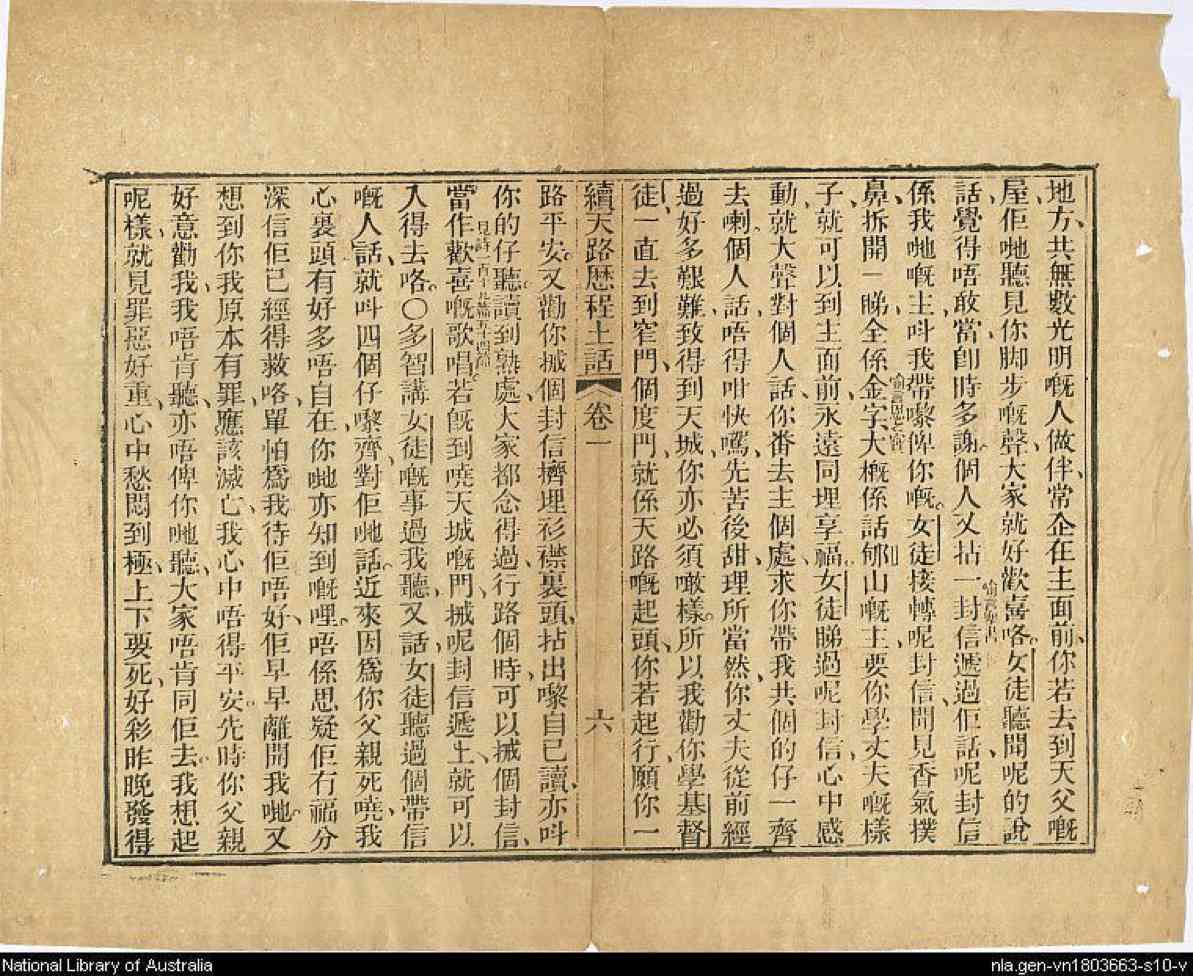
- 1870, John Bunyan, translated by George H. Piercy, 《續天路歷程土話》 [Pilgrim's Progress. Pt. II Christiana. Canton Vernacular.], 羊城: 惠師禮堂, pages 6–7:
- 我想起呢樣、就見罪惡好重、心中愁悶到極、上下要死、好彩昨晚發得個夢、如今又有一個人嚟、𢬿好消息報我聽、我致忍得住呮。 [Cantonese, trad.]
- ngo5 soeng2 hei2 ni1 joeng6, zau6 gin3 zeoi6 ok3 hou2 cung5, sam1 zung1 sau4 mun6 dou3 gik6, soeng6 haa6-2 jiu3 sei2, hou2 coi2 zok6 maan5 faat3 dak1 go3 mung6, jyu4 gam1 jau6 jau5 jat1 go3 jan4 lai4, kaai2 hou2 siu1 sik1 bou3 ngo5 teng1, ngo5 zi3 jan2 dak1 zyu6 ze1. [Jyutping]
- (please add an English translation of this quotation)
我想起呢样、就见罪恶好重、心中愁闷到极、上下要死、好彩昨晚发得个梦、如今又有一个人嚟、𢬿好消息报我听、我致忍得住呮。 [Cantonese, simp.]

Etymology 3
Pronunciation
- Mandarin
- (Standard Chinese)+
- Hanyu Pinyin: shàngxià
- Zhuyin: ㄕㄤˋ ㄒㄧㄚˋ
- Tongyong Pinyin: shàngsià
- Wade–Giles: shang4-hsia4
- Yale: shàng-syà
- Gwoyeu Romatzyh: shanqshiah
- Palladius: шанся (šansja)
- Sinological IPA (key): /ʂɑŋ⁵¹⁻⁵³ ɕi̯ä⁵¹/
- (Standard Chinese)+
- Cantonese
- (Standard Cantonese, Guangzhou–Hong Kong)+
- Jyutping: soeng5 haa6
- Yale: séuhng hah
- Cantonese Pinyin: soeng5 haa6
- Guangdong Romanization: sêng5 ha6
- Sinological IPA (key): /sœːŋ¹³ haː²²/
- (Standard Cantonese, Guangzhou–Hong Kong)+
- Hakka
- (Sixian, incl. Miaoli and Neipu)
- Pha̍k-fa-sṳ: sông-hâ
- Hakka Romanization System: songˊ haˊ
- Hagfa Pinyim: song1 ha1
- Sinological IPA: /soŋ²⁴⁻¹¹ ha²⁴/
- (Meixian)
- Guangdong: song1 ha1
- Sinological IPA: /sɔŋ⁴⁴ ha⁴⁴/
- (Sixian, incl. Miaoli and Neipu)
- Southern Min
- (Hokkien: Xiamen)
- Pe̍h-ōe-jī: siōng-hā
- Tâi-lô: siōng-hā
- Phofsit Daibuun: sioxngha
- Sinological IPA (Xiamen): /siɔŋ²²⁻²¹ ha²²/
- (Hokkien: Xiamen)
Verb
上下
- to go up and down
- (Meixian Hakka) to have contact with; to have dealings with
- (Taiwanese Hakka) to pass by
Synonyms
- (to go up and down): 上落 (shàngluò)
- (to have contact with):
Derived terms
Descendants
Japanese
Etymology 1
| Kanji in this term | |
|---|---|
| 上 | 下 |
| あ(がり) Grade: 1 |
お(り) Grade: 1 |
| kun'yomi | |
Compound of 上がり (agari, “rising, going up”, the 連用形 (ren'yōkei, “stem or continuative form”) of the verb 上がる (agaru, “to rise, to go up”)) + 下り (ori, “descending, going down”, the 連用形 (ren'yōkei, “stem or continuative form”) of the verb 下りる (oriru, “to descend, to go down”)).[1][2]
Alternative forms
- 上がり下り, 上がり降り
Pronunciation
Noun
上下 • (agariori)
- ascending and descending, ascent and descent
Verb
上下する • (agariori suru) suru (stem 上下し (agariori shi), past 上下した (agariori shita))
Etymology 2
| Kanji in this term | |
|---|---|
| 上 | 下 |
| あ(がり) Grade: 1 |
さ(がり) Grade: 1 |
| kun'yomi | |
Compound of 上がり (agari, “rising, going up”, the 連用形 (ren'yōkei, “stem or continuative form”) of the verb 上がる (agaru, “to rise, to go up”)) + 下がり (sagari, “coming down, hanging down”, the 連用形 (ren'yōkei, “stem or continuative form”) of the verb 下がる (sagaru, “to come down, to hang down”)).[1][2]
Pronunciation
- IPA(key): [a̠ɡa̠ɾʲisa̠ɡa̠ɾʲi]
- (Tokyo) あがりさがり [àgáríꜜsàgàrì] (Nakadaka – [3])[2]
- (Tokyo) あがりさがり [àgáríságárí] (Heiban – [0])[2]
Noun
上下 • (agarisagari)
- rise and fall, fluctuation (as a level of something, such as a price)
Verb
上下する • (agarisagari suru) suru (stem 上下し (agarisagari shi), past 上下した (agarisagari shita))
Etymology 3
| Kanji in this term | |
|---|---|
| 上 | 下 |
| あ(げ) Grade: 1 |
お(ろし) Grade: 1 |
| kun'yomi | |
| Alternative spellings |
|---|
| 上げ下ろし 揚げ卸し |
Compound of 上げ (age, “raising, lifting up”, 連用形 (ren'yōkei, “stem or continuative form”) of the verb 上げる (ageru, “to raise, lift”)) + 下ろし (oroshi, “lowering, bringing down”, 連用形 (ren'yōkei, “stem or continuative form”) of the verb 下ろす (orosu, “to lower, bring down”)).[1][2]
Pronunciation
Noun
上下 • (ageoroshi)
- raising and lowering of something
- loading and unloading (as of the cargo in a ship)
- weaving on a loom (from the way the warp is raised and lowered)
Idioms
- 箸の上げ下ろしにも文句を言う (hashi no ageoroshi ni mo monku o iu): “to complain about [how someone] raises and lowers their chopsticks” → to be extremely fastidious and nitpicky
Etymology 4
| Kanji in this term | |
|---|---|
| 上 | 下 |
| あ(げ) Grade: 1 |
くだ(し) Grade: 1 |
| kun'yomi | |
| Alternative spelling |
|---|
| 上げ下し |
Compound of 上げ (age, “raising, lifting”, 連用形 (ren'yōkei, “stem or continuative form”) of the verb 上げる (ageru, “to raise, lift”)) + 下だし (kudashi, “putting something down; passing something through one's gut”, 連用形 (ren'yōkei, “stem or continuative form”) of the verb 下す (kudasu, “to put something down; to pass something through one's gut”)).[1][2]
Pronunciation
Noun
上下 • (agekudashi)
- bringing something back up and passing something → vomiting and having diarrhea
Etymology 5
| Kanji in this term | |
|---|---|
| 上 | 下 |
| あ(げ) Grade: 1 |
さ(げ) Grade: 1 |
| kun'yomi | |
| Alternative spelling |
|---|
| 上げ下げ |
Compound of 上げ (age, “raising, lifting”, 連用形 (ren'yōkei, “stem or continuative form”) of the verb 上げる (ageru, “to raise, lift”)) + 下げ (sage, “lowering something, hanging something down”, 連用形 (ren'yōkei, “stem or continuative form”) of the verb 下げる (sageru, “to lower something, to hang something down”)).[1][2]
Pronunciation
Noun
上下 • (agesage)
- raising and lowering of something
- (more specifically) the raising and lowering of prices
- praising and berating someone
- good times and bad times, thick and thin, ups and downs
- the start and finish of something (such as the process of setting a table for a meal, and then clearing up afterwards)
- the ebb and flow of the tides
Idioms
Verb
上下する • (agesage suru) suru (stem 上下し (agesage shi), past 上下した (agesage shita))
- to raise and lower something
- (more specifically) to raise and lower prices
- to praise and berate someone
- to start and finish something (such as the process of setting a table for a meal, and then clearing up afterwards)
- to ebb and flow, such as the tides
Etymology 6
| Kanji in this term | |
|---|---|
| 上 | 下 |
| うえ Grade: 1 |
した Grade: 1 |
| kun'yomi | |
Compound of 上 (ue, “up”) + 下 (shita, “down”).[1][2]
Pronunciation
Noun
上下 • (ueshita) ←うへした (ufesita)?
- up and down, the upper and the lower
- the nobility and the commoners
- (in reference to western-style clothing) upper clothing (such as shirts and jackets) and lower clothing (such as trousers and socks)
- outerwear and underwear
- upside-down
Idioms
Synonyms
- (upside-down): 逆様 (sakasama)
Etymology 7
| Kanji in this term | |
|---|---|
| 上 | 下 |
| かみ Grade: 1 |
しも Grade: 1 |
| kun'yomi | |
Compound of 上 (kami, “up, upper; first”) + 下 (shimo, “down, lower; last”).[1][2]
Pronunciation 1
Noun
上下 • (kamishimo)
- the upper and the lower
- (more specifically) upstream and downstream
- (more specifically) upstage and downstage
- (more specifically) high status and low status
- (more specifically) the city and the countryside
- (more specifically) the upper body and the lower body
- (more specifically) the first three lines and the last two lines of a traditional waka poem
- (more specifically) the first half the last half of a month
- various things
Pronunciation 2
Alternative forms
Noun
上下 • (kamishimo)
Etymology 8
| Kanji in this term | |
|---|---|
| 上 | 下 |
| か(り) Grade: 1 |
め(り) Grade: 1 |
| kun'yomi | |
| Alternative spellings |
|---|
| 上り下り 甲乙 |
Compound of 上り (kari, “rising in tone”, 連用形 (ren'yōkei, “stem or continuative form”) of the verb 上る (karu, “to rise in tone”)) + 下り (meri, “falling in tone”, 連用形 (ren'yōkei, “stem or continuative form”) of the verb 下る (meru, “to fall in tone”)).[1]
Pronunciation
Noun
上下 • (karimeri)
Verb
上下する • (karimeri suru) suru (stem 上下し (karimeri shi), past 上下した (karimeri shita))
Etymology 9
| Kanji in this term | |
|---|---|
| 上 | 下 |
| しょう Grade: 1 |
か Grade: 1 |
| on'yomi | |
/ɕauka/ → /ɕɔːka/ → /ɕoːka/
From Middle Chinese compound 上下 (dzyangH hæX, literally “up and down”). Compare modern Cantonese reading soeng6 haa6 or Hakka song-ha.
The kan'on, so likely a later borrowing.
Pronunciation
Noun
- up and down
- the upper and the lower (especially, the rulers and the ruled)
- rising and falling
- an exchange of opinions
Verb
上下する • (shōka suru) ←しやうか (syauka)?suru (stem 上下し (shōka shi), past 上下した (shōka shita))
Etymology 10
| Kanji in this term | |
|---|---|
| 上 | 下 |
| じょう Grade: 1 |
か Grade: 1 |
| on'yomi | |
/d͡ʑauka/ → /d͡ʑɔːka/ → /d͡ʑoːka/
From Middle Chinese compound 上下 (dzyangH hæX, literally “up and down”). Compare modern Min Nan alternative reading chiūⁿ hā.
A mixed reading, using the goon of jō and the kan'on of ka.
Pronunciation
Noun
- up and down
- high grade and low grade
- the upper and lower houses of the Diet or parliament
- ascending and descending, climbing up and climbing down
Verb
上下する • (jōka suru) ←じやうか (zyauka)?suru (stem 上下し (jōka shi), past 上下した (jōka shita))
Etymology 11
| Kanji in this term | |
|---|---|
| 上 | 下 |
| じょう Grade: 1 |
げ Grade: 1 |
| on'yomi | |
/d͡ʑauɡe/ → /d͡ʑɔːɡe/ → /d͡ʑoːɡe/
From Middle Chinese compound 上下 (dzyangH hæX, literally “up and down”). Compare modern Cantonese reading soeng6 haa6, Hakka song-ha, or Min Nan alternative reading chiūⁿ hā.
The goon reading, so likely the initial borrowing.
Pronunciation
Noun
- the high and the low, the upper and the lower
- (clothing) a suit, a set of clothing consisting of garments for the upper and lower body
- rising and falling, ascent and descent
- the city and the country (the city is considered “up”)
- north and south (north is considered “up”)
- volumes one and two of a two-volume book or other document
- roundtrip travel on a river, going both upstream and downstream
- high rank and low rank
- the nobility and the commoners
- the lord and the ministers
- the old and the young
- an exchange of words, a discussion, question and answer
Synonyms
- (high and low): 高低 (kōtei)
- (high and low in a rank; nobility and commoners): 貴賎 (kisen)
- (rise and fall): 起伏 (kifuku)
- (old and young): 老少 (rōshō), 長幼 (chōyō)
Derived terms
- 上下向 (jōgekō): travelling to the city from the country and travelling to the country from the city
- 上下水道 (jōge suidō): water and sewer pipes, water and sewer services
- 上下付け (jōgezuke), 上下付 (jōgezuke): a kind of poetry game where either the first and last lines of a haiku are provided and the players must invent an appropriate middle line, or the first two kana are provided and the players must also use these as the last two kana, and invent an appropriate middle
- 上下動 (jōgedō): vertical movement, such as during an earthquake
- 上下二連銃 (jōge niren jū): an over/under shotgun
Verb
上下する • (jōge suru) ←じやうげ (zyauge)?suru (stem 上下し (jōge shi), past 上下した (jōge shita))
- to rise and fall, to ascend and descend
- to travel roundtrip on a river, going both upstream and downstream
- to exchange words, to discuss, to question and answer
Etymology 12
| Kanji in this term | |
|---|---|
| 上 | 下 |
| のぼ(り) Grade: 1 |
お(り) Grade: 1 |
| kun'yomi | |
| Alternative spellings |
|---|
| 上ぼり下り 上り下り |
Compound of 上ぼり (nobori, “climbing, going up”, 連用形 (ren'yōkei, “stem or continuative form”) of the verb 上る (noboru, “to climb, to go up”)) + 下り (ori, “descending, going down”, 連用形 (ren'yōkei, “stem or continuative form”) of the verb 下りる (oriru, “to descend, to go down”)).[1][2]
Pronunciation
Noun
上下 • (noboriori)
- ascending and descending, climbing and coming back down (particularly as of a person or thing travelling or moving up and down, such as stairs or levels)
Verb
上下する • (noboriori suru) suru (stem 上下し (noboriori shi), past 上下した (noboriori shita))
- to ascend and descend, to climb and come back down (particularly as of a person or thing travelling or moving up and down, such as stairs or levels)
Etymology 13
| Kanji in this term | |
|---|---|
| 上 | 下 |
| のぼ(り) Grade: 1 |
くだ(り) Grade: 1 |
| kun'yomi | |
| Alternative spelling |
|---|
| 上り下り |
Compound of 上ぼり (nobori, “climbing, going up”, 連用形 (ren'yōkei, “stem or continuative form”) of the verb 上る (noboru, “to climb, to go up”)) + 下り (kudari, “descending, coming down”, 連用形 (ren'yōkei, “stem or continuative form”) of the verb 下る (kudaru, “to descend a path, to come down a path”)).[1][2]
Pronunciation
- IPA(key): [no̞bo̞ɾʲikɯ̟da̠ɾʲi]
- (Tokyo) のぼりくだり [nòbóríkúdárí] (Heiban – [0])[2]
- (Tokyo) のぼりくだり [nòbóríꜜkùdàrì] (Nakadaka – [3])[2]
Noun
上下 • (noborikudari)
- climbing up and climbing down (particularly as of a person or path travelling or moving up and down, such as a road going uphill and downhill in the mountains)
- going upstream and downstream (such as on a river, or on a highway with “up” indicating towards a city)
Verb
上下する • (noborikudari suru) suru (stem 上下し (noborikudari shi), past 上下した (noborikudari shita))
- to climb up and climb down
- to go upstream and downstream (such as on a river, or on a highway with “up” indicating towards a city)
References
- ↑ 1.00 1.01 1.02 1.03 1.04 1.05 1.06 1.07 1.08 1.09 Shōgaku Tosho (1988), 国語大辞典(新装版) [Unabridged Dictionary of Japanese (Revised Edition)] (in Japanese), Tōkyō: Shogakukan, →ISBN
- ↑ 2.00 2.01 2.02 2.03 2.04 2.05 2.06 2.07 2.08 2.09 2.10 2.11 2.12 2.13 2.14 2.15 2.16 2.17 2.18 2.19 2.20 2.21 2.22 2.23 Matsumura, Akira, editor (2006), 大辞林 [Daijirin] (in Japanese), Third edition, Tokyo: Sanseidō, →ISBN
- ↑ 3.0 3.1 3.2 3.3 3.4 NHK Broadcasting Culture Research Institute, editor (1998), NHK日本語発音アクセント辞典 [NHK Japanese Pronunciation Accent Dictionary] (in Japanese), Tokyo: NHK Publishing, Inc., →ISBN
- “〈上下〉”, in 漢字ぺディア [Kanjipedia][1] (in Japanese), The Japan Kanji Aptitude Testing Foundation, 2015–2026
- Chinese lemmas
- Mandarin lemmas
- Cantonese lemmas
- Hakka lemmas
- Jin lemmas
- Hokkien lemmas
- Chinese nouns
- Mandarin nouns
- Cantonese nouns
- Hakka nouns
- Jin nouns
- Hokkien nouns
- Chinese terms with IPA pronunciation
- Chinese terms spelled with 上
- Chinese terms spelled with 下
- Taishanese lemmas
- Xiang lemmas
- Taishanese nouns
- Xiang nouns
- Chinese adverbs
- Cantonese adverbs
- Mandarin terms with collocations
- Cantonese Chinese
- Chinese terms with quotations
- Cantonese terms with quotations
- Chinese verbs
- Mandarin verbs
- Cantonese verbs
- Hakka verbs
- Hokkien verbs
- Meixian Hakka
- Taiwanese Hakka
- Intermediate Mandarin
- Chinese antonymous compounds
- Japanese terms spelled with 上 read as あ
- Japanese terms spelled with 下 read as お
- Japanese terms read with kun'yomi
- Japanese compound terms
- Japanese terms with IPA pronunciation
- Japanese terms with Nakadaka pitch accent (Tōkyō)
- Japanese terms with IPA pronunciation with pitch accent
- Japanese lemmas
- Japanese nouns
- Japanese terms with multiple readings
- Japanese terms spelled with first grade kanji
- Japanese terms with 2 kanji
- Japanese verbs
- Japanese suru verbs
- Japanese terms spelled with 下 read as さ
- Japanese terms with Heiban pitch accent (Tōkyō)
- Japanese terms spelled with 下 read as くだ
- Japanese terms spelled with 上 read as うえ
- Japanese terms spelled with 下 read as した
- Japanese terms spelled with 上 read as かみ
- Japanese terms spelled with 下 read as しも
- Japanese terms with Atamadaka pitch accent (Tōkyō)
- ja:Clothing
- Japanese terms spelled with 上 read as か
- Japanese terms spelled with 下 read as め
- ja:Music
- Japanese terms spelled with 上 read as しょう
- Japanese terms spelled with 下 read as か
- Japanese terms read with on'yomi
- Japanese terms derived from Middle Chinese
- Japanese terms spelled with 上 read as じょう
- Japanese terms spelled with 下 read as げ
- Japanese terms spelled with 上 read as のぼ