ventre
English
Verb
ventre (third-person singular simple present ventres, present participle ventring, simple past and past participle ventred)
- Obsolete form of venture (“to hazard, risk”).
Catalan
Etymology
Pronunciation
- IPA(key): (Northern) [ˈbe̞n.tɾə]
- IPA(key): (Balearic) [ˈven.tɾə]
- IPA(key): (Central) [ˈben.tɾə]
- IPA(key): (Valencia) [ˈven.tɾe]
- IPA(key): (Northwestern) [ˈben.tɾe]
Audio (Barcelona): (file)
Noun
ventre m (plural ventres)
- (anatomy) belly, abdomen
- (anatomy) womb
- (anatomy) the fleshy part of a muscle
- ventre de la cama ― calf of the leg
- (figurative) the lower part of something; underside
- El sol daura el ventre dels núvols. ― The sun gilded the underside of the clouds.
Derived terms
Related terms
Further reading
- “ventre”, in Diccionari de la llengua catalana [Dictionary of the Catalan Language] (in Catalan), second edition, Institute of Catalan Studies [Catalan: Institut d'Estudis Catalans], April 2007
- “ventre”, in Gran Diccionari de la Llengua Catalana, Grup Enciclopèdia Catalana, 2026
- “ventre” in Diccionari normatiu valencià, Acadèmia Valenciana de la Llengua.
- Alcover, Antoni Maria; Moll, Francesc de Borja (1963), “ventre”, in Diccionari català-valencià-balear (in Catalan)
French
Etymology
Inherited from Middle French ventre, from Old French ventre, from Latin ventrem, from Proto-Indo-European *wend-tri-.
Pronunciation
- IPA(key): /vɑ̃tʁ/
Audio (France (Paris)); “le ventre”: (file) Audio (Switzerland (Valais)): (file) Audio (France (Paris)): (file) Audio (France (Toulouse)); [ˈvɑ̃ⁿtʁə]: (file) Audio (France (Vosges)): (file) Audio (France): (file) Audio (France (Grenoble)): (file) Audio (France (Vosges)): (file) Audio (France (Vosges)): (file) Audio (France (Hérault)): (file) Audio (France (Lyon)): (file) Audio (France (Massy)): (file)
Noun
ventre m (plural ventres)
Derived terms
Related terms
Descendants
See also
Further reading
- “ventre”, in Trésor de la langue française informatisé [Digitized Treasury of the French Language], 2012
Anagrams
Galician
Etymology
Inherited from Old Galician-Portuguese ventre, from Latin venter, ventrem, from Proto-Indo-European *wend-tri-.
Pronunciation
- IPA(key): /ˈbɛntɾe/ [ˈbɛn̪.t̪ɾɪ], /ˈbentɾe/ [ˈben̪.t̪ɾɪ]
- Rhymes: -ɛntɾe, -entɾe
Noun
ventre m (plural ventres)
- (anatomy) belly, abdomen, groin
- 1458, X. Ferro Couselo, editor, A vida e a fala dos devanceiros. Escolma de documentos en galego dos séculos XIII ao XVI, page 337:
- que vira ao dito Johán, ome do dito prouisor, jaser ençima da dita Tareija do Tyollo et ela que tiña as pernas encrusilladas, descobertas, en çima fasta o ventre, ben brancas, et el que pona en ela as pernas e as maaos por las abryr et non podía, et por que as non quería abrir, que lle daba bofetadas et ela, descabellada, jasendo en terra, et disendo "Ay del Rey, ay del Rey".
- that he saw said Xoán, man of the provisor, lying over said Tareixa do Tiollo; and that she had her legs crossed and naked up to her belly and very white; and that he was putting his hands and legs on her for opening them but couldn't; and that because she didn't want to that he was slapping her, who were disheveled, lying in the ground and saying "Help! Help!".
- 1458, X. Ferro Couselo, editor, A vida e a fala dos devanceiros. Escolma de documentos en galego dos séculos XIII ao XVI, Vigo: Galaxia, page 340:
- et que, yndo él fogindo, lle lançara duas lanças e hua que lle dera por lo braço e llo pasara et a outra que lle puxeran por lle dar por lo ventre, et que, quando a vira vir, que a tomara por lo ferro, viindo por lo ayre, et que cortara a maao
- and that while he was fleeing he was thrown two spears, one that hit him in the arm and pierced it and another that was thrown to hit his belly, but that he, when he saw it coming, took it by the spearhead, while coming through the air, and it cut his hand
- (anatomy) stomach
- (anatomy) womb
- pregnancy
Derived terms
References
- Seoane, Ernesto Xosé González; Granja, María Álvarez de la; Agrelo, Ana Isabel Boullón (2006–2022), “ventre”, in Dicionario de Dicionarios do galego medieval [Dictionary of dictionaries of Medieval Galician] (in Galician), Santiago de Compostela: Instituto da Lingua Galega
- Barreiro, Xavier Varela; Guinovart, Xavier Gómez (2006–2018), “ventre”, in Corpus Xelmírez: corpus lingüístico da Galicia medieval [Corpus Xelmírez: linguistic corpus of Medieval Galicia] (in Galician), Santiago de Compostela: Instituto da Lingua Galega
- Antón Santamarina, editor (2006–2013), “ventre”, in Dicionario de Dicionarios da lingua galega [Dictionary of Dictionaries of the Galician language] (in Galician), Santiago de Compostela: Instituto da Lingua Galega
- Antón Santamarina, Ernesto X. González Seoane, María Álvarez de la Granja, editors (2003–2018), “ventre”, in Tesouro informatizado da lingua galega (in Galician), Santiago de Compostela: Instituto da Lingua Galega
- “ventre”, in Dicionario da Real Academia Galega (in Galician), A Coruña: Royal Galician Academy, 2012–2026
Italian
Etymology
From Latin ventrem, from Proto-Indo-European *wend-tri-.
Pronunciation
- IPA(key): /ˈvɛn.tre/, /ˈven.tre/[1]
Audio: (file) - Rhymes: -ɛntre, -entre
- Hyphenation: vèn‧tre, vén‧tre
Noun
ventre m (plural ventri)
Derived terms
Related terms
References
- ^ “ventre” in Luciano Canepari, Dizionario di Pronuncia Italiana (DiPI)
Further reading
- “ventre”, in Vocabolario Treccani on line (in Italian), Istituto dell'Enciclopedia Italiana, 2026
Latin
Noun
ventre
- ablative singular of venter
Middle French
Etymology
From Old French ventre, from Latin venter, ventrem.
Noun
ventre m (plural ventres)
Descendants
- French: ventre
Norman
Alternative forms
Etymology
From Old French ventre, from Latin venter, ventrem.
Noun
ventre m (plural ventres)
Synonyms
Derived terms
- ventrée (“bellyful”)
Occitan
Etymology
From Old Occitan ventre, from Latin venter.
Pronunciation
Audio (Languedoc): (file)
Noun
ventre m (plural ventres)
Derived terms
Old French
Alternative forms
Etymology
From Latin venter, ventrem.
Noun
ventre oblique singular, m (oblique plural ventres, nominative singular ventres, nominative plural ventre)
Descendants
Old Galician-Portuguese
Etymology
Inherited from Latin venter, ventrem, from Proto-Indo-European *wend-tri-.
Pronunciation
- IPA(key): /ˈβen.tɾe/
Noun
ventre m
- (anatomy) The belly, abdomen, stomach
- a. 1284, Alfonso X of Castile, Cantigas de Santa Maria, Códice de los músicos, cantiga 368 (facsimile):
- [C]omo […] ſ(ant)a M(aria) do porto guariu ũa moller dũa coobra que tragia eno uentre
- (H)ow Holy Mary of Porto cured a woman of a snake she had in her belly
- The womb
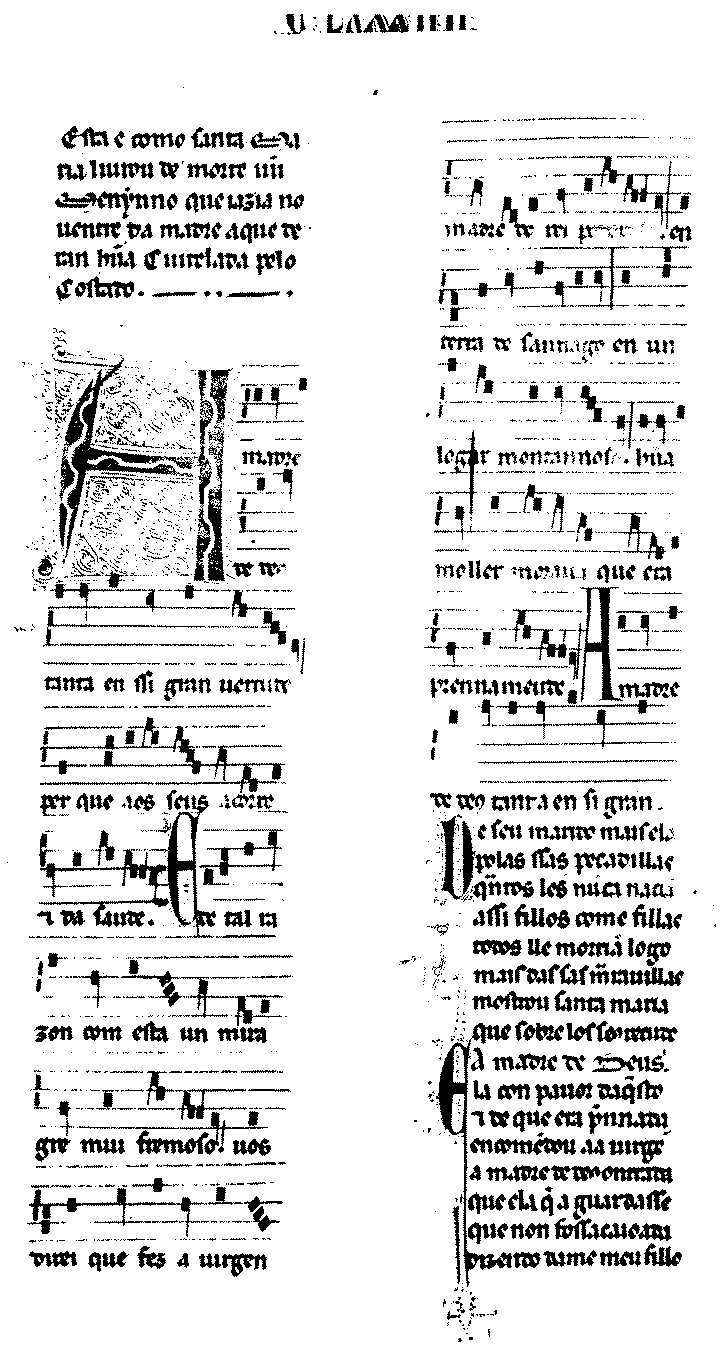
- a. 1284, Alfonso X of Castile, Cantigas de Santa Maria, Códice de los músicos, cantiga 184 (facsimile):
- Eſta e como ſanta Maria liurou de morte ũu Menynno que iazia no uentre da madre
- This is how Holy Mary saved from death a little boy who laid in his mother's womb
Descendants
Old Occitan
Etymology
From Latin venter, ventrem.
Noun
ventre m (oblique plural ventres, nominative singular ventres, nominative plural ventre)
Descendants
Portuguese
Etymology
From Old Galician-Portuguese ventre, from Latin ventrem, from Proto-Indo-European *wend-tri.
Pronunciation
- (Brazil) IPA(key): /ˈvẽ.tɾi/
- (Portugal) IPA(key): /ˈvẽ.tɾɨ/
- (Northern Portugal) IPA(key): /ˈbẽ.tɾɨ/
- Rhymes: (Brazil) -ẽtɾi, (Portugal) -ẽtɾɨ
- Hyphenation: ven‧tre
Noun
ventre m (plural ventres)
Derived terms
- alto-ventre
- baixo-ventre
- dança do ventre
- Lei do Ventre Livre
- prisão de ventre
- tirar o ventre de misérias
Related terms
Further reading
- “ventre”, in Dicionário Aulete Digital (in Portuguese), Rio de Janeiro: Lexikon Editora Digital, 2008–2026
- “ventre”, in Dicionário Priberam da Língua Portuguesa (in Portuguese), Lisbon: Priberam, 2008–2026
- “ventre”, in Dicionário Infopédia da Língua Portuguesa (in Portuguese), Porto: Porto Editora, 2003–2026
- English lemmas
- English verbs
- English obsolete forms
- Catalan terms derived from Latin
- Catalan terms inherited from Latin
- Catalan terms with IPA pronunciation
- Catalan terms with audio pronunciation
- Catalan lemmas
- Catalan nouns
- Catalan countable nouns
- Catalan masculine nouns
- ca:Anatomy
- Catalan terms with usage examples
- ca:Body parts
- French terms inherited from Middle French
- French terms derived from Middle French
- French terms inherited from Old French
- French terms derived from Old French
- French terms inherited from Latin
- French terms derived from Latin
- French terms derived from Proto-Indo-European
- French 1-syllable words
- French terms with IPA pronunciation
- French terms with audio pronunciation
- French lemmas
- French nouns
- French countable nouns
- French masculine nouns
- fr:Physics
- Galician terms derived from Old Galician-Portuguese
- Galician terms derived from Latin
- Galician terms inherited from Old Galician-Portuguese
- Galician terms derived from Proto-Indo-European
- Galician terms inherited from Latin
- Galician terms with IPA pronunciation
- Rhymes:Galician/ɛntɾe
- Rhymes:Galician/ɛntɾe/2 syllables
- Rhymes:Galician/entɾe
- Rhymes:Galician/entɾe/2 syllables
- Galician lemmas
- Galician nouns
- Galician countable nouns
- Galician masculine nouns
- gl:Anatomy
- Galician terms with quotations
- Italian terms inherited from Latin
- Italian terms derived from Latin
- Italian terms derived from Proto-Indo-European
- Italian 2-syllable words
- Italian terms with IPA pronunciation
- Italian terms with audio pronunciation
- Rhymes:Italian/ɛntre
- Rhymes:Italian/ɛntre/2 syllables
- Rhymes:Italian/entre
- Rhymes:Italian/entre/2 syllables
- Italian lemmas
- Italian nouns
- Italian countable nouns
- Italian masculine nouns
- it:Anatomy
- Latin non-lemma forms
- Latin noun forms
- Middle French terms inherited from Old French
- Middle French terms derived from Old French
- Middle French terms inherited from Latin
- Middle French terms derived from Latin
- Middle French lemmas
- Middle French nouns
- Middle French masculine nouns
- Middle French countable nouns
- frm:Anatomy
- Norman terms inherited from Old French
- Norman terms derived from Old French
- Norman terms inherited from Latin
- Norman terms derived from Latin
- Norman lemmas
- Norman nouns
- Norman masculine nouns
- Jersey Norman
- Guernsey Norman
- nrf:Anatomy
- Occitan terms inherited from Old Occitan
- Occitan terms derived from Old Occitan
- Occitan terms inherited from Latin
- Occitan terms derived from Latin
- Occitan terms with audio pronunciation
- Occitan lemmas
- Occitan nouns
- Occitan countable nouns
- Occitan masculine nouns
- oc:Anatomy
- Old French terms inherited from Latin
- Old French terms derived from Latin
- Old French lemmas
- Old French nouns
- Old French masculine nouns
- fro:Anatomy
- Old Galician-Portuguese terms derived from Latin
- Old Galician-Portuguese terms inherited from Latin
- Old Galician-Portuguese terms derived from Proto-Indo-European
- Old Galician-Portuguese terms with IPA pronunciation
- Old Galician-Portuguese lemmas
- Old Galician-Portuguese nouns
- Old Galician-Portuguese masculine nouns
- roa-opt:Anatomy
- Old Galician-Portuguese terms with quotations
- Old Galician-Portuguese terms with usage examples
- Old Occitan terms inherited from Latin
- Old Occitan terms derived from Latin
- Old Occitan lemmas
- Old Occitan nouns
- Old Occitan masculine nouns
- pro:Anatomy
- Portuguese terms inherited from Old Galician-Portuguese
- Portuguese terms derived from Old Galician-Portuguese
- Portuguese terms inherited from Latin
- Portuguese terms derived from Latin
- Portuguese terms derived from Proto-Indo-European
- Portuguese 2-syllable words
- Portuguese terms with IPA pronunciation
- Rhymes:Portuguese/ẽtɾi
- Rhymes:Portuguese/ẽtɾi/2 syllables
- Rhymes:Portuguese/ẽtɾɨ
- Rhymes:Portuguese/ẽtɾɨ/2 syllables
- Portuguese lemmas
- Portuguese nouns
- Portuguese countable nouns
- Portuguese masculine nouns
- pt:Anatomy