nome
Aragonese • Asturian • Bavarian • Corsican • Esperanto • French • Galician • Ido • Istro-Romanian • Italian • Leonese • Middle English • Mirandese • Norwegian Nynorsk • Old English • Old Galician-Portuguese • Portuguese • Riantana • Spanish
Page categories
English
Pronunciation
- (Received Pronunciation) IPA(key): /nəʊm/
Audio (Southern England): (file) - (General American) enPR: nōm, IPA(key): /noʊm/
- Rhymes: -əʊm
- Homophones: Nome, gnome
Etymology 1
From French nome, from Ancient Greek νομός (nomós, “district”), from νέμω (némō, “to divide”). Doublet of nomos.
Noun
nome (plural nomes)
- A prefecture or unit of regional government in Greece.
- Laconia is the southernmost nome in the Peloponnese.
- A territorial division of ancient Egypt.
- 1983, Norman Mailer, Ancient Evenings:
- Yet the part will be as the whole, and you will be the High Priest in this nome of Egypt.
Derived terms
Translations


Etymology 2
From Ancient Greek νόμος (nómos), from νέμω (némō, “to divide”). Differs from Etymology 1 in the position of Ancient Greek accent, though from the same root. Doublet of nomos and namus.
Noun
nome (plural nomes)
- A type of musical composition in Ancient Greece.
Translations
Etymology 3
Contraction.
Interjection
nome
- (US, regional) Alternative form of no'm (“no ma'am”).
- 1929, William Faulkner, The Sound and the Fury, Folio Society, published 2016, page 7:
- Mother said, “Is he cold, Versh.”
“Nome.” Versh said.
Etymology 4
The sense "term" is from French -nôme, second element of binôme etc., again from Ancient Greek νομός (nomós) here in its sense "division". The name of the special function may be identical or may be an independent borrowing from the Greek.[1]
Noun
nome
- (mathematics, obsolete) A term in an algebraic expression.
- (mathematics) A special function with which elliptic functions and modular forms can be described.
References
Further reading
 Nome (melody) in the 1905 edition of the New International Encyclopedia.
 Nome (Egypt) on Wikipedia.Wikipedia
See also
Anagrams
Aragonese
Alternative forms
Etymology
Pronunciation
- IPA(key): /ˈnome/
- Rhymes: -ome
- Syllabification: no‧me
Noun
nome m (plural nomes)
Asturian
Alternative forms
Etymology
From Latin nōmen, from Proto-Indo-European *h₁nómn̥.
Pronunciation
- IPA(key): /ˈnome/ [ˈno.me]
- Rhymes: -ome
- Syllabification: no‧me
Noun
nome m (plural nomes)
Synonyms
- (noun): sustantivu
Derived terms
Related terms
Bavarian
Etymology
(This etymology is missing or incomplete. Please add to it, or discuss it at the Etymology scriptorium.)
Noun
nome
References
- Umberto Patuzzi, ed., (2013) Ünsarne Börtar, Luserna: Comitato unitario delle linguistiche storiche germaniche in Italia / Einheitskomitee der historischen deutschen Sprachinseln in Italien.
Corsican
Alternative forms
Etymology
Noun
nome m (plural nomi)
- name
- first name
- name, reputation
- Synonym: reputazione
- (grammar) noun
Further reading
- “nome”, in INFCOR: Banca di dati di a lingua corsa [Database of the Corsican language], 1999-
Esperanto
Etymology
Pronunciation
- IPA(key): /ˈnome/
Audio 1: (file) Audio 2: (file) - Rhymes: -ome
- Syllabification: no‧me
Adverb
nome
Further reading
- “nome”, in Plena Ilustrita Vortaro de Esperanto [Complete Illustrated Dictionary of Esperanto], 2020, →ISBN
- “nome”, in Reta Vortaro [Online Dictionary] (in Esperanto), 1997-2026
French
Pronunciation
Noun
nome m (plural nomes)
References
- “nome”, in Trésor de la langue française informatisé [Digitized Treasury of the French Language], 2012
Galician

Etymology
From Old Galician-Portuguese nome, from Latin nōmen, nōminis, from Proto-Indo-European *h₁nómn̥.
Pronunciation
- IPA(key): /ˈnome/ [ˈnõ.mɪ]
- Rhymes: -ome
- Hyphenation: no‧me
Noun
nome m (plural nomes)
- name
- (grammar) a noun, a substantive or adjective
- Synonyms: nome común, nome propio
- (figuratively) fame, renown
Derived terms
- a nome de
- en nome de
Related terms
References
- Seoane, Ernesto Xosé González; Granja, María Álvarez de la; Agrelo, Ana Isabel Boullón (2006–2022), “nome”, in Dicionario de Dicionarios do galego medieval [Dictionary of dictionaries of Medieval Galician] (in Galician), Santiago de Compostela: Instituto da Lingua Galega
- Barreiro, Xavier Varela; Guinovart, Xavier Gómez (2006–2018), “nome”, in Corpus Xelmírez: corpus lingüístico da Galicia medieval [Corpus Xelmírez: linguistic corpus of Medieval Galicia] (in Galician), Santiago de Compostela: Instituto da Lingua Galega
- Antón Santamarina, editor (2006–2013), “nome”, in Dicionario de Dicionarios da lingua galega [Dictionary of Dictionaries of the Galician language] (in Galician), Santiago de Compostela: Instituto da Lingua Galega
- Antón Santamarina, Ernesto X. González Seoane, María Álvarez de la Granja, editors (2003–2018), “nome”, in Tesouro informatizado da lingua galega (in Galician), Santiago de Compostela: Instituto da Lingua Galega
- Rosario Álvarez Blanco, editor (2014–2024), “nome”, in Tesouro do léxico patrimonial galego e portugués (in Galician), Santiago de Compostela: Instituto da Lingua Galega, →ISSN
Ido
Etymology
Pronunciation
- IPA(key): /ˈnome/
- Hyphenation: no‧me
Adverb
nome
- namely (specifically)
References
- nome in Ido-English Dictionary by L.H. Dyer, 1924
Istro-Romanian
Etymology
From Latin nōmen, from Proto-Indo-European *h₁nómn̥. Compare Romanian nume.
Noun
nome (definite nomelu)
Italian
Etymology
Pronunciation
- IPA(key): /ˈno.me/, /ˈnɔ.me/[1]
Audio (Italy): (file) - Rhymes: -ome, -ɔme
- Hyphenation: nó‧me, nò‧me
Noun
nome m (plural nomi or (Old Italian) nómora)
- name
- first name
- Synonyms: nome di battesimo, prenome
- name, reputation
- Synonyms: reputazione, fama
- (grammar) noun
Hyponyms
- (noun): nome aggettivo = aggettivo, nome sostantivo = sostantivo
Related terms
See also
References
- ^ “nome” in Luciano Canepari, Dizionario di Pronuncia Italiana (DiPI)
Anagrams
Leonese
Etymology
Pronunciation
- IPA(key): /ˈnome/, [ˈno.me]
- Rhymes: -ome
- Hyphenation: no‧me
Noun
nome m (plural nomes)
References
- “nome”, in Diccionario Castellano-Leonés / Leonés-Castellano [Spanish-Leonese / Leonese-Spanish Dictionary] (in Spanish), La Asociación L'Alderique, 2012–2026
- “nome”, in Pallabreiru Llïonés [Leonese Dictionary] (in Spanish), 2026
Middle English
Noun
nome (plural nomes)
- (West Midland, Southern) alternative form of name
Mirandese
Etymology
From Latin nōmen, from Proto-Indo-European *h₁nómn̥.
Noun
nome m (plural nomes)
Norwegian Nynorsk
Alternative forms
Adjective
nome
- neuter of nomen
Old English
Alternative forms
Pronunciation
- IPA(key): /ˈnoː.me/
- Rhymes: -oː.me
Verb
nōme
- second-person singular preterite indicative of niman
- first/third-person singular preterite subjunctive of niman
Old Galician-Portuguese
Etymology
Inherited from Latin nōmen (“name”), from Proto-Indo-European *h₁nómn̥.
Pronunciation
- IPA(key): /ˈnome/
Noun
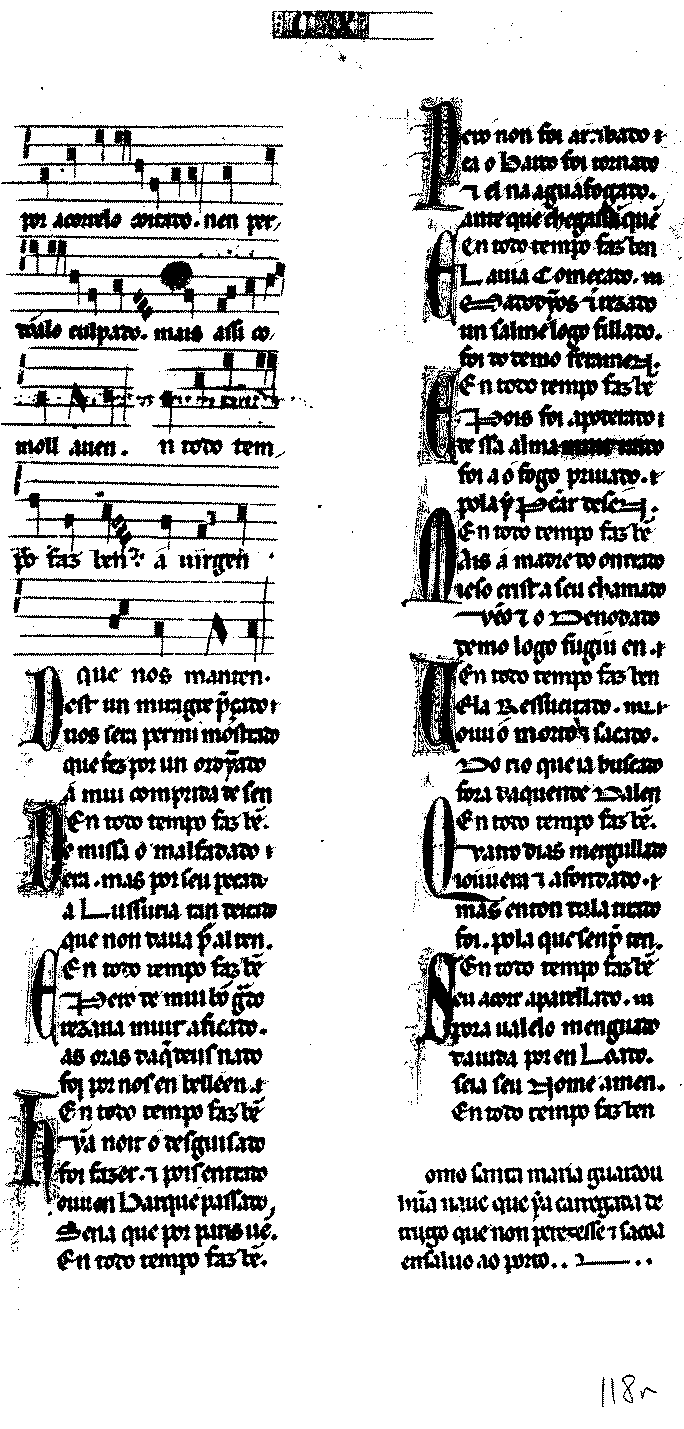
nome m (plural nomes)
- name
- a. 1284, Alfonso X of Castile, Cantigas de Santa Maria, Códice de los músicos, cantiga 111 (facsimile):
- […] Loado ſeia ſeu Nome.
- […] may his Name be praised.
- […] Loado ſeia ſeu Nome.
Descendants
Portuguese
Etymology
From Old Galician-Portuguese nome, from Latin nōmen (“name”), from Proto-Indo-European *h₁nómn̥.
Pronunciation
- (Brazil) IPA(key): /ˈnõ.mi/
- (Portugal) IPA(key): /ˈno.mɨ/
- (Rural Central Brazil) IPA(key): /ˈno.mʲ/
Audio (Portugal (Porto)): (file) - Rhymes: (Portugal) -omɨ, (Brazil) -õmi, (Southern Brazil) -ome
- Hyphenation: no‧me
Noun
nome m (plural nomes)
- name (word or phrase which identifies an individual person, place, class, or thing)
- 2000, J. K. Rowling, translated by Lia Wyler, Harry Potter e a Câmara Secreta [Harry Potter and the Chamber of Secrets] (Harry Potter; 2), Rio de Janeiro: Rocco, →ISBN, page 264:
- [...] e as letras do seu nome se rearrumaram.
- [...] and the letters of his name rearranged themselves.
- name (what somebody is known for)
- Preciso limpar meu nome.
- I must clear my name.
- (grammar) noun
- (grammar, loosely) substantive or adjective
- insult (used in the expression chamar nomes)
Quotations
- For quotations using this term, see Citations:nome.
Synonyms
- (word indicating something): denominação
- (reputation): reputação
- (noun): substantivo
Derived terms
- chamar nomes
- conhecer de nome
- de nome
- em nome de
- nome artístico
- nome científico
- nome civil
- nome comercial
- nome comum
- nome de família
- nome de guerra
- nome do pai
- nome feio
- nome morto
- nome popular
- nome próprio
- nome social
- nomezinho (diminutive), nominho (diminutive)
- sobrenome
Related terms
Descendants
Further reading
- “nome”, in Dicionário Aulete Digital (in Portuguese), Rio de Janeiro: Lexikon Editora Digital, 2008–2026
- “nome”, in Dicionário Infopédia da Língua Portuguesa (in Portuguese), Porto: Porto Editora, 2003–2026
- “nome”, in Michaelis Dicionário Brasileiro da Língua Portuguesa (in Portuguese), São Paulo: Editora Melhoramentos, 2015–2026, →ISBN
- “nome”, in Dicionário Priberam da Língua Portuguesa (in Portuguese), Lisbon: Priberam, 2008–2026
Riantana
Noun
nome
References
- Andrew Pawley et al., "The Trans New Guinea family", in The Languages and Linguistics of the New Guinea Area: A Comprehensive Guide (2018, →ISBN)
Spanish
Pronunciation
- IPA(key): /ˈnome/ [ˈno.me]
- Rhymes: -ome
- Syllabification: no‧me
Noun
nome m (plural nomes)
Related terms
Further reading
- “nome”, in Diccionario de la lengua española [Dictionary of the Spanish Language] (in Spanish), 24th edition, Royal Spanish Academy [Spanish: Real Academia Española], 30 October 2026
- English 1-syllable words
- English terms with IPA pronunciation
- English terms with audio pronunciation
- Rhymes:English/əʊm
- Rhymes:English/əʊm/1 syllable
- English terms with homophones
- English terms derived from Proto-Indo-European
- English terms derived from the Proto-Indo-European root *nem- (distribute)
- English terms borrowed from French
- English terms derived from French
- English terms derived from Ancient Greek
- English doublets
- English lemmas
- English nouns
- English countable nouns
- English terms with usage examples
- English terms with quotations
- English interjections
- American English
- Regional English
- English nouns with unknown or uncertain plurals
- en:Mathematics
- English terms with obsolete senses
- Aragonese terms inherited from Latin
- Aragonese terms derived from Latin
- Aragonese terms with IPA pronunciation
- Rhymes:Aragonese/ome
- Rhymes:Aragonese/ome/2 syllables
- Aragonese lemmas
- Aragonese nouns
- Aragonese countable nouns
- Aragonese masculine nouns
- Asturian terms inherited from Latin
- Asturian terms derived from Latin
- Asturian terms inherited from Proto-Indo-European
- Asturian terms derived from Proto-Indo-European
- Asturian terms with IPA pronunciation
- Rhymes:Asturian/ome
- Rhymes:Asturian/ome/2 syllables
- Asturian lemmas
- Asturian nouns
- Asturian masculine nouns
- ast:Parts of speech
- Bavarian lemmas
- Bavarian nouns
- Sappada Bavarian
- Sauris Bavarian
- Corsican terms derived from Proto-Italic
- Corsican terms inherited from Proto-Italic
- Corsican terms derived from Proto-Indo-European
- Corsican terms inherited from Proto-Indo-European
- Corsican terms inherited from Latin
- Corsican terms derived from Latin
- Corsican lemmas
- Corsican nouns
- Corsican masculine nouns
- co:Grammar
- Esperanto terms suffixed with -e
- Esperanto terms derived from the Proto-Indo-European word *h₁nómn̥
- Esperanto 2-syllable words
- Esperanto terms with IPA pronunciation
- Esperanto terms with audio pronunciation
- Rhymes:Esperanto/ome
- Rhymes:Esperanto/ome/2 syllables
- Esperanto lemmas
- Esperanto adverbs
- French terms with audio pronunciation
- French lemmas
- French nouns
- French countable nouns
- French masculine nouns
- Galician terms inherited from Old Galician-Portuguese
- Galician terms derived from Old Galician-Portuguese
- Galician terms inherited from Latin
- Galician terms derived from Latin
- Galician terms inherited from Proto-Indo-European
- Galician terms derived from Proto-Indo-European
- Galician terms with IPA pronunciation
- Rhymes:Galician/ome
- Rhymes:Galician/ome/2 syllables
- Galician lemmas
- Galician nouns
- Galician countable nouns
- Galician masculine nouns
- gl:Grammar
- Ido terms suffixed with -e (adverb)
- Ido terms with IPA pronunciation
- Ido lemmas
- Ido adverbs
- Istro-Romanian terms inherited from Latin
- Istro-Romanian terms derived from Latin
- Istro-Romanian terms inherited from Proto-Indo-European
- Istro-Romanian terms derived from Proto-Indo-European
- Istro-Romanian lemmas
- Istro-Romanian nouns
- Italian terms inherited from Proto-Italic
- Italian terms derived from the Proto-Indo-European word *h₁nómn̥
- Italian terms inherited from Latin
- Italian terms inherited from Proto-Indo-European
- Italian terms derived from Latin
- Italian terms derived from Proto-Indo-European
- Italian terms derived from Proto-Italic
- Italian 2-syllable words
- Italian terms with IPA pronunciation
- Italian terms with audio pronunciation
- Rhymes:Italian/ome
- Rhymes:Italian/ome/2 syllables
- Rhymes:Italian/ɔme
- Rhymes:Italian/ɔme/2 syllables
- Italian lemmas
- Italian nouns
- Italian countable nouns
- Italian nouns with multiple plurals
- Italian masculine nouns
- it:Grammar
- it:Parts of speech
- Leonese terms inherited from Latin
- Leonese terms derived from Latin
- Leonese terms with IPA pronunciation
- Rhymes:Leonese/ome
- Rhymes:Leonese/ome/2 syllables
- Leonese lemmas
- Leonese nouns
- Leonese masculine nouns
- Middle English lemmas
- Middle English nouns
- West Midland Middle English
- Southern Middle English
- Mirandese terms inherited from Latin
- Mirandese terms derived from Latin
- Mirandese terms derived from Proto-Indo-European
- Mirandese lemmas
- Mirandese nouns
- Mirandese countable nouns
- Mirandese masculine nouns
- Norwegian Nynorsk non-lemma forms
- Norwegian Nynorsk adjective forms
- Old English terms with IPA pronunciation
- Rhymes:Old English/oː.me
- Rhymes:Old English/oː.me/2 syllables
- Old English non-lemma forms
- Old English verb forms
- Old Galician-Portuguese terms inherited from Latin
- Old Galician-Portuguese terms derived from Latin
- Old Galician-Portuguese terms inherited from Proto-Indo-European
- Old Galician-Portuguese terms derived from Proto-Indo-European
- Old Galician-Portuguese terms with IPA pronunciation
- Old Galician-Portuguese lemmas
- Old Galician-Portuguese nouns
- Old Galician-Portuguese masculine nouns
- Old Galician-Portuguese terms with quotations
- Portuguese terms inherited from Old Galician-Portuguese
- Portuguese terms derived from Old Galician-Portuguese
- Portuguese terms inherited from Latin
- Portuguese terms derived from Latin
- Portuguese terms inherited from Proto-Indo-European
- Portuguese terms derived from Proto-Indo-European
- Portuguese 2-syllable words
- Portuguese terms with IPA pronunciation
- Portuguese 1-syllable words
- Portuguese terms with audio pronunciation
- Rhymes:Portuguese/omɨ
- Rhymes:Portuguese/omɨ/2 syllables
- Rhymes:Portuguese/õmi
- Rhymes:Portuguese/õmi/2 syllables
- Rhymes:Portuguese/ome
- Rhymes:Portuguese/ome/2 syllables
- Portuguese lemmas
- Portuguese nouns
- Portuguese countable nouns
- Portuguese masculine nouns
- Portuguese terms with quotations
- Portuguese terms with usage examples
- pt:Grammar
- Riantana lemmas
- Riantana nouns
- Spanish 2-syllable words
- Spanish terms with IPA pronunciation
- Rhymes:Spanish/ome
- Rhymes:Spanish/ome/2 syllables
- Spanish lemmas
- Spanish nouns
- Spanish countable nouns
- Spanish masculine nouns
- Spanish terms with obsolete senses