gospel
English
Pronunciation
- (Received Pronunciation) IPA(key): /ˈɡɒspəl/
- (US) IPA(key): /ˈɡɑspəl/
Audio (Mid-Atlantic US): (file)
Audio (Southern England): (file) - Hyphenation: gos‧pel
Etymology 1
From Middle English gospel, gospell, godspel, godspell, goddspell, from Old English godspell (“gospel”), corresponding to God + spell (“talk, tale, story”), literally “the message of God”, believed to be an alteration of earlier *gōdspell (literally “good news”), used to translate ecclesiastical Latin bona annūntiātiō, itself a translation of Ecclesiastical Latin ēvangelium / Ancient Greek εὐαγγέλιον (euangélion, “evangel”, literally “good news”) (English evangel). Compare Old Saxon gōdspel and godspell (“gospel”), Old High German and Middle High German gotspel (“gospel”), Icelandic guðspjall (“gospel”), and the modern calque Malayalam സുവിശേഷം (suviśēṣaṁ).
Noun
gospel (countable and uncountable, plural gospels)
- The first section of the Christian New Testament scripture, comprising the books of Matthew, Mark, Luke and John, concerned with the birth, ministry, passion, and resurrection of Jesus.
- An account of those aspects of Jesus' life, generally written during the first several centuries of the Common Era.
- (Protestantism) The teaching of Divine grace as distinguished from the Law or Divine commandments.
- A message expected to have positive reception or effect, one promoted as offering important (or even infallible) guiding principles.
- 1917, Oral Hygiene, volume 7, section title:
- Spreading the gospel of dental hygiene in Vermont
- (uncountable) That which is absolutely authoritative (definitive).
- We took her words for gospel.
- 1881, George Saintsbury, Dryden:
- If any one thinks this expression hyperbolical, I shall only ask him to read Edipus, instead of taking the traditional witticisms about Lee for gospel.
- (uncountable) Gospel music.
Synonyms
Derived terms
- antigospel
- bluegrass gospel
- contemporary gospel
- Gin and Gospel Gazette
- gospel bird
- gospel blues
- gospel-blues
- gospeler
- gospelesque
- gospelize
- gospeller
- gospellike
- gospel-like
- gospelly
- gospelmonger
- gospel music
- Gospel Oak
- gospelphile
- gospel side
- gospel truth
- gospely
- gospelypso
- infancy gospel
- nongospel
- prosperity gospel
- protogospel
- Social Gospel
- Southern gospel
Descendants
Translations
|
|
|
- The translations below need to be checked and inserted above into the appropriate translation tables. See instructions at Wiktionary:Entry layout § Translations.
Etymology 2
From Middle English gospellen, from Old English godspellian (“to preach the gospel, evangelise”), from the noun (see above).
Verb
gospel (third-person singular simple present gospels, present participle (US) gospeling or (UK) gospelling, simple past and past participle (US) gospeled or (UK) gospelled)
- (transitive) To instruct in, declare, or communicate the gospel; to evangelise.
- c. 1606 (date written), William Shakespeare, “The Tragedie of Macbeth”, in Mr. William Shakespeares Comedies, Histories, & Tragedies […] (First Folio), London: […] Isaac Iaggard, and Ed[ward] Blount, published 1623, →OCLC, (please specify the act number in uppercase Roman numerals, and the scene number in lowercase Roman numerals):
- Are you so gospelled, to pray for this good man and for his issue, whose heavy hand hath bowed you to the grave and beggared yours forever?
- 2014, Caesar Kalinowski, Small Is Big, Slow Is Fast:
- I stood there wondering how often they had “gospeled” each other's hearts like this.
- 2014, Trevor Joy, Spence Shelton, The People of God: Empowering the Church to Make Disciples:
- Hopefully you will get to the point where gospeling one another becomes a natural part of your language, and you will not need a set of phrases anymore.
- 2021, Sarosh Koshy, Beyond Missio Dei, page 339:
- But the very act of “seeing” for anyone—both those within and beyond the fold of Christian communions—is possible only as a gospel being gospeled anew in and through the most pertinent issues of their particular contexts.
References
- “gospel”, in Dictionary.com Unabridged, Dictionary.com, LLC, 1995–present.
- Douglas Harper (2001–2026), “gospel”, in Online Etymology Dictionary.
Anagrams
Dutch
Etymology
Pronunciation
- IPA(key): /ˈɡɔs.pəl/
Audio: (file) - Hyphenation: gos‧pel
- Rhymes: -ɔspəl
Noun
gospel m (plural gospels, no diminutive)
- (uncountable) gospel music
- Synonym: gospelmuziek
- (countable) gospel song
Derived terms
- gospelachtig
- gospelmuziek
References
- van der Sijs, Nicoline, editor (2010), “gospel”, in Etymologiebank, Meertens Institute
Finnish
Etymology
Pronunciation
- IPA(key): /ˈɡospel/, [ˈɡo̞s̠pe̞l]
- Rhymes: -ospel
- Syllabification(key): gos‧pel
- Hyphenation(key): gos‧pel
Noun
gospel
Declension
| Inflection of gospel (Kotus type 6/paperi, no gradation) | |||
|---|---|---|---|
| nominative | gospel | gospelit | |
| genitive | gospelin | gospelien gospeleiden gospeleitten | |
| partitive | gospelia | gospeleita gospeleja | |
| illative | gospeliin | gospeleihin | |
| singular | plural | ||
| nominative | gospel | gospelit | |
| accusative | nom. | gospel | gospelit |
| gen. | gospelin | ||
| genitive | gospelin | gospelien gospeleiden gospeleitten | |
| partitive | gospelia | gospeleita gospeleja | |
| inessive | gospelissa | gospeleissa | |
| elative | gospelista | gospeleista | |
| illative | gospeliin | gospeleihin | |
| adessive | gospelilla | gospeleilla | |
| ablative | gospelilta | gospeleilta | |
| allative | gospelille | gospeleille | |
| essive | gospelina | gospeleina | |
| translative | gospeliksi | gospeleiksi | |
| abessive | gospelitta | gospeleitta | |
| instructive | — | gospelein | |
| comitative | See the possessive forms below. | ||
| Possessive forms of gospel (Kotus type 6/paperi, no gradation) | ||||||||||||||||||||||||||||||||||||||||||||||||||||||||||||||||||||||||||||||||||||||||||||||||||||||||||||||||||||||||||||||||||||||||||||||||||||||||||||||||||||||||||||||||||||||||||||||||||||||||||||||||||||||||||||||||||||||||||||||||||||||||||||||||||||||||||||||||||||||||||||||||||||||||||||||||||||||||||||||||||||||||||||||||||||||||||||||
|---|---|---|---|---|---|---|---|---|---|---|---|---|---|---|---|---|---|---|---|---|---|---|---|---|---|---|---|---|---|---|---|---|---|---|---|---|---|---|---|---|---|---|---|---|---|---|---|---|---|---|---|---|---|---|---|---|---|---|---|---|---|---|---|---|---|---|---|---|---|---|---|---|---|---|---|---|---|---|---|---|---|---|---|---|---|---|---|---|---|---|---|---|---|---|---|---|---|---|---|---|---|---|---|---|---|---|---|---|---|---|---|---|---|---|---|---|---|---|---|---|---|---|---|---|---|---|---|---|---|---|---|---|---|---|---|---|---|---|---|---|---|---|---|---|---|---|---|---|---|---|---|---|---|---|---|---|---|---|---|---|---|---|---|---|---|---|---|---|---|---|---|---|---|---|---|---|---|---|---|---|---|---|---|---|---|---|---|---|---|---|---|---|---|---|---|---|---|---|---|---|---|---|---|---|---|---|---|---|---|---|---|---|---|---|---|---|---|---|---|---|---|---|---|---|---|---|---|---|---|---|---|---|---|---|---|---|---|---|---|---|---|---|---|---|---|---|---|---|---|---|---|---|---|---|---|---|---|---|---|---|---|---|---|---|---|---|---|---|---|---|---|---|---|---|---|---|---|---|---|---|---|---|---|---|---|---|---|---|---|---|---|---|---|---|---|---|---|---|---|---|---|---|---|---|---|---|---|---|---|---|---|---|---|---|---|---|---|---|---|---|---|---|---|---|---|---|---|---|---|---|---|---|---|---|---|---|---|---|---|---|---|---|---|---|---|---|---|---|---|---|
| ||||||||||||||||||||||||||||||||||||||||||||||||||||||||||||||||||||||||||||||||||||||||||||||||||||||||||||||||||||||||||||||||||||||||||||||||||||||||||||||||||||||||||||||||||||||||||||||||||||||||||||||||||||||||||||||||||||||||||||||||||||||||||||||||||||||||||||||||||||||||||||||||||||||||||||||||||||||||||||||||||||||||||||||||||||||||||||||
Derived terms
Further reading
- “gospel”, in Kielitoimiston sanakirja [Dictionary of Contemporary Finnish][1] (in Finnish) (online dictionary, continuously updated), Kotimaisten kielten keskuksen verkkojulkaisuja 35, Helsinki: Kotimaisten kielten tutkimuskeskus (Institute for the Languages of Finland), 2004–, retrieved 2 July 2023
French
Etymology
Pronunciation
Noun
gospel m (plural gospels)
Italian
Etymology
Noun
gospel m (invariable)
Middle English
Alternative forms
- gospell
- godspel, godspell (mainly Early Middle English); goddspel, godespel, gotspel (Early Middle English, rare)
- cospel, gospeel, gospelle, gospille (Late Middle English)
- ꟑoddspell (Ormulum)
Etymology
Inherited from Old English godspell, *gōdspell, from gōd (“good”) + spell (“news”), calquing Ecclesiastical Latin bona annūntiātiō, itself a translation of Ecclesiastical Latin ēvangelium / Ancient Greek εὐαγγέλιον (euangélion, “evangel”, literally “good news”); thus equivalent to God or good + spel.
Pronunciation
- IPA(key): /ˈɡɔˌspɛl/, (Late Middle English) /ˈɡɔspəl/, (Early Middle English) /ˈɡɔdˌspɛl/
Noun
gospel (plural gospelles or gospels)
- A gospel (one of four books recounting Jesus' life in the Christian biblical canon)
- An excerpt or passage from a gospel, especially if read in a church service.
- The instructions or beliefs contained in the New Testament.
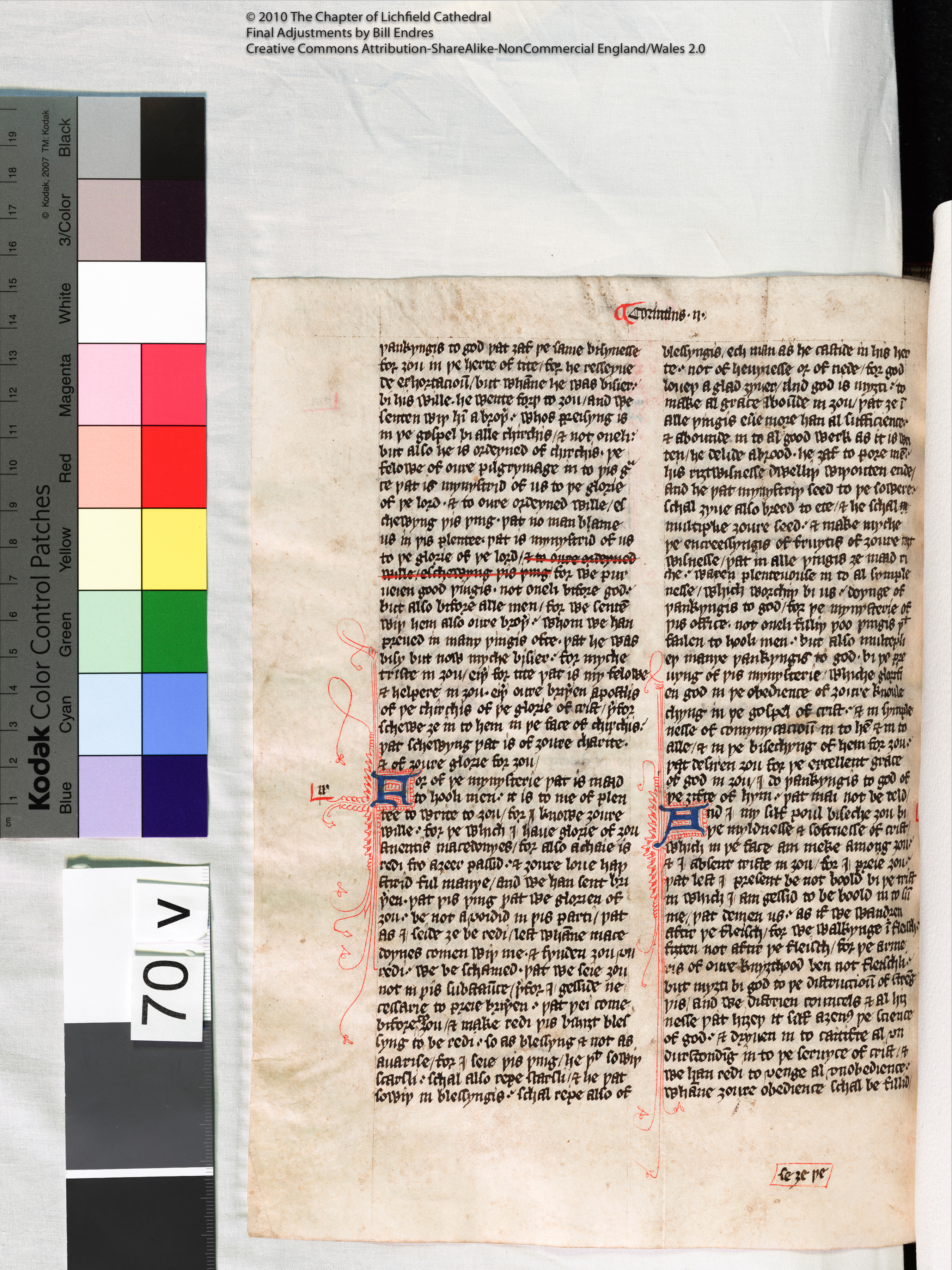
- c. 1395, John Wycliffe, John Purvey [et al.], transl., Bible (Wycliffite Bible (later version), MS Lich 10.)[2], published c. 1410, Coꝛinthis ·ii· 9:13, folio 70, verso, column 2; republished as Wycliffe's translation of the New Testament, Lichfield: Bill Endres, 2010:
- bı þe pꝛeuyng of þıs mynyſterie / whıche gloꝛifıen god ın þe obedıence of ȝoure knoulechyng in þe goſpel of crıſt⹎ ⁊ ın ſympleneſſe of comynycacıoũ ın to hẽ ⁊ ın to alle
- Using the example of this ministry, they will glorify God through the obedience [that comes] from your acknowledgement of the gospel of Christ and the generosity of your sharing with them and everyone [else].
- Something authoritative or definitive.
- (rare) Christian doctrine or belief in general.
Related terms
Descendants
References
- “gospel, n.”, in MED Online, Ann Arbor, Mich.: University of Michigan, 2007.
Polish
Etymology
Borrowed from English gospel, from Middle English gospel, gospell, godspel, godspell, goddspell, from Old English godspell.
Pronunciation
- IPA(key): /ˈɡɔs.pɛl/
Audio: (file) - Rhymes: -ɔspɛl
- Syllabification: gos‧pel
Noun
gospel m inan (indeclinable)
Further reading
- “gospel”, in Wielki słownik języka polskiego[3] (in Polish), Instytut Języka Polskiego PAN
- “gospel”, in Polish dictionaries at PWN[4] (in Polish)
Portuguese
Alternative forms
- góspel (adapted form, rare, nonstandard)
Etymology
Unadapted borrowing from English gospel.
Pronunciation
- (Brazil) IPA(key): /ˈɡɔs.pew/ [ˈɡɔs.peʊ̯]
- (Rio de Janeiro) IPA(key): /ˈɡɔʃ.pew/ [ˈɡɔʃ.peʊ̯]
- (Portugal) IPA(key): /ˈɡɔʃ.pɛl/ [ˈɡɔʃ.pɛɫ]
- Hyphenation: gos‧pel
Noun
gospel m (countable and uncountable, plural gospel or gospels or (rare) góspeis)
- (countable) a gospel song
- (uncountable) gospel music
Adjective
gospel (invariable)
- (relational) gospel (of or relating to gospel music)
Further reading
- “gospel”, in Dicionário Aulete Digital (in Portuguese), Rio de Janeiro: Lexikon Editora Digital, 2008–2026
- “gospel”, in Dicionário Priberam da Língua Portuguesa (in Portuguese), Lisbon: Priberam, 2008–2026
Spanish
Etymology
Pronunciation
- IPA(key): /ˈɡospel/ [ˈɡos.pel]
- Rhymes: -ospel
- Syllabification: gos‧pel
Noun
gospel m (uncountable)
Swedish
Etymology
Borrowed from English gospel (song). Attested since the 1950s.
Noun
gospel c
- gospel music, gospel
- Synonym: gospelmusik
- a gospel song, a gospel
- Synonyms: gospelsång, gospellåt
Usage notes
"Gosplar" is an intuitive plural, but might not be used.
Declension
| nominative | genitive | ||
|---|---|---|---|
| singular | indefinite | gospel | gospels |
| definite | gospeln | gospelns | |
| plural | indefinite | gospel, gospels | gospels |
| definite | - | - |
Derived terms
- gospelkör (“gospel choir”)
- gospelsångare (“gospel singer”)
- gospelsångerska (“female gospel singer”)
See also
- evangelium (“gospel”)
References
- “gospel”, in Svensk ordbok [Dictionary of Swedish] (in Swedish)
- “gospel”, in Svenska Akademiens ordlista [Wordlist of the Swedish Academy] (in Swedish)
- English 2-syllable words
- English terms with IPA pronunciation
- English terms with audio pronunciation
- English terms derived from Proto-Indo-European
- English terms derived from the Proto-Indo-European root *ǵʰew-
- English terms derived from Middle English
- English terms derived from Old English
- English terms derived from Ecclesiastical Latin
- English terms derived from Ancient Greek
- English lemmas
- English nouns
- English uncountable nouns
- English countable nouns
- en:Protestantism
- English terms with quotations
- English terms with usage examples
- English terms inherited from Middle English
- English terms inherited from Old English
- English verbs
- English transitive verbs
- English calques
- en:Christianity
- en:Musical genres
- Dutch terms borrowed from English
- Dutch terms derived from English
- Dutch terms with IPA pronunciation
- Dutch terms with audio pronunciation
- Rhymes:Dutch/ɔspəl
- Rhymes:Dutch/ɔspəl/2 syllables
- Dutch lemmas
- Dutch nouns
- Dutch nouns with plural in -s
- Dutch countable nouns
- Dutch masculine nouns
- Dutch uncountable nouns
- Finnish terms borrowed from English
- Finnish terms derived from English
- Finnish 2-syllable words
- Finnish terms with IPA pronunciation
- Rhymes:Finnish/ospel
- Rhymes:Finnish/ospel/2 syllables
- Finnish lemmas
- Finnish nouns
- fi:Music
- Finnish paperi-type nominals
- French terms derived from English
- French terms borrowed from English
- French 2-syllable words
- French terms with IPA pronunciation
- French terms with audio pronunciation
- French lemmas
- French nouns
- French countable nouns
- French masculine nouns
- fr:Music
- fr:Musical genres
- Italian terms derived from English
- Italian terms borrowed from English
- Italian lemmas
- Italian nouns
- Italian countable nouns
- Italian indeclinable nouns
- Italian masculine nouns
- it:Music
- Middle English terms inherited from Old English
- Middle English terms derived from Old English
- Middle English terms derived from Ecclesiastical Latin
- Middle English terms derived from Ancient Greek
- Middle English compound terms
- Middle English terms with IPA pronunciation
- Middle English lemmas
- Middle English nouns
- Middle English terms with quotations
- Middle English terms with rare senses
- enm:Books
- enm:Christianity
- Polish terms borrowed from English
- Polish terms derived from English
- Polish terms derived from Middle English
- Polish terms derived from Old English
- Polish 2-syllable words
- Polish terms with IPA pronunciation
- Polish terms with audio pronunciation
- Rhymes:Polish/ɔspɛl
- Rhymes:Polish/ɔspɛl/2 syllables
- Polish lemmas
- Polish nouns
- Polish indeclinable nouns
- Polish masculine nouns
- Polish inanimate nouns
- pl:Musical genres
- Portuguese terms derived from English
- Portuguese unadapted borrowings from English
- Portuguese terms borrowed from English
- Portuguese 2-syllable words
- Portuguese terms with IPA pronunciation
- Portuguese lemmas
- Portuguese nouns
- Portuguese uncountable nouns
- Portuguese countable nouns
- Portuguese nouns with multiple plurals
- Portuguese masculine nouns
- Portuguese adjectives
- Portuguese indeclinable adjectives
- Portuguese relational adjectives
- pt:Musical genres
- Spanish terms borrowed from English
- Spanish terms derived from English
- Spanish 2-syllable words
- Spanish terms with IPA pronunciation
- Rhymes:Spanish/ospel
- Rhymes:Spanish/ospel/2 syllables
- Spanish lemmas
- Spanish nouns
- Spanish uncountable nouns
- Spanish masculine nouns
- es:Music
- Swedish terms borrowed from English
- Swedish terms derived from English
- Swedish lemmas
- Swedish nouns
- Swedish common-gender nouns