dado
English


Etymology
From Italian dado, first attested in 1664.
Pronunciation
- (Received Pronunciation) IPA(key): /ˈdeɪdəʊ/
- (General American) IPA(key): /ˈdeɪdoʊ/
Audio (US): (file) Audio (Australia): (file) - Rhymes: -eɪdəʊ
Noun
- (architecture) The section of a pedestal above the base.
- (architecture) The lower portion of an interior wall decorated differently from the upper portion.
- 1912, Arthur Conan Doyle, The Lost World […], London; New York, N.Y.: Hodder and Stoughton, →OCLC:
- Like a dado round the room was the jutting line of splendid heavy game-heads, the best of their sort from every quarter of the world, with the rare white rhinoceros of the Lado Enclave drooping its supercilious lip above them all.
- 1922, E[ric] R[ücker] Eddison, The Worm Ouroboros: A Romance, London: Jonathan Cape […], →OCLC, page 3:
- Hangings of tapestry were behind the high seats, worked with flowers, snake’s-head, snapdragon, dragon-mouth, and their kind; and on the dado below the windows were sculptures of birds and beasts and creeping things.
- (carpentry) A rectangular channel in a board cut across the grain.
- 2026 August, Logan Wittmer, “Whiskey Cabinet”, in Popular Woodworking, volume 290, number 4, page 56:
- Next, cut stopped dadoes in the shelf and the underside of the top for the vertical dividers.
Translations
|
Verb
dado (third-person singular simple present dadoes, present participle dadoing, simple past and past participle dadoed)
- (transitive, architecture) To furnish with a dado.
- (transitive, carpentry) To cut a dado.
Translations
Derived terms
Further reading

Anagrams
Central Bikol
Etymology
Pronunciation
- IPA(key): /ˈdado/ [ˈd̪a.d̪o]
- Hyphenation: da‧do
Noun
dádo (plural dados, Basahan spelling ᜇᜇᜓ)
- die (used in board games)
Central Malay
Alternative forms
- dadau (Manna Serawai)
- dade (Besemah, Ogan)
Etymology
From Proto-Malayic *dada, from Proto-Malayo-Polynesian *dahdah, from Proto-Austronesian *daSdaS (“chest”).
Noun
dado
- (Lintang, Talo Serawai) chest
References
- Adelaar, K. A. (1992), Proto-Malayic: The reconstruction of its phonology and parts of its lexicon and morphology[2], Canberra: The Australian National University
Galician
Pronunciation
- IPA(key): /ˈdado/ [ˈd̪a.ð̞ʊ]
- Rhymes: -ado
- Hyphenation: da‧do
Etymology 1
Inherited from Old Galician-Portuguese dado, itself from a form *datu of uncertain origin; possibly from Classical Arabic أَعْدَاد (ʔaʕdād, “numbers”), or from Latin datum.[1] Compare Spanish dado, Catalan dau, Italian dado, French dé.
Noun
dado m (plural dados)
Etymology 2
Inherited from Old Galician-Portuguese dado, from Latin datus. Equivalent to dar + -ado. Doublet of dato.
Adjective
dado (feminine dada, masculine plural dados, feminine plural dadas)
- offered
- Synonym: oferecido
- granted, conceded (given)
- Synonym: concedido
- given, fixed
- Synonym: determinado
- friendly, sociable
- Synonyms: afábel, afable
- generous
- Synonyms: desinteresado, xeneroso
- prone, inclined
- Synonym: propenso
Participle
dado (feminine dada, masculine plural dados, feminine plural dadas)
- past participle of dar
References
- Seoane, Ernesto Xosé González; Granja, María Álvarez de la; Agrelo, Ana Isabel Boullón (2006–2022), “dado”, in Dicionario de Dicionarios do galego medieval [Dictionary of dictionaries of Medieval Galician] (in Galician), Santiago de Compostela: Instituto da Lingua Galega
- Barreiro, Xavier Varela; Guinovart, Xavier Gómez (2006–2018), “dado”, in Corpus Xelmírez: corpus lingüístico da Galicia medieval [Corpus Xelmírez: linguistic corpus of Medieval Galicia] (in Galician), Santiago de Compostela: Instituto da Lingua Galega
- Antón Santamarina, editor (2006–2013), “dado”, in Dicionario de Dicionarios da lingua galega [Dictionary of Dictionaries of the Galician language] (in Galician), Santiago de Compostela: Instituto da Lingua Galega
- Antón Santamarina, Ernesto X. González Seoane, María Álvarez de la Granja, editors (2003–2018), “dado”, in Tesouro informatizado da lingua galega (in Galician), Santiago de Compostela: Instituto da Lingua Galega
- Rosario Álvarez Blanco, editor (2014–2024), “dado”, in Tesouro do léxico patrimonial galego e portugués (in Galician), Santiago de Compostela: Instituto da Lingua Galega, →ISSN
- ^ Coromines, Joan; Pascual, José Antonio (1983–1991), “dado”, in Diccionario crítico etimológico castellano e hispánico [Critical Castilian and Hispanic etymological dictionary][1] (in Spanish), Madrid: Gredos
Hiligaynon
Noun
dadô
- a young fish
Related terms
Ilocano
Etymology
Pronunciation
- IPA(key): /ˈdado/ [ˈdɐ.do]
- Hyphenation: da‧do
Noun
dádo (Kur-itan spelling ᜇᜇᜓ)
References
- Andrés Carro (1888), Vocabulario ilocano-español: trabajado por varios religiosos del orden de N.P.S. Agustín / coordinado por Predicador Andrés Carro y ultimamente aumentado y corregido por algunos religiosos del mismo orden[3] (overall work in Spanish and Ilocano), Manila: Est. Tipo-Litográfico de M. Pérez
Italian
Etymology
Uncertain. Perhaps from a Vulgar Latin *dadu, itself either from Latin datum (“thrown, given”), or from Arabic أَعْدَاد (ʔaʕdād, “numbers”). Compare Spanish and Portuguese dado, Catalan dau, French dé (whence English die).
Pronunciation
- IPA(key): /ˈda.do/
- Rhymes: -ado
- Hyphenation: dà‧do
Noun
dado m (plural dadi)
- (gaming) die, dice
- giocare a dadi ― to play dice
- (by extension) any small cube-shaped object
- (cooking) stock cube
- minestra di dadi ― (please add an English translation of this usage example)
- (engineering) nut (intended to be screwed onto a bolt)
Anagrams
Ladino
Noun
dado m (plural dados)
Minangkabau
Etymology
From Proto-Malayic *dada, from Proto-Malayo-Polynesian *dahdah, from Proto-Austronesian *daSdaS (“chest”); compare Malay dada, Old Javanese ḍaḍa, Malagasy tratra.
Noun
dado
References
- Kamus Minangkabau - Indonesia [Minangkabau - Indonesian Dictionary][4] (in Indonesian), Jakarta: Pusat Pembinaan dan Pengembangan Bahasa, 1985
Negeri Sembilan Malay
Etymology
From Proto-Malayic *dada, from Proto-Malayo-Polynesian *dahdah, from Proto-Austronesian *daSdaS (“chest”).
Noun
dado
Old Galician-Portuguese
Etymology
From Vulgar Latin *dadu, itself either from Arabic أَعْدَاد (ʔaʕdād, “numbers”), or from Latin dātum.
Pronunciation
- IPA(key): /ˈda.do/
Noun
dado m (plural dados)
- die
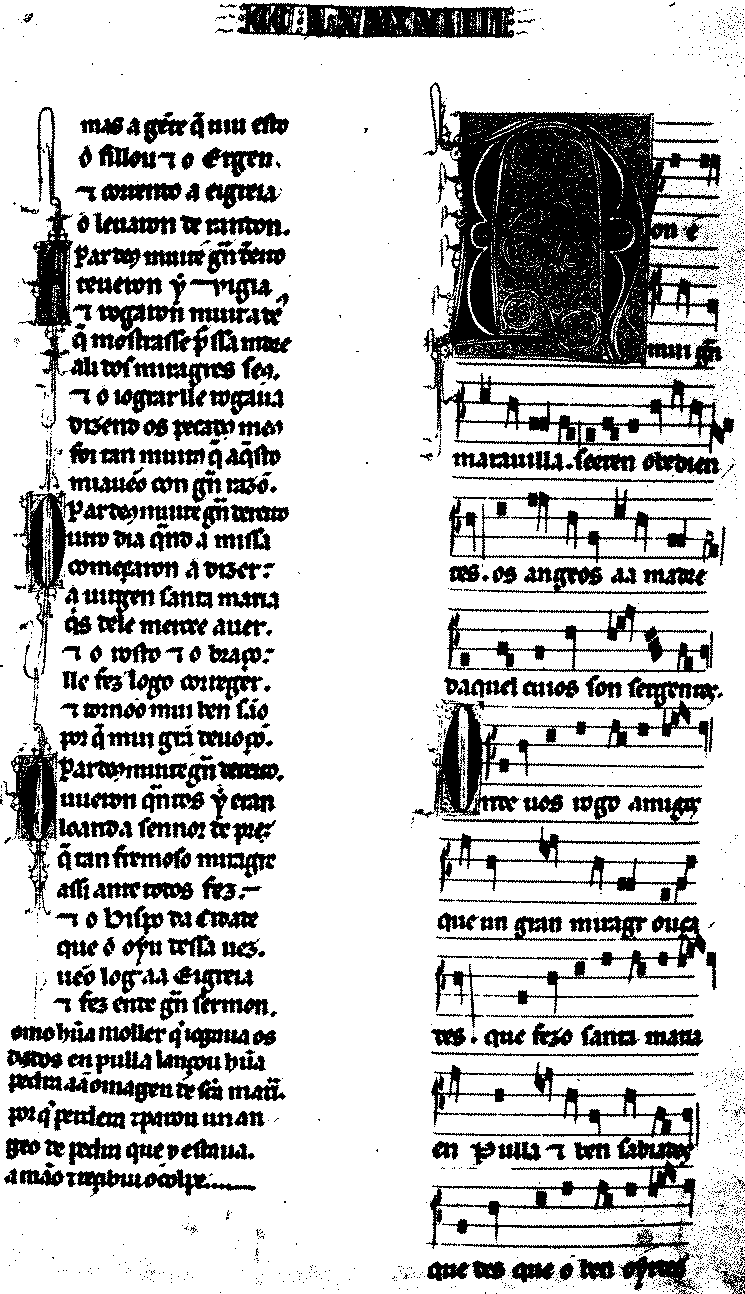
- a. 1284, Alfonso X of Castile, Cantigas de Santa Maria, Códice de los músicos, cantiga 294 (facsimile):
- Como hũa moller q̇ iogaua os dados en pulla lançou hũa pedra aa omagen de ſ[ant]a mari[a] por q̇ perdera ⁊ parou un angeo de pedra que y eſtava a mão ⁊ reçibiu o colpe.
- How a woman who was playing dice in Apulia threw a stone at the statue of Holy Mary because she had lost, and an angel of stone which was there reached out its hand and received the blow.
- Como hũa moller q̇ iogaua os dados en pulla lançou hũa pedra aa omagen de ſ[ant]a mari[a] por q̇ perdera ⁊ parou un angeo de pedra que y eſtava a mão ⁊ reçibiu o colpe.
Descendants
Pali
Alternative forms
- 𑀤𑀤𑁄 (Brahmi script)
- ददो (Devanagari script)
- দদো (Bengali script)
- දදො (Sinhalese script)
- ဒဒေါ or ၻၻေႃ (Burmese script)
- ทโท or ทะโท (Thai script)
- ᨴᨴᩮᩤ (Tai Tham script)
- ທໂທ or ທະໂທ (Lao script)
- ទទោ (Khmer script)
- 𑄘𑄘𑄮 (Chakma script)
Verb
dado
- second-person singular imperfect active of dadāti (“to give”)
Portuguese

Pronunciation
- (Brazil) IPA(key): /ˈda.du/
- (Portugal) IPA(key): /ˈda.du/ [ˈda.ðu]
- (Southern Portugal) IPA(key): /ˈda.du/
Etymology 1
From Old Galician-Portuguese dado, itself from a Vulgar Latin *dadu, of uncertain origin; possibly from Classical Arabic أَعْدَاد (ʔaʕdād, “numbers”), or from Latin datum. Compare Spanish dado, Catalan dau, Italian dado, French dé.
Noun
dado m (plural dados)
Descendants
Etymology 2
From Old Galician-Portuguese dado, from Latin datus. By surface analysis, dar + -ado. Doublet of data.
Adjective
dado (feminine dada, masculine plural dados, feminine plural dadas)
- offered
- Synonym: oferecido
- granted, conceded (given)
- Synonym: concedido
- given, fixed (currently discussed)
- Synonym: determinado
- em um dado momento ― at a given moment
- friendly, sociable
- Synonym: afável
- Eles são muito dados. ― They are very friendly.
- prone, inclined
Noun
dado m (plural dados)
- (computing, sciences) data; datum (item of information)
- Não encontrei nenhum dado no sistema.
- I did not find any data in the system.
- (in the plural) ellipsis of dados móveis (“mobile data”)
Determiner
dado (feminine dada, masculine plural dados, feminine plural dadas)
- a given; a particular; a specific
- A família mora em uma dada localidade no vale.
- The family lives in a given location in the valley.
Usage notes
- In the determiner sense, optionally used with an article.
Participle
dado (feminine dada, masculine plural dados, feminine plural dadas)
- past participle of dar
References
- “dado”, in Dicionário Aulete Digital (in Portuguese), Rio de Janeiro: Lexikon Editora Digital, 2008–2026
- “dado”, in Dicio – Dicionário Online de Português (in Portuguese), São Paulo: 7Graus, 2009–2026
- “dado”, in Dicionário Infopédia da Língua Portuguesa (in Portuguese), Porto: Porto Editora, 2003–2026
- “dado”, in Michaelis Dicionário Brasileiro da Língua Portuguesa (in Portuguese), São Paulo: Editora Melhoramentos, 2015–2026, →ISBN
- “dado”, in Dicionário Priberam da Língua Portuguesa (in Portuguese), Lisbon: Priberam, 2008–2026
Spanish
Pronunciation
- IPA(key): /ˈdado/ [ˈd̪a.ð̞o]
Audio (Colombia): (file) - Rhymes: -ado
- Syllabification: da‧do
Etymology 1
From a Vulgar Latin *dadu, of uncertain origin; perhaps from Arabic أَعْدَاد (ʔaʕdād, “numbers”), or alternatively from Latin dātum. Compare Portuguese dado, Catalan dau, Italian dado. Cf. also French dé.
Noun
dado m (plural dados)
Etymology 2
Inherited from Latin dātus. See dar.
Preposition
dado
- given, considering
- 1915, Julio Vicuña Cifuentes, Mitos y Supersticiones Recogidos de la Tradición Oral Chilena, page 89:
- Es un mito popular. Algunos creen que su origen está relacionado con una formidable cuadrilla de bandidos que hace años tenía su guarida en los famosos Cerrillos de Teno. Dada la difusión que alcanza la leyenda mítica, esta hipótises se inadmisible.
- It is a popular myth. Some believe that its origin is related to a formidable gang of bandits that years ago had their lair in the famous Cerrillos de Teno. Given the diffusion that the mythic legend reached, this hypothesis is inadmissible.
Derived terms
Participle
dado (feminine dada, masculine plural dados, feminine plural dadas)
- past participle of dar
Further reading
- “dado”, in Diccionario de la lengua española [Dictionary of the Spanish Language] (in Spanish), 24th edition, Royal Spanish Academy [Spanish: Real Academia Española], 30 October 2026
Tagalog
Etymology
Borrowed from Spanish dado (“die”), from Vulgar Latin *dadu, of uncertain origin; perhaps from Arabic أَعْدَاد (ʔaʕdād, “numbers”), or alternatively from Latin dātum. Compare Malay dadu. Doublet of daro. See also datos and days.
Pronunciation
- (Standard Tagalog) IPA(key): /ˈdado/ [ˈd̪aː.d̪o]
- Rhymes: -ado
- Syllabification: da‧do
Noun
dado (Baybayin spelling ᜇᜇᜓ)
- die; dice
- Synonym: days
- (mechanical engineering) bushing
See also
- beto-beto
Further reading
- Panganiban, José Villa (1972), Diksyunaryo-Tesauro Pilipino - Ingles [Filipino–English Dictionary-Thesaurus] (overall work in Tagalog and English), Quezon City: Manlapaz Publishing Co., →LCCN, →OL, page 331
- Cuadrado Muñiz, Adolfo (1972), Hispanismos en el tagalo: Diccionario de vocablos de origen español vigentes en esta lengua filipina. [Hispanicisms in Tagalog: Dictionary of words of Spanish origin still used in this Philippine language.], Revised by Antonio M. Molina. With an Introductory Study by Rodolfo Barón Castro, Madrid: Oficina de Educación Iberoamericana (OEI) [Office of Ibero-American Education], →LCCN, →OCLC, →OL, page 185
- English terms borrowed from Italian
- English terms derived from Italian
- English 2-syllable words
- English terms with IPA pronunciation
- English terms with audio pronunciation
- Rhymes:English/eɪdəʊ
- Rhymes:English/eɪdəʊ/2 syllables
- English lemmas
- English nouns
- English countable nouns
- English nouns with irregular plurals
- en:Architecture
- English terms with quotations
- en:Carpentry
- English verbs
- English transitive verbs
- en:Architectural elements
- Central Bikol terms borrowed from Spanish
- Central Bikol terms derived from Spanish
- Central Bikol terms with IPA pronunciation
- Central Bikol lemmas
- Central Bikol nouns
- Central Bikol terms with Basahan script
- Central Malay terms inherited from Proto-Malayic
- Central Malay terms derived from Proto-Malayic
- Central Malay terms inherited from Proto-Malayo-Polynesian
- Central Malay terms derived from Proto-Malayo-Polynesian
- Central Malay terms inherited from Proto-Austronesian
- Central Malay terms derived from Proto-Austronesian
- Central Malay lemmas
- Central Malay nouns
- pse:Anatomy
- pse:Body parts
- Galician terms with IPA pronunciation
- Rhymes:Galician/ado
- Rhymes:Galician/ado/2 syllables
- Galician terms inherited from Old Galician-Portuguese
- Galician terms derived from Old Galician-Portuguese
- Galician terms derived from Arabic
- Galician terms derived from Latin
- Galician lemmas
- Galician nouns
- Galician countable nouns
- Galician masculine nouns
- gl:Gaming
- Galician terms inherited from Latin
- Galician terms suffixed with -ado
- Galician doublets
- Galician adjectives
- Galician non-lemma forms
- Galician past participles
- Hiligaynon lemmas
- Hiligaynon nouns
- Ilocano terms borrowed from Spanish
- Ilocano terms derived from Spanish
- Ilocano terms with IPA pronunciation
- Ilocano lemmas
- Ilocano nouns
- Ilocano terms with Kur-itan script
- ilo:Gaming
- ilo:Dice games
- Italian terms with unknown etymologies
- Italian terms inherited from Vulgar Latin
- Italian terms derived from Vulgar Latin
- Italian terms derived from Latin
- Italian terms derived from Arabic
- Italian 2-syllable words
- Italian terms with IPA pronunciation
- Rhymes:Italian/ado
- Rhymes:Italian/ado/2 syllables
- Italian lemmas
- Italian nouns
- Italian countable nouns
- Italian masculine nouns
- it:Gaming
- Italian terms with collocations
- it:Cooking
- it:Engineering
- Ladino lemmas
- Ladino nouns
- Ladino nouns in Latin script
- Ladino masculine nouns
- lad:Gaming
- Minangkabau terms inherited from Proto-Malayic
- Minangkabau terms derived from Proto-Malayic
- Minangkabau terms inherited from Proto-Malayo-Polynesian
- Minangkabau terms derived from Proto-Malayo-Polynesian
- Minangkabau terms inherited from Proto-Austronesian
- Minangkabau terms derived from Proto-Austronesian
- Minangkabau lemmas
- Minangkabau nouns
- min:Anatomy
- min:Body parts
- Negeri Sembilan Malay terms inherited from Proto-Malayic
- Negeri Sembilan Malay terms derived from Proto-Malayic
- Negeri Sembilan Malay terms inherited from Proto-Malayo-Polynesian
- Negeri Sembilan Malay terms derived from Proto-Malayo-Polynesian
- Negeri Sembilan Malay terms inherited from Proto-Austronesian
- Negeri Sembilan Malay terms derived from Proto-Austronesian
- Negeri Sembilan Malay lemmas
- Negeri Sembilan Malay nouns
- zmi:Anatomy
- zmi:Body parts
- Old Galician-Portuguese terms inherited from Vulgar Latin
- Old Galician-Portuguese terms derived from Vulgar Latin
- Old Galician-Portuguese terms derived from Arabic
- Old Galician-Portuguese terms derived from Latin
- Old Galician-Portuguese terms with IPA pronunciation
- Old Galician-Portuguese lemmas
- Old Galician-Portuguese nouns
- Old Galician-Portuguese masculine nouns
- Old Galician-Portuguese terms with quotations
- Pali non-lemma forms
- Pali verb forms
- Pali verb forms in Latin script
- Portuguese 2-syllable words
- Portuguese terms with IPA pronunciation
- Portuguese terms with audio pronunciation
- Rhymes:Portuguese/adu
- Rhymes:Portuguese/adu/2 syllables
- Portuguese terms inherited from Old Galician-Portuguese
- Portuguese terms derived from Old Galician-Portuguese
- Portuguese terms inherited from Vulgar Latin
- Portuguese terms derived from Vulgar Latin
- Portuguese terms derived from Arabic
- Portuguese terms derived from Latin
- Portuguese lemmas
- Portuguese nouns
- Portuguese countable nouns
- Portuguese masculine nouns
- pt:Gaming
- Portuguese terms with usage examples
- Portuguese terms inherited from Latin
- Portuguese terms suffixed with -ado
- Portuguese doublets
- Portuguese adjectives
- Portuguese terms with collocations
- pt:Computing
- pt:Sciences
- Portuguese ellipses
- Portuguese determiners
- Portuguese non-lemma forms
- Portuguese past participles
- Spanish 2-syllable words
- Spanish terms with IPA pronunciation
- Spanish terms with audio pronunciation
- Rhymes:Spanish/ado
- Rhymes:Spanish/ado/2 syllables
- Spanish terms inherited from Vulgar Latin
- Spanish terms derived from Vulgar Latin
- Spanish terms derived from Arabic
- Spanish terms derived from Latin
- Spanish lemmas
- Spanish nouns
- Spanish countable nouns
- Spanish masculine nouns
- es:Gaming
- Spanish terms inherited from Latin
- Spanish prepositions
- Spanish terms with quotations
- Spanish non-lemma forms
- Spanish past participles
- es:Dice games
- Tagalog terms borrowed from Spanish
- Tagalog terms derived from Spanish
- Tagalog terms derived from Vulgar Latin
- Tagalog terms derived from Arabic
- Tagalog terms derived from Latin
- Tagalog doublets
- Tagalog 2-syllable words
- Tagalog terms with IPA pronunciation
- Rhymes:Tagalog/ado
- Rhymes:Tagalog/ado/2 syllables
- Tagalog terms with malumay pronunciation
- Tagalog lemmas
- Tagalog nouns
- Tagalog terms with Baybayin script
- tl:Mechanical engineering
- tl:Dice games