cras
Catalan
Etymology
Pronunciation
- IPA(key): (Northern, Balearic, Central, Valencia, Northwestern) [ˈkɾas]
Adjective
cras (feminine crassa, masculine plural crassos, feminine plural crasses)
- gross (great, serious, flagrant, or shameful)
Derived terms
Further reading
- “cras”, in Diccionari de la llengua catalana [Dictionary of the Catalan Language] (in Catalan), second edition, Institute of Catalan Studies [Catalan: Institut d'Estudis Catalans], April 2007
Latin
Etymology
Inherited from Proto-Italic *krās, possibly from Proto-Indo-European *ḱerh₂- (“head, top”).[1]
Pronunciation
- (Classical Latin) IPA(key): [ˈkraːs]
- (modern Italianate Ecclesiastical) IPA(key): [ˈkras]
- Rhymes: -aːs
Adverb
crās (not comparable)
- tomorrow
- 86 CE – 103 CE, Martialis, Epigrammata 5.58.1–8:
- Crās tē vīctūrum, crās dīcis, Postume, semper.
Dīc mihi, crās istud, Postume, quando venit?
quam longē crās istud, ubi est? aut unde petendum?
numquid apud Parthōs Armeniōsque latet?
jam crās istud habet Priamī vel Nestoris annōs.
crās istud quantī, dīc mihi, possit emī?
crās vīvēs? hodiē jam vīvere, Postume, sērum est:
ille sapit quisquis, Postume, vīxit heri.- You tell me, Postumus, that you will live tomorrow; you always say tomorrow, Postumus. Tell me, Postumus, when will that tomorrow arrive? How far is that tomorrow off? Where is it? or where is it to be found? Is it hidden among the Parthians and Armenians? That tomorrow already counts up as many years as those of Priam or Nestor. For how much, tell me, may that tomorrow be bought? You will live tomorrow: even to-day it is too late to begin to live. He is the wise man, Postumus, who lived yesterday.
- Crās tē vīctūrum, crās dīcis, Postume, semper.
Derived terms
Related terms
| Dates relative to today in Latin (layout · text) | |||||||
|---|---|---|---|---|---|---|---|
| –3 | –2 | –1 | 0 | +1 | +2 | +3 | |
| direct speech | three days ago | two days ago | yesterday | today | tomorrow | in two days | in three days |
| nū̆dius quārtus | nū̆dius tertius | herī̆ | hodiē | crās | perendiē | post trīduum, diē quārtō | |
| reported speech | three days before, three days earlier | two days before, two days earlier | the day before | on that day | the next day | two days later | three days later |
| ante diem quārtum | ante diem tertium | prīdiē | eō/eā diē | postrīdiē | tertiō/tertiā diē | quārtō/quartā diē | |
| adjectival formations | of three days ago | of two days ago | yesterday's | today's | tomorrow's | of two days from now | of three days from now |
| nū̆diusquārtānus | nū̆diustertiānus | hesternus | hodiernus | crāstinus | perendinus | comperendinus | |
Descendants
See also
References
- Meyer-Lübke, Wilhelm (1911), “cras”, in Romanisches etymologisches Wörterbuch (in German), page 181
- Walther von Wartburg (1928–2002), “cras”, in Französisches Etymologisches Wörterbuch (in German), volume 2: C Q K, page 1275
Further reading
- “cras”, in Charlton T. Lewis and Charles Short (1879), A Latin Dictionary, Oxford: Clarendon Press
- “cras”, in Charlton T. Lewis (1891), An Elementary Latin Dictionary, New York: Harper & Brothers
- "cras", in Charles du Fresne du Cange, Glossarium Mediæ et Infimæ Latinitatis (augmented edition with additions by D. P. Carpenterius, Adelungius and others, edited by Léopold Favre, 1883–1887)
- “cras”, in Gaffiot, Félix (1934), Dictionnaire illustré latin-français, Hachette.
- Carl Meißner; Henry William Auden (1894), Latin Phrase-Book[1], London: Macmillan and Co.
- to-day the 5th of September; tomorrow September the 5th: hodie qui est dies Non. Sept.; cras qui dies futurus est Non. Sept.
- to-day the 5th of September; tomorrow September the 5th: hodie qui est dies Non. Sept.; cras qui dies futurus est Non. Sept.
- ^ De Vaan, Michiel (2008), “crās”, in Etymological Dictionary of Latin and the other Italic Languages (Leiden Indo-European Etymological Dictionary Series; 7), Leiden, Boston: Brill, →ISBN, pages 140-141
Old French
Alternative forms
Etymology
Noun
cras oblique singular, m (oblique plural cras, nominative singular cras, nominative plural cras)
Related terms
Descendants
References
- “cras”, in DEAF: Dictionnaire Étymologique de l'Ancien Français, Heidelberg: Heidelberger Akademie der Wissenschaften, 1968-.
Old Galician-Portuguese
Etymology
Inherited from Latin crās (“tomorrow”).
Pronunciation
- IPA(key): /ˈkɾas̺/
Adverb
cras
- tomorrow
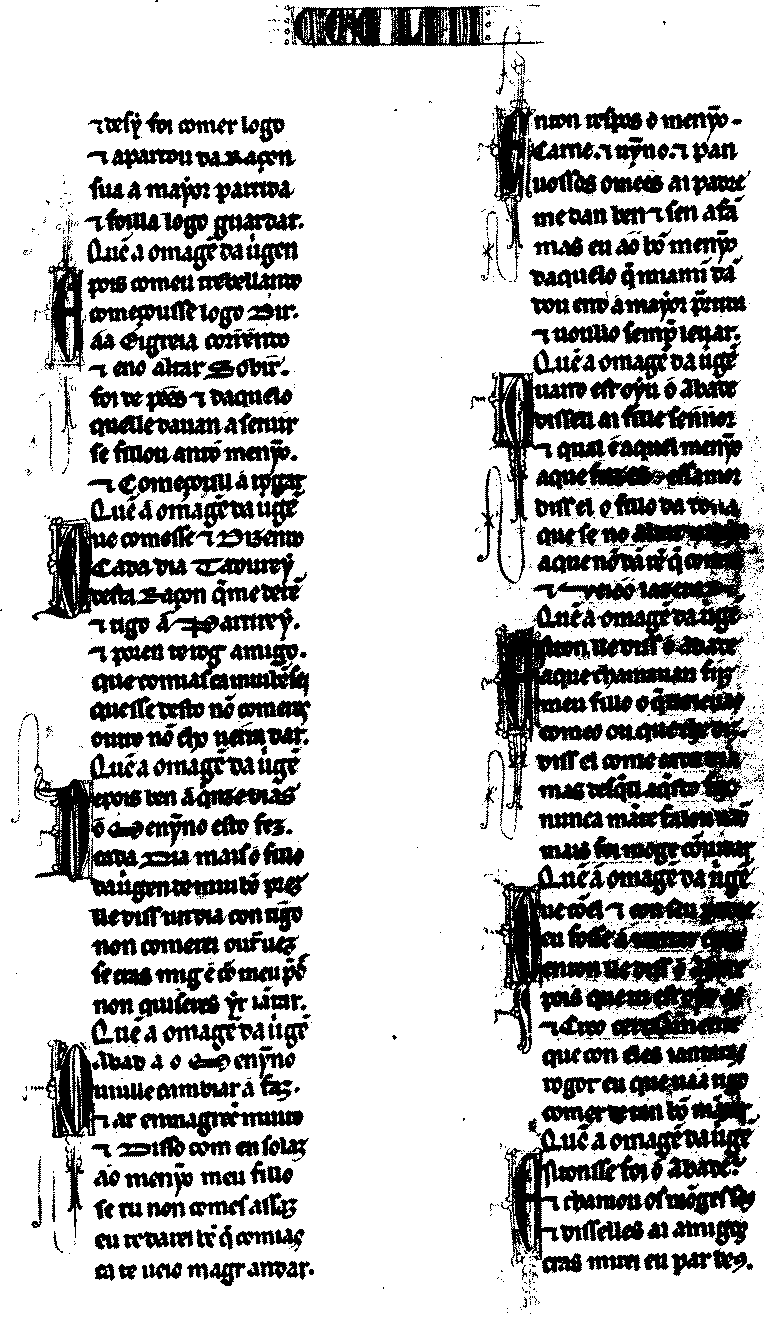
- a. 1284, Alfonso X of Castile, Cantigas de Santa Maria, Códice de los músicos, cantiga 353 (facsimile):
- con tigo non comerei out[ra] vez / ſe cras mige cõ meu p[adre] non quiſeres yr iãntar.
- I shall not eat with you again unless you will go to dine with me and my Father tomorrow.
- con tigo non comerei out[ra] vez / ſe cras mige cõ meu p[adre] non quiſeres yr iãntar.
Descendants
See also
Old Spanish
Etymology
Pronunciation
- IPA(key): /ˈkɾas/
Adverb
cras
- tomorrow
- c. 1140 – 1207, anonymous, Poem of the Cid 537–538:
- Todos ſodes pagados ⁊ ninguno nõ por pagar
Cras ala mañana penſemos de caualgaꝛ- All of you have been paid, none remains to be paid
Tomorrow morning let's get ready to ride
- All of you have been paid, none remains to be paid
- Todos ſodes pagados ⁊ ninguno nõ por pagar
Descendants
- Spanish: cras (obsolete)
Romanian
Etymology
Borrowed from French crasse, Latin crassus. Doublet of gras.
Adjective
cras m or n (feminine singular crasă, masculine plural crași, feminine/neuter plural crase)
Declension
| singular | plural | ||||||
|---|---|---|---|---|---|---|---|
| masculine | neuter | feminine | masculine | neuter | feminine | ||
| nominative- accusative |
indefinite | cras | crasă | crași | crase | ||
| definite | crasul | crasa | crașii | crasele | |||
| genitive- dative |
indefinite | cras | crase | crași | crase | ||
| definite | crasului | crasei | crașilor | craselor | |||
Sardinian
Etymology
Pronunciation
- IPA(key): /ˈkras/, [ˈkɾaː.ză]
Adverb
cras
References
- AIS: Sprach- und Sachatlas Italiens und der Südschweiz [Linguistic and Ethnographic Atlas of Italy and Southern Switzerland] – map 347: “domani” – on navigais-web.pd.istc.cnr.it
Spanish
Etymology
Inherited from Old Spanish cras, from Latin crās.
Pronunciation
- IPA(key): /ˈkɾas/ [ˈkɾas]
- Rhymes: -as
- Syllabification: cras
Adverb
cras
- (obsolete) tomorrow
- Synonym: mañana
- 1589, Juan de Pineda, Diálogos familiares de la agricultura cristiana 58:
- La corneja dice con su canto cras, cras, que quiere decir mañana; mañana, también como el canto de los cuervos; y ansí los que viven de esperanzas pasan de día en día, prometiéndose buenaventura para los venideros, y porque en la materia de virtudes es mal caso dejar para mañana el bien, que hoy se puede hacer, condena Dios en la ley por aves inmundas a todos los linajes de cuervos, que siempre dicen cras o mañana.
- A small crow says in its song, cras cras, which means 'tomorrow', so does the song of regular crows. This is how those who live off hope pass their days, promising to themselves better times in future days. Among virtues, it is bad form to leave the good that can be done today till tomorrow, and so God condemns all types of crows as foul birds, because they say cras, that is 'tomorrow'.
- La corneja dice con su canto cras, cras, que quiere decir mañana; mañana, también como el canto de los cuervos; y ansí los que viven de esperanzas pasan de día en día, prometiéndose buenaventura para los venideros, y porque en la materia de virtudes es mal caso dejar para mañana el bien, que hoy se puede hacer, condena Dios en la ley por aves inmundas a todos los linajes de cuervos, que siempre dicen cras o mañana.
Usage notes
- Already obsolescent by the late 16th century.
Further reading
- “cras”, in Diccionario de la lengua española [Dictionary of the Spanish Language] (in Spanish), 24th edition, Royal Spanish Academy [Spanish: Real Academia Española], 30 October 2026
Welsh
Etymology
From Proto-Celtic *krasto- (“dry”).[1] This could be from Proto-Indo-European *kr̥s-to-, participial adjective of *kseros (“dry”), see also Ancient Greek ξηρός (xērós, “dry”). Compare Cornish kras (“toasted”).
Pronunciation
- IPA(key): /kraːs/
- Rhymes: -aːs
Adjective
cras (feminine singular cras, plural creision, comparative crasach, equative crased, superlative crasaf)
Derived terms
Noun
cras m (plural creision)
Derived terms
References
Further reading
- R. J. Thomas, G. A. Bevan, P. J. Donovan, A. Hawke, et al., editors (1950–present), “cras”, in Geiriadur Prifysgol Cymru Online (in Welsh), University of Wales Centre for Advanced Welsh & Celtic Studies
- Catalan terms derived from Latin
- Catalan terms with IPA pronunciation
- Catalan lemmas
- Catalan adjectives
- Latin terms derived from the Proto-Indo-European root *ḱerh₂- (head)
- Latin terms derived from the Proto-Indo-European root *ḱer- (grow)
- Latin terms derived from Proto-Italic
- Latin terms derived from Proto-Indo-European
- Latin terms inherited from Proto-Italic
- Latin 1-syllable words
- Latin terms with IPA pronunciation
- Rhymes:Latin/aːs
- Rhymes:Latin/aːs/1 syllable
- Latin lemmas
- Latin adverbs
- Latin uncomparable adverbs
- Latin terms with usage examples
- Latin terms with quotations
- la:Time
- Latin words in Meissner and Auden's phrasebook
- Old French terms inherited from Latin
- Old French terms derived from Latin
- Old French lemmas
- Old French nouns
- Old French masculine nouns
- Old Galician-Portuguese terms derived from the Proto-Indo-European root *ḱer- (grow)
- Old Galician-Portuguese terms derived from Latin
- Old Galician-Portuguese terms derived from Proto-Indo-European
- Old Galician-Portuguese terms derived from Proto-Italic
- Old Galician-Portuguese terms derived from the Proto-Indo-European root *ḱerh₂- (head)
- Old Galician-Portuguese terms inherited from Latin
- Old Galician-Portuguese terms inherited from Proto-Italic
- Old Galician-Portuguese terms with IPA pronunciation
- Old Galician-Portuguese lemmas
- Old Galician-Portuguese adverbs
- Old Galician-Portuguese terms with quotations
- Old Spanish terms inherited from Latin
- Old Spanish terms derived from Latin
- Old Spanish terms with IPA pronunciation
- Old Spanish lemmas
- Old Spanish adverbs
- Old Spanish terms with quotations
- Romanian terms borrowed from French
- Romanian terms derived from French
- Romanian terms derived from Latin
- Romanian doublets
- Romanian lemmas
- Romanian adjectives
- Sardinian terms inherited from Latin
- Sardinian terms derived from Latin
- Sardinian terms with IPA pronunciation
- Sardinian lemmas
- Sardinian adverbs
- sc:Future
- Spanish terms inherited from Old Spanish
- Spanish terms inherited from Latin
- Spanish terms derived from Proto-Indo-European
- Spanish terms derived from Proto-Italic
- Spanish terms derived from the Proto-Indo-European root *ḱerh₂- (head)
- Spanish terms inherited from Proto-Italic
- Spanish terms derived from Old Spanish
- Spanish terms derived from the Proto-Indo-European root *ḱer- (grow)
- Spanish terms derived from Latin
- Spanish 1-syllable words
- Spanish terms with IPA pronunciation
- Rhymes:Spanish/as
- Rhymes:Spanish/as/1 syllable
- Spanish lemmas
- Spanish adverbs
- Spanish terms with obsolete senses
- Spanish terms with quotations
- Welsh terms inherited from Proto-Celtic
- Welsh terms derived from Proto-Celtic
- Welsh terms derived from Proto-Indo-European
- Welsh terms with IPA pronunciation
- Rhymes:Welsh/aːs
- Rhymes:Welsh/aːs/1 syllable
- Welsh lemmas
- Welsh adjectives
- Welsh comparable adjectives
- Welsh nouns
- Welsh countable nouns
- Welsh masculine nouns