波
| ||||||||
Translingual
Han character
波 (Kangxi radical 85, 水+5, 8 strokes, Cangjie input 水木竹水 (EDHE), four-corner 34147, composition ⿰氵皮)
Derived characters
Descendants
- Japanese: は (ha)
References
- Kangxi Dictionary: page 617, character 8
- Dai Kanwa Jiten: character 17308
- Dae Jaweon: page 1012, character 6
- Hanyu Da Zidian (first edition): volume 3, page 1597, character 7
- Unihan data for U+6CE2
Chinese

Glyph origin
| Historical forms of the character 波 |
|---|
| Shuowen Jiezi (compiled in Han) |
| Small seal script |

|
| Old Chinese | |
|---|---|
| 陂 | *pral, *prals, *pʰaːl |
| 詖 | *pral, *prals |
| 彼 | *pralʔ |
| 柀 | *pralʔ |
| 佊 | *pralʔ, *prals |
| 貱 | *prals |
| 跛 | *prals, *paːlʔ |
| 披 | *pʰral, *pʰralʔ |
| 鈹 | *pʰral |
| 帔 | *pʰral, *pʰrals |
| 鮍 | *pʰral |
| 耚 | *pʰral |
| 狓 | *pʰral |
| 翍 | *pʰral |
| 旇 | *pʰral, *brals |
| 秛 | *pʰral, *pʰrals |
| 紴 | *pʰralʔ, *paːl |
| 皮 | *bral |
| 疲 | *bral |
| 被 | *bralʔ, *brals |
| 髲 | *brals |
| 鞁 | *brals |
| 骳 | *mbralʔ |
| 波 | *paːl |
| 碆 | *paːl, *baːl |
| 菠 | *paːl |
| 簸 | *paːlʔ, *paːls |
| 駊 | *paːlʔ, *pʰaːlʔ |
| 頗 | *pʰaːl, *pʰaːlʔ, *pʰaːls |
| 坡 | *pʰaːl |
| 玻 | *pʰaːl |
| 破 | *pʰaːls |
| 婆 | *baːl |
| 蔢 | *baːl |
Phono-semantic compound (形聲 / 形声, OC *paːl): semantic 氵 (“water”) + phonetic 皮 (OC *bral, “surface”).
Etymology 1
| simp. and trad. |
波 | |
|---|---|---|
- “wave; undulation”
- Debated.
- STEDT and Starostin derive it from Proto-Sino-Tibetan *r/m-ba (“wave; ripple”). Cognate with Tibetan རྦ (rba), དབའ (dba', “wave”).
- Schuessler (2007) notes a mismatch of the vowels in the above comparanda, and instead posits a root *paj (“slanted; not level”), also subsuming 陂 (OC *pral, “slope; slanting”).
- Wang (1982) relates it to 播 (OC *paːls, “to winnow”), 簸 (OC *paːlʔ, *paːls, “to winnow”).
Pronunciation
- Mandarin
- Cantonese
- Gan (Wiktionary): bo1
- Hakka
- Jin (Wiktionary): be1
- Northern Min (KCR): bó̤
- Eastern Min (BUC): pŏ̤
- Puxian Min (Pouseng Ping'ing): bor1
- Southern Min
- Southern Pinghua (Nanning, Jyutping++): bo1
- Wu (Wugniu)
- Xiang (Changsha, Wiktionary): bo1
- Mandarin
- (Standard Chinese)+
- Hanyu Pinyin: bō
- Zhuyin: ㄅㄛ
- Tongyong Pinyin: bo
- Wade–Giles: po1
- Yale: bwō
- Gwoyeu Romatzyh: bo
- Palladius: бо (bo)
- Sinological IPA (key): /pu̯ɔ⁵⁵/
- (Standard Chinese, variant in Beijing and Taiwan)+
- Hanyu Pinyin: pō
- Zhuyin: ㄆㄛ
- Tongyong Pinyin: po
- Wade–Giles: pʻo1
- Yale: pwō
- Gwoyeu Romatzyh: po
- Palladius: по (po)
- Sinological IPA (key): /pʰu̯ɔ⁵⁵/
- (Chengdu)
- Sichuanese Pinyin: bo1
- Scuanxua Ladinxua Xin Wenz: bo
- Sinological IPA (key): /po⁵⁵/
- (Xi'an)
- Guanzhong Pinyin: pǒ
- Sinological IPA (key): /pʰo²¹/
- (Nanjing)
- Nanjing Pinyin: bò
- Nanjing Pinyin (numbered): bo1
- Sinological IPA (key): /po³¹/
- (Dungan)
- (Note: Dungan pronunciation is currently experimental and may be inaccurate.)
- (Standard Chinese)+
- Cantonese
- (Standard Cantonese, Guangzhou–Hong Kong)
- Jyutping: bo1
- Yale: bō
- Cantonese Pinyin: bo1
- Guangdong Romanization: bo1
- Sinological IPA (key): /pɔː⁵⁵/
- (Dongguan, Guancheng)
- Jyutping++: bo1
- Sinological IPA (key): /pɔ²¹³/
- (Taishanese, Taicheng)
- Wiktionary: bo1
- Sinological IPA (key): /pᵘɔ³³/
- (Standard Cantonese, Guangzhou–Hong Kong)
- Gan
- Hakka
- (Sixian, incl. Miaoli and Neipu)
- Pha̍k-fa-sṳ: pô / phô
- Hakka Romanization System: boˊ / poˊ
- Hagfa Pinyim: bo1 / po1
- Sinological IPA: /po²⁴/, /pʰo²⁴/
- (Hailu, incl. Zhudong)
- Hakka Romanization System: poˋ
- Sinological IPA: /pʰo⁵³/
- (Meixian)
- Guangdong: bo1
- Sinological IPA: /po⁴⁴/
- (Sixian, incl. Miaoli and Neipu)
- Jin
- Northern Min
- (Jian'ou)
- Kienning Colloquial Romanized: bó̤
- Sinological IPA (key): /pɔ⁵⁴/
- (Jian'ou)
- Eastern Min
- Puxian Min
- (Putian)
- Pouseng Ping'ing: bor1
- Báⁿ-uā-ci̍: bo̤
- Sinological IPA (key): /pɒ⁵³³/
- (Xianyou)
- Pouseng Ping'ing: bor1
- Sinological IPA (key): /pɒ⁵⁴⁴/
- (Putian)
- Southern Min
- (Hokkien: Xiamen, Quanzhou, Zhangzhou, Jinjiang, General Taiwanese)
- Pe̍h-ōe-jī: pho
- Tâi-lô: pho
- Phofsit Daibuun: phoy
- Sinological IPA (Kaohsiung): /pʰɤ⁴⁴/
- Sinological IPA (Quanzhou, Jinjiang): /pʰo³³/
- Sinological IPA (Xiamen, Zhangzhou, Taipei): /pʰo⁴⁴/
- (Hokkien: Xiamen, Quanzhou, General Taiwanese)
- Pe̍h-ōe-jī: po
- Tâi-lô: po
- Phofsit Daibuun: poy
- Sinological IPA (Kaohsiung): /pɤ⁴⁴/
- Sinological IPA (Quanzhou): /po³³/
- Sinological IPA (Xiamen, Taipei): /po⁴⁴/
- (Hokkien: Quanzhou, Jinjiang)
- Pe̍h-ōe-jī: po͘
- Tâi-lô: poo
- Phofsit Daibuun: pof
- Sinological IPA (Quanzhou, Jinjiang): /pɔ³³/
- (Teochew)
- Peng'im: bo1
- Pe̍h-ōe-jī-like: po
- Sinological IPA (key): /po³³/
- (Leizhou)
- Leizhou Pinyin: bo1
- Sinological IPA: /pɔ³⁵/
- (Hokkien: Xiamen, Quanzhou, Zhangzhou, Jinjiang, General Taiwanese)
- Southern Pinghua
- (Nanning Pinghua, Tingzi)
- Jyutping++: bo1
- Sinological IPA (key): /po⁵³/
- (Nanning Pinghua, Tingzi)
- Wu
- (Northern: Shanghai, Jiading, Songjiang, Chongming, Suzhou, Kunshan, Jiaxing)
- Wugniu: 1pu
- MiniDict: pu平
- Wiktionary Romanisation (Shanghai): 1pu
- Sinological IPA (Shanghai): /pu⁵³/
- Sinological IPA (Jiading): /pu⁵³/
- Sinological IPA (Songjiang): /ɓu⁵³/
- Sinological IPA (Chongming): /pu⁵⁵/
- Sinological IPA (Suzhou): /pu⁴⁴/
- Sinological IPA (Kunshan): /pu⁵⁵/
- Sinological IPA (Jiaxing): /pu⁵³/
- (Northern: Changzhou, Ningbo, Zhoushan)
- (Northern: Hangzhou, Shaoxing)
- (Northern: Shanghai, Jiaxing, Ningbo)
- (Jinhua)
- Wugniu: 1po; 1poe
- Sinological IPA (Jinhua): /po³³⁴/, /pɤ³³⁴/
- (Northern: Shanghai, Jiading, Songjiang, Chongming, Suzhou, Kunshan, Jiaxing)
- Dialectal data
- Middle Chinese: pa
- Old Chinese
- (Baxter–Sagart): /*pˤaj/
- (Zhengzhang): /*paːl/
Definitions
波
- wave; breaker
- undulation
- (physics) wave
- (Sichuanese, including Chongqing and Neijiang) elderly person
- short for 波蘭/波兰 (Bōlán, “Poland”)
- short for 波斯 (Bōsī, “Persia”)
- a surname
- used in 波羅/波罗 (bōluó), alternative form of 菠蘿 / 菠萝 (bōluó)
- Used in transcription.
Synonyms
Compounds
- 一寸秋波
- 一波
- 一波三折 (yībōsānzhé)
- 三角波 (sānjiǎobō)
- 中波波段
- 中短波
- 也波
- 仁波切 (rénbōqiè)
- 伏波
- 偃波書 / 偃波书
- 光波 (guāngbō)
- 六波羅蜜 / 六波罗蜜
- 凌波 (língbō)
- 凌波仙子
- 凌波微步
- 凌波殿
- 凌波舞
- 凌波襪
- 則波 / 则波
- 加利波里
- 加里波的
- 古井不波
- 古井無波 / 古井无波
- 古井重波
- 周波 (zhōubō)
- 回波
- 太陽電波 / 太阳电波
- 奔波
- 奔波勞碌 / 奔波劳碌 (bēnbōláolù)
- 嬌波 / 娇波
- 孤子波 (gūzǐ bō)
- 孤波 (gūbō)
- 孤立子波 (gūlìzǐ bō)
- 孤立波 (gūlìbō)
- 寧波市 / 宁波市
- 尺水丈波
- 尺波
- 尺波電謝 / 尺波电谢
- 巴波亞 / 巴波亚 (bābōyà)
- 平地波瀾 / 平地波澜
- 平地風波 / 平地风波
- 強波器 / 强波器
- 微波 (wēibō)
- 微波爐 / 微波炉 (wēibōlú)
- 微波食品
- 心波
- 急波波
- 恩波
- 情海生波
- 拔爾波亞 / 拔尔波亚
- 推波助瀾 / 推波助澜 (tuībōzhùlán)
- 捲浪翻波 / 卷浪翻波
- 揚波 / 扬波
- 擁霧翻波 / 拥雾翻波
- 擺動波 / 摆动波
- 政治波普
- 方波 (fāngbō)
- 暗送秋波 (ànsòngqiūbō)
- 曼波 (mànbō)
- 橫波 / 横波 (héngbō)
- 檢波 / 检波 (jiǎnbō)
- 歷經波折 / 历经波折
- 毫米波 (háomǐbō)
- 波以耳
- 波俏
- 波光
- 波光瀲灩 / 波光潋滟
- 波光粼粼 (bōguānglínlín)
- 波光蕩漾 / 波光荡漾
- 波光閃閃 / 波光闪闪
- 波函數 / 波函数 (bōhánshù)
- 波動 / 波动 (bōdòng)
- 波及 (bōjí)
- 波及無辜 / 波及无辜
- 波哥大 (Bōgēdà)
- 波喳
- 波士尼亞 / 波士尼亚 (Bōshìníyà)
- 波士頓 / 波士顿 (Bōshìdùn)
- 波多黎各 (Bōduōlígè)
- 波娘
- 波子曼
- 波導 / 波导 (bōdǎo)
- 波導管 / 波导管 (bōdǎoguǎn)
- 波峰 (bōfēng)
- 波峭
- 波布政權 / 波布政权
- 波布那
- 波希
- 波希戰爭 / 波希战争
- 波希米亞 / 波希米亚 (Bōxīmǐyà)
- 波幅 (bōfú)
- 波平浪靜 / 波平浪静
- 波形 (bōxíng)
- 波形板
- 波微
- 波恩病
- 波扇
- 波折 (bōzhé)
- 波提且利
- 波斯 (Bōsī)
- 波斯喀木 (Bōsīkāmù)
- 波斯國 / 波斯国 (Bōsī Guó)
- 波斯地毯
- 波斯尼亞和黑塞哥維那 / 波斯尼亚和黑塞哥维那 (Bōsīníyà hé Hēisàigēwéinà)
- 波斯帝國 / 波斯帝国
- 波斯教 (Bōsījiào)
- 波斯灣 / 波斯湾 (Bōsī Wān)
- 波斯皁莢 / 波斯皂荚
- 波斯菊
- 波旁王朝
- 波昂
- 波札那 (Bōzhánà)
- 波束 (bōshù)
- 波查
- 波段 (bōduàn)
- 波河
- 波波 (bōbō)
- 波波劫劫
- 波波吒吒
- 波河平原
- 波波悄悄
- 波波淥淥 / 波波渌渌
- 波波漉漉
- 波波碌碌
- 沿波討源 / 沿波讨源
- 波津
- 波流
- 波洛克
- 波浪 (bōlàng)
- 波浪熱 / 波浪热
- 波浪週期 / 波浪周期
- 波浪銳度 / 波浪锐度
- 波浪阻力
- 波涌雲亂 / 波涌云乱 (bōyǒngyúnluàn)
- 波浪鼓 (bōlànggǔ)
- 波源 (bōyuán)
- 波漾
- 波濤 / 波涛 (bōtāo)
- 波濤洶湧 / 波涛汹涌 (bōtāoxiōngyǒng)
- 波瀾 / 波澜 (bōlán)
- 波瀾壯闊 / 波澜壮阔 (bōlánzhuàngkuò)
- 波瀾老成 / 波澜老成
- 波爾 / 波尔
- 波爾卡 / 波尔卡 (bō'ěrkǎ)
- 波爾卡舞 / 波尔卡舞
- 波爾多 / 波尔多 (Bō'ěrduō)
- 波特 (Bōtè)
- 波特萊爾 / 波特莱尔
- 波特酒
- 波狀熱 / 波状热 (bōzhuàngrè)
- 波痕
- 波盪 / 波荡 (bōdàng)
- 波磔 (bōzhé)
- 波磔點畫 / 波磔点画
- 波稜菜 / 波棱菜
- 波節 / 波节 (bōjié)
- 波紋 / 波纹 (bōwén)
- 波紋如縠 / 波纹如縠
- 波納爾 / 波纳尔
- 波紋管 / 波纹管
- 波累 (bōlěi)
- 波羅 / 波罗 (bōluó)
- 波羅夷 / 波罗夷 (bōluóyí)
- 波羅的海 / 波罗的海 (Bōluódì Hǎi)
- 波羅蓋 / 波罗盖 (bōluógài)
- 波羅蜜 / 波罗蜜 (bōluómì)
- 波羅門教 / 波罗门教
- 波群
- 波耳
- 波能
- 波腹 (bōfù)
- 波臣
- 波臣派
- 波若 (bōrě)
- 波茨坦 (Bōcítǎn)
- 波蕩 / 波荡 (bōdàng)
- 波蘭 / 波兰 (Bōlán)
- 波蘭舞曲 / 波兰舞曲
- 波蘭走廊 / 波兰走廊
- 波詭雲譎 / 波诡云谲 (bōguǐyúnjué)
- 波譜 / 波谱 (bōpǔ)
- 波譎雲詭 / 波谲云诡 (bōjuéyúnguǐ)
- 波谷 (bōgǔ)
- 波路壯闊 / 波路壮阔
- 波蹅
- 波迸
- 波逃
- 波迸流移
- 波速
- 波道
- 波長 / 波长 (bōcháng)
- 波開浪裂 / 波开浪裂
- 波隆那
- 波霸 (bōbà)
- 波音 (Bōyīn)
- 波高
- 波髮藻 / 波发藻
- 波黑 (Bōhēi)
- 洪波 (hóngbō)
- 流波
- 洪波滾雪 / 洪波滚雪
- 海不揚波 / 海不扬波 (hǎibùyángbō)
- 海不波溢
- 浪恬波靜 / 浪恬波静
- 海波 (hǎibō)
- 海波不驚 / 海波不惊
- 消波塊 / 消波块 (xiāobōkuài)
- 海沸波翻
- 淚波 / 泪波
- 淪波舟 / 沦波舟
- 淺海波 / 浅海波
- 溢波
- 澴波
- 濾波 / 滤波 (lǜbō)
- 濾波器 / 滤波器 (lǜbōqì)
- 無波無浪 / 无波无浪
- 無線電波 / 无线电波 (wúxiàndiànbō)
- 煙波 / 烟波 (yānbō)
- 煙波客 / 烟波客
- 煙波浩渺 / 烟波浩渺
- 煙波萬頃 / 烟波万顷
- 煙波釣叟 / 烟波钓叟
- 煙波釣徒 / 烟波钓徒
- 爆炸波
- 的黎波里
- 目波
- 眼波 (yǎnbō)
- 短波 (duǎnbō)
- 短波廣播 / 短波广播
- 碌碌波波
- 碧波 (bìbō)
- 碧波爽清
- 碧波萬頃 / 碧波万顷
- 示波器 (shìbōqì)
- 秋波 (qiūbō)
- 秋波送情 (qiūbō sòngqíng)
- 第一波
- 簾波 / 帘波
- 粼粼波光
- 縱波 / 纵波 (zòngbō)
- 群波
- 老魚跳波 / 老鱼跳波 (lǎoyútiàobō)
- 者波
- 聲波 / 声波 (shēngbō)
- 脈波體 / 脉波体
- 腦波 / 脑波 (nǎobō)
- 臉波 / 脸波
- 臨去秋波 / 临去秋波
- 藍波 / 蓝波
- 藍波主義 / 蓝波主义
- 衝擊波 / 冲击波 (chōngjībō)
- 衝波激浪 / 冲波激浪
- 衝波逆折 / 冲波逆折
- 西風波 / 西风波
- 趁波逐浪
- 趁浪逐波
- 超短波 (chāoduǎnbō)
- 超聲波 / 超声波 (chāoshēngbō)
- 超音波 (chāoyīnbō)
- 軒然大波 / 轩然大波 (xuānrándàbō)
- 載波 / 载波 (zàibō)
- 送秋波 (sòngqiūbō)
- 逐浪隨波 / 逐浪随波
- 金波
- 金波玉液
- 鋸齒波 / 锯齿波 (jùchǐbō)
- 長波 / 长波 (chángbō)
- 防波堤 (fángbōdī)
- 阿波羅 / 阿波罗 (Ābōluó)
- 隨波漂流 / 随波漂流
- 隨波逐塵 / 随波逐尘
- 隨波逐流 / 随波逐流 (suíbōzhúliú)
- 隨波逐浪 / 随波逐浪
- 雲譎波詭 / 云谲波诡 (yúnjuébōguǐ)
- 電波 / 电波 (diànbō)
- 電磁波 / 电磁波 (diàncíbō)
- 震波 (zhènbō)
- 震波測勘 / 震波测勘
- 面波羅 / 面波罗
- 音波 (yīnbō)
- 頹波 / 颓波
- 風平波息 / 风平波息
- 風波 / 风波
- 風波亭 / 风波亭
- 風波平地 / 风波平地
- 餘波 / 余波 (yúbō)
- 餘波盪漾 / 余波荡漾
- 香波 (xiāngbō)
- 駐波 / 驻波 (zhùbō)
- 鯨波 / 鲸波
- 鱗波 / 鳞波 (línbō)
- 鷗波 / 鸥波
- 麼波 / 么波
Etymology 2
| simp. and trad. |
波 | |
|---|---|---|
Borrowed from English ball. Compare Hokkien bò͘-lù.
Pronunciation
- Mandarin
- Cantonese
- Southern Min (Leizhou, Leizhou Pinyin): bo7
- Mandarin
- (Standard Chinese)+
- Hanyu Pinyin: bō
- Zhuyin: ㄅㄛ
- Tongyong Pinyin: bo
- Wade–Giles: po1
- Yale: bwō
- Gwoyeu Romatzyh: bo
- Palladius: бо (bo)
- Sinological IPA (key): /pu̯ɔ⁵⁵/
- (Standard Chinese)+
- Cantonese
- (Standard Cantonese, Guangzhou–Hong Kong)
- Jyutping: bo1
- Yale: bō
- Cantonese Pinyin: bo1
- Guangdong Romanization: bo1
- Sinological IPA (key): /pɔː⁵⁵/
- (Dongguan, Guancheng)
- Jyutping++: bo1-0
- Sinological IPA (key): /pɔ²¹³⁻⁵⁵/
- (Taishanese, Taicheng)
- Wiktionary: bo1* / bo1
- Sinological IPA (key): /pᵘɔ³³⁻³³⁵/, /pᵘɔ³³/
- (Standard Cantonese, Guangzhou–Hong Kong)
- Southern Min
- (Leizhou)
- Leizhou Pinyin: bo7
- Sinological IPA: /pɔ⁵⁵/
- (Leizhou)
Definitions
波
- (Cantonese, Leizhou Min, Hainanese) ball (Classifier: 個/个 c; 粒 c)
- (Cantonese) ball game, especially football (Classifier: 場/场 c)
- (Cantonese) team in a ball game, especially football (Classifier: 隊/队 c)
- (Cantonese) goal (act of scoring with the ball) in a ball game, especially football (Classifier: 球 c)
- (Cantonese) automotive gear, gearbox; transmission
- (Hong Kong Cantonese) typhoon signal (issued by the Hong Kong Observatory)
- 八號波/八号波 [Hong Kong Cantonese] ― baat3 hou6 bo1 [Jyutping] ― Typhoon Signal No. 8
- (chiefly Hong Kong Cantonese, figurative) boob; breast (Classifier: 對/对 c; 個/个 c)
- 波大冇腦/波大冇脑 [Hong Kong Cantonese] ― bo1 daai6 mou5 nou5 [Jyutping] ― with big boobs but brainless
- (Hong Kong Cantonese) ball; dance party (Classifier: 個/个 c)
- (Hong Kong Cantonese, figuratively, always with the classifier) responsibility (Classifier: 個/个 c)
Synonyms
- (ball):
Compounds
- D波 (Cantonese)
- L波 (Cantonese)
- N波 (en1 bo1) (Cantonese)
- pink波 (ping1 bo1) (Cantonese)
- P波 (pi1 bo1) (Cantonese)
- R波 (Cantonese)
- S波 (e1 si4 bo1) (Cantonese)
- 三分波 (saam1 fan1 bo1) (Cantonese)
- 世界波 (sai3 gaai3 bo1) (Cantonese)
- 乒乓波 (bing1 bam1 bo1) (Cantonese)
- 交波 (gaau1 bo1) (Cantonese)
- 低波 (dai1 bo1) (Cantonese)
- 傳波 / 传波 (Cantonese)
- 入波 (jap6 bo1) (Cantonese)
- 八字波 (Cantonese)
- 出波 (Cantonese)
- 吹波仔 (ceoi1 bo1 zai2) (Cantonese)
- 吹波糖 (ceoi1 bo1 tong4-2) (Cantonese)
- 吹波膠 / 吹波胶 (ceoi1 bo1 gaau1) (Cantonese)
- 和波 (wo4 bo1) (Cantonese)
- 坐波監 / 坐波监 (Cantonese)
- 大波 (daai6 bo1) (Cantonese)
- 大波妹 (Cantonese)
- 失波 (Cantonese)
- 好波 (hou2 bo1) (Cantonese)
- 射波 (se6 bo1) (Cantonese)
- 屎波 (si2 bo1) (Cantonese)
- 帶波 / 带波 (Cantonese)
- 後波 / 后波 (hau6 bo1) (Cantonese)
- 打假波 (daa2 gaa2 bo1) (Cantonese)
- 打波 (daa2 bo1) (Cantonese)
- 扭波 (Cantonese)
- 拋波 / 抛波 (Cantonese)
- 揸波 (Cantonese)
- 斬波 / 斩波 (Cantonese)
- 棍波 (gwan3 bo1) (Cantonese)
- 檯波 / 台波 (toi2 bo1) (Cantonese)
- 殺波 / 杀波 (saat3 bo1) (Cantonese)
- 沙灘波 / 沙滩波 (saa1 taan1 bo1) (Cantonese)
- 波地 (bo1 dei6-2) (Cantonese)
- 波場 / 波场 (bo1 coeng4) (Cantonese)
- 波夾棍 / 波夹棍 (Cantonese)
- 波子 (bo1 zi2) (Cantonese)
- 波帽 (bo1 mou6-2) (Cantonese)
- 波恤 (Cantonese)
- 波板 (bo1 baan2) (Cantonese)
- 波板糖 (bo1 baan2 tong4-2) (Cantonese)
- 波棍 (bo1 gwan3) (Cantonese)
- 波樓 / 波楼 (bo1 lau4-2) (Cantonese)
- 波檯 / 波台 (Cantonese)
- 波波 (bo1 bo1) (Cantonese)
- 波濤洶湧 / 波涛汹涌 (bo1 tou4 hung1 jung2) (Cantonese)
- 波牛 (Cantonese)
- 波砵 (bo1 but1) (Cantonese)
- 波箱 (bo1 soeng1) (Cantonese)
- 波經 / 波经 (Cantonese)
- 波纜 / 波缆 (Cantonese)
- 波罅 (bo1 laa3) (Cantonese)
- 波衫 (bo1 saam1) (Cantonese)
- 波褲 / 波裤 (Cantonese)
- 波迷 (Cantonese)
- 波霸 (bo1 baa3) (Cantonese)
- 波鞋 (bo1 haai4) (Cantonese)
- 波飛 / 波飞 (bo1 fei1) (Cantonese)
- 烏龍波 / 乌龙波 (wu1 lung4-2 bo1) (Cantonese)
- 空波 (hung1 bo1) (Cantonese)
- 篤波 / 笃波 (duk1 bo1) (Cantonese)
- 羽毛波 (jyu5 mou4 bo1) (Cantonese)
- 老波骨 (lou5 bo1 gwat1) (Cantonese)
- 肥仔波 (fei4 zai2 bo1) (Cantonese)
- 自動波 / 自动波 (zi6 dung6 bo1) (Cantonese)
- 草波 (cou2 bo1) (Cantonese)
- 落波 (lok6 bo1) (Cantonese)
- 西瓜波 (Cantonese)
- 講波 / 讲波 (Cantonese)
- 講波佬 / 讲波佬 (gong2 bo1 lou2) (Cantonese)
- 講波箱 / 讲波箱 (Cantonese)
- 賭波 / 赌波 (dou2 bo1) (Cantonese)
- 踢波 (tek3 bo1) (Cantonese)
- 轉波 / 转波 (zyun3 bo1) (Cantonese)
- 通波仔 (tung1 bo1 zai2) (Cantonese)
- 針波 / 针波 (Cantonese)
- 開波 / 开波 (hoi1 bo1) (Cantonese)
- 食波餅 / 食波饼 (sik6 bo1 beng2) (Cantonese)
- 高波 (Cantonese)
- 鬥波 / 斗波 (Cantonese)
- 黃波燈 / 黄波灯 (wong4 bo1 dang1) (Cantonese)
Etymology 3
| simp. and trad. |
波 | |
|---|---|---|
| alternative forms | 罷/罢 | |
Likely also from 罷/罢 (bà) and 夫 (OC *ba, “is it not?”), itself a contraction of 不乎. See 吧 (ba).
Pronunciation
- Mandarin
- (Standard Chinese)+
- Hanyu Pinyin: bō
- Zhuyin: ㄅㄛ
- Tongyong Pinyin: bo
- Wade–Giles: po1
- Yale: bwō
- Gwoyeu Romatzyh: bo
- Palladius: бо (bo)
- Sinological IPA (key): /pu̯ɔ⁵⁵/
- (Standard Chinese)+
Definitions
波
- (early vernacular) Emphatic final particle; used at the end of a sentence to indicate a suggested action: why don't you ...; let us ...
- (early vernacular) Used at the end of a sentence used to indicate disapproving incredulousness.
- 孩兒,你教我怎生說波! [Written Vernacular Chinese, trad.]
- From: Yuan Dynasty, Guan Hanqing, The Injustice to Dou E
- Hái'ér, nǐ jiào wǒ zěnshēng shuō bō! [Pinyin]
- O my child, what am I to say! (literally, “what would you have me say!”)
孩儿,你教我怎生说波! [Written Vernacular Chinese, simp.]
- (early vernacular) A meaningless sentence-medial particle
Usage notes
- Usage 3 is most often seen in Yuan dynasty zaju dramas.
Synonyms
Etymology 4
| For pronunciation and definitions of 波 – see 簸 (“to winnow; to bump; to jerk; to jolt”). (This character is the second-round simplified form of 簸). |
Notes:
|
References
- “波”, in 漢語多功能字庫 (Multi-function Chinese Character Database)[2], 香港中文大學 (the Chinese University of Hong Kong), 2014–
Japanese
Kanji
Readings
Compounds
- 波蘭 (Pōrando)
Etymology 1
| Kanji in this term |
|---|
| 波 |
| なみ Grade: 3 |
| kun'yomi |
| Alternative spellings |
|---|
| 浪 (uncommon) 涛 (rare) |
⟨nami1⟩ → /namʲi/ → /nami/
From Old Japanese 浪 (nami1), from Proto-Japonic *nami.
Pronunciation
Noun
波 • (nami)
- a wave
- そのサーファーは一番大きな波に乗った。
- Sono sāfā wa ichiban ōkina nami ni notta.
- That surfer rode the biggest wave.
- そのサーファーは一番大きな波に乗った。
Derived terms
Proper noun
波 • (Nami)
- a female given name
Etymology 2
| Kanji in this term |
|---|
| 波 |
| は Grade: 3 |
| on'yomi |
/pa/ → /ɸa/ → /ha/
From Middle Chinese 波 (MC pa).
Pronunciation
- IPA(key): [ha̠]
Affix
波 • (ha)
Derived terms
Etymology 3
| Kanji in this term |
|---|
| 波 |
| ぽ Grade: 3 |
| irregular |
Short form of ateji (当て字) spelling 波蘭 (Pōrando).
Pronunciation
- IPA(key): [po̞]
Proper noun
波 • (Po)
References
- ^ Matsumura, Akira, editor (2006), 大辞林 [Daijirin] (in Japanese), Third edition, Tokyo: Sanseidō, →ISBN
- ^ NHK Broadcasting Culture Research Institute, editor (1998), NHK日本語発音アクセント辞典 [NHK Japanese Pronunciation Accent Dictionary] (in Japanese), Tokyo: NHK Publishing, Inc., →ISBN
- “波”, in 漢字ぺディア [Kanjipedia][3] (in Japanese), The Japan Kanji Aptitude Testing Foundation, 2015–2026
Korean
Etymology
From Middle Chinese 波 (MC pa). Recorded as Middle Korean 파 (pha) (Yale: pha) in Hunmong Jahoe (訓蒙字會 / 훈몽자회), 1527.
Hanja
- hanja form? of 파 (“wave, undulation”)
Compounds
- 고주파 (高周波, gojupa)
- 광파 (光波, gwangpa)
- 뇌파 (腦波, noepa)
- 방파제 (防波堤, bangpaje)
- 여파 (餘波, yeopa)
- 음파 (音波, eumpa)
- 인파 (人波, inpa)
- 전자기파 (電磁氣波, jeonjagipa)
- 전파 (電波, jeonpa, “electric or radio wave”)
- 주파수 (周波數, jupasu)
- 중력파 (重力波, jungnyeokpa)
- 지진파 (地震波, jijinpa)
- 초음파 (超音波, cho'eumpa)
- 추파 (秋波, chupa, “romantic move”)
- 충격파 (衝擊波, chunggyeokpa)
- 파급 (波及, pageup)
- 파도 (波濤, pado)
- 파동 (波動, padong)
- 파력 (波力, paryeok)
- 파문 (波紋, pamun, “ripple, undulation”)
- 풍파 (風波, pungpa)
- 한파 (寒波, hanpa)
References
- 국제퇴계학회 대구경북지부 (國際退溪學會 大邱慶北支部) (2007). Digital Hanja Dictionary, 전자사전/電子字典. [4]
Vietnamese
Han character
波: Hán Việt readings: ba[1][2][3][4][5][6][7][8]
波: Nôm readings: bể[1][2][3], pha[1][2], phà[1], phả[1], phá[2]
Etymology 1
Noun
波 • (ba)
Compounds
Combining form
波 • (ba)
Compounds
Etymology 2
Combining form
波 • (ba)
- chữ Nôm form of ba (“used in ba ba (“soft-shell turtle”)”)
Compounds
Etymology 3
Glyph origin
Phono-semantic compound (形聲 / 形声, bể): semantic 氵 (“water”) + abbreviated phonetic 彼 (bỉ).
See also 𣷭, an alternative form that uses the unabbreviated phonetic component.
Noun
波 • (bể)
- chữ Nôm form of bể (“sea, ocean”)
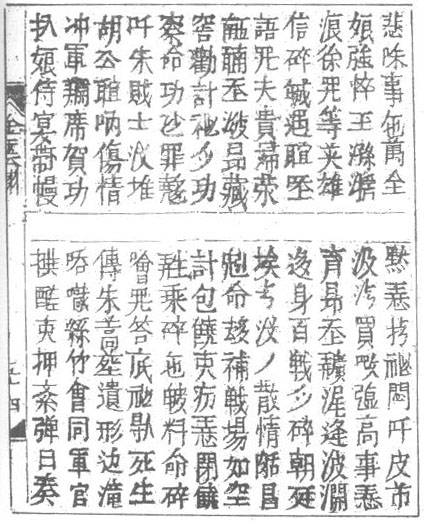
- 1820, 阮攸 [Nguyễn Du], compiled by 柳文堂 [Liễu Văn Đường], 金雲翹新傳 [Kim Vân Kiều tân truyện, New Story of Jin Yun Qiao][5], published 1871, page 54a:
- 浪徐𱺵等𮎦雄
育昂𡗶𢌌浘逢波𣾺- Rằng: Từ là đấng anh hùng,
Dọc ngang trời rộng, vẫy vùng bể khơi! - She said: "Từ was a great hero;
He went his way across the vast skies, and wandered freely in the open seas.
- Rằng: Từ là đấng anh hùng,
Etymology 4
Verb
波 • (phả)
References
- CJK Unified Ideographs block
- Han script characters
- Translingual lemmas
- Translingual symbols
- Han phono-semantic compounds
- Chinese terms inherited from Proto-Sino-Tibetan
- Chinese terms derived from Proto-Sino-Tibetan
- Mandarin terms with multiple pronunciations
- Chinese lemmas
- Mandarin lemmas
- Sichuanese lemmas
- Dungan lemmas
- Cantonese lemmas
- Taishanese lemmas
- Gan lemmas
- Hakka lemmas
- Jin lemmas
- Northern Min lemmas
- Eastern Min lemmas
- Hokkien lemmas
- Teochew lemmas
- Leizhou Min lemmas
- Puxian Min lemmas
- Southern Pinghua lemmas
- Wu lemmas
- Xiang lemmas
- Middle Chinese lemmas
- Old Chinese lemmas
- Chinese hanzi
- Mandarin hanzi
- Sichuanese hanzi
- Dungan hanzi
- Cantonese hanzi
- Taishanese hanzi
- Gan hanzi
- Hakka hanzi
- Jin hanzi
- Northern Min hanzi
- Eastern Min hanzi
- Hokkien hanzi
- Teochew hanzi
- Leizhou Min hanzi
- Puxian Min hanzi
- Southern Pinghua hanzi
- Wu hanzi
- Xiang hanzi
- Middle Chinese hanzi
- Old Chinese hanzi
- Chinese nouns
- Mandarin nouns
- Sichuanese nouns
- Dungan nouns
- Cantonese nouns
- Taishanese nouns
- Gan nouns
- Hakka nouns
- Jin nouns
- Northern Min nouns
- Eastern Min nouns
- Hokkien nouns
- Teochew nouns
- Leizhou Min nouns
- Puxian Min nouns
- Southern Pinghua nouns
- Wu nouns
- Xiang nouns
- Middle Chinese nouns
- Old Chinese nouns
- Chinese proper nouns
- Mandarin proper nouns
- Sichuanese proper nouns
- Dungan proper nouns
- Cantonese proper nouns
- Taishanese proper nouns
- Gan proper nouns
- Hakka proper nouns
- Jin proper nouns
- Northern Min proper nouns
- Eastern Min proper nouns
- Hokkien proper nouns
- Teochew proper nouns
- Leizhou Min proper nouns
- Puxian Min proper nouns
- Southern Pinghua proper nouns
- Wu proper nouns
- Xiang proper nouns
- Middle Chinese proper nouns
- Old Chinese proper nouns
- Chinese terms with IPA pronunciation
- Chinese terms spelled with 波
- zh:Physics
- Mandarin terms with usage examples
- Sichuanese Chinese
- Chinese short forms
- Chinese surnames
- Chinese terms borrowed from English
- Chinese terms derived from English
- Cantonese Chinese
- Leizhou Min Chinese
- Hainanese Chinese
- Chinese nouns classified by 個/个
- Chinese nouns classified by 粒
- Chinese nouns classified by 場/场
- Chinese nouns classified by 隊/队
- Chinese nouns classified by 球
- Cantonese terms with usage examples
- Hong Kong Cantonese
- Chinese nouns classified by 對/对
- Chinese terms with quotations
- Cantonese terms with quotations
- Chinese particles
- Mandarin particles
- Mandarin terms with quotations
- Chinese verbs
- Mandarin verbs
- Sichuanese verbs
- Cantonese verbs
- Hakka verbs
- Eastern Min verbs
- Hokkien verbs
- Teochew verbs
- Wu verbs
- Middle Chinese verbs
- Old Chinese verbs
- Chinese simplified forms
- Japanese kanji
- Japanese third grade kanji
- Japanese kyōiku kanji
- Japanese jōyō kanji
- Japanese kanji with goon reading は
- Japanese kanji with kan'on reading は
- Japanese kanji with kun reading なみ
- Japanese kanji with nanori reading ぽ
- Japanese terms spelled with 波 read as なみ
- Japanese terms read with kun'yomi
- Japanese terms inherited from Old Japanese
- Japanese terms derived from Old Japanese
- Japanese terms inherited from Proto-Japonic
- Japanese terms derived from Proto-Japonic
- Japanese terms with IPA pronunciation
- Japanese terms with Odaka pitch accent (Tōkyō)
- Japanese terms with IPA pronunciation with pitch accent
- Japanese lemmas
- Japanese nouns
- Japanese terms with multiple readings
- Japanese terms spelled with third grade kanji
- Japanese terms with 1 kanji
- Japanese terms spelled with 波
- Japanese single-kanji terms
- Japanese terms with usage examples
- Japanese proper nouns
- Japanese given names
- Japanese female given names
- Japanese terms spelled with 波 read as は
- Japanese terms read with on'yomi
- Japanese terms derived from Middle Chinese
- Japanese affixes
- Japanese terms read with irregular kanji readings
- Japanese terms spelled with ateji
- Japanese short forms
- Korean terms derived from Middle Chinese
- Middle Korean hanja
- Korean lemmas
- Korean hanja
- Korean hanja forms
- Vietnamese Chữ Hán
- Vietnamese lemmas
- Vietnamese Han characters
- Vietnamese Nom
- Vietnamese nouns
- Vietnamese nouns in Han script
- Vietnamese combining forms
- Vietnamese terms with quotations
- Vietnamese verbs
- Vietnamese verbs in Han script
- vi:Bodies of water
- vi:Landforms