thonder
Middle English
FWOTD – 26 October 2026
Alternative forms
- thondir, thounder, thunder, thundre, thundur, thundyr, thwndur, þonder, þunder
- ðhunder, þunre (Early Middle English)
- thondyr, þondyr, þundyr (Buckinghamshire, East Anglia); dondere, dunder, þondre, þonre (chiefly Southern, Southwest Midland)
- thondour, thoner, thonere, thonore, thonnere (Northern); thownyr (Catholicon Anglicum); thonir, thonnir, thonyre, thuner (Early Scots)
Etymology
Inherited from Old English þunor, from Proto-West Germanic *þunr, from Proto-Germanic *þunraz.
Forms with -d- are from the oblique stem of þunor, þunr-, which experienced a sound change -nr- → -ndr-; this was leveled into all forms of the word (compare gandre).
Pronunciation
- IPA(key): /ˈθundər/
- Rhymes: -undər
- IPA(key): (mostly Northern) /ˈθunər/, (Southern, Southwest Midland) /ˈðundrə/
Noun
thonder (plural thondres)
- Thunder (loud noise created during a thunderstorm).
- A thunderstorm (storm which accompanies such a noise).
- Something which sounds like thunder.
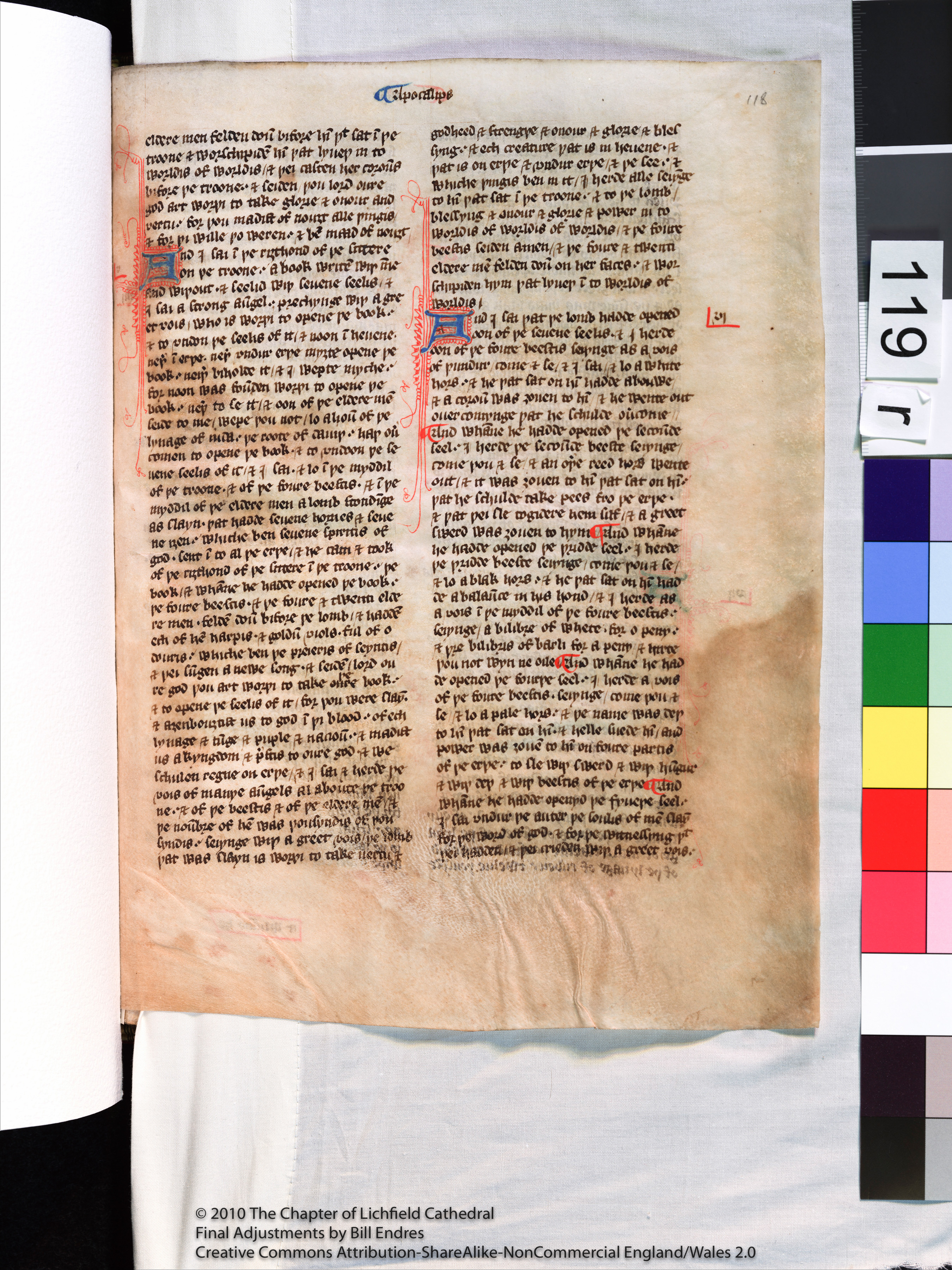
- c. 1395, John Wycliffe, John Purvey [et al.], transl., Bible (Wycliffite Bible (later version), MS Lich 10.)[1], published c. 1410, Apocalips 6:1, folio 119, recto, column 2; republished as Wycliffe's translation of the New Testament, Lichfield: Bill Endres, 2010:
- And I ſai þat þe lomb hadde opened oon of þe ſeuene ſeelis. ⁊ I herde oon of þe foure beeſtis ſeiynge as a vois of þundur / come ⁊ ſe
- And I saw that the lamb had opened one of the seven seals, and I heard one of the four creatures saying, like the sound of thunder, "Come and see!"
- Lightning (especially referring to destruction)
- (rare) A threat or intimidation.
Related terms
Descendants
References
- “thǒnder, n.”, in MED Online, Ann Arbor, Mich.: University of Michigan, 2007, retrieved 8 October 2018.
- “thunder, thuner, n.”, in The Dictionary of the Scots Language, Edinburgh: Scottish Language Dictionaries, 2004–present, →OCLC, reproduced from William A[lexander] Craigie, A[dam] J[ack] Aitken [et al.], editors, A Dictionary of the Older Scottish Tongue: […], Oxford, Oxfordshire: Oxford University Press, 1931–2002, →OCLC.
Categories:
- Middle English terms derived from Proto-West Germanic
- Middle English terms inherited from Proto-West Germanic
- Middle English terms inherited from Proto-Germanic
- Middle English terms inherited from Old English
- Middle English terms derived from Proto-Indo-European
- Middle English terms derived from Proto-Germanic
- Middle English terms derived from the Proto-Indo-European root *(s)tenh₂-
- Middle English terms derived from Old English
- Middle English terms derived from the Proto-Indo-European root *sten-
- Middle English terms with IPA pronunciation
- Rhymes:Middle English/undər
- Rhymes:Middle English/undər/2 syllables
- Middle English lemmas
- Middle English nouns
- Middle English terms with quotations
- Middle English terms with rare senses
- enm:Sound
- enm:Weather