infante
English
Etymology
From Spanish infante and Portuguese infante, both from Latin īnfāntem (“child”). Doublet of infant. Cognate with infantry.
Noun
infante (plural infantes)
- (historical) Any son of the king of Spain or Portugal, sometimes except the eldest or heir apparent.
Related terms
Translations
|
References
- “infante”, in Webster’s Revised Unabridged Dictionary, Springfield, Mass.: G. & C. Merriam, 1913, →OCLC.
Anagrams
French
Etymology
Doublet of enfant.
Pronunciation
- IPA(key): /ɛ̃.fɑ̃t/
- Hyphenation: in‧fante
Noun
infante f (plural infantes)
Further reading
- “infante”, in Trésor de la langue française informatisé [Digitized Treasury of the French Language], 2012
Galician
Etymology
Inherited from Old Galician-Portuguese infante, a borrowing from Latin īnfantem (“infant”). Cognate with Portuguese, Spanish, and Italian infante, French enfant.
Pronunciation
- IPA(key): /inˈfante/ [iɱˈfan̪.t̪ɪ]
- Rhymes: -ante
- Hyphenation: in‧fan‧te
Noun
infante m (plural infantes, feminine infanta, feminine plural infantas)
- infant (very young human being)
- (military) a soldier of the infantry
- prince, infante (the son of a king in Spain and Portugal)
- (botany) deadnettle
Noun
infante f (plural infantes)
- (archaic) princess (the daughter of a king in Spain and Portugal)
Derived terms
- Vilanova dos Infantes (place name: Vilanova das Infantes, originally)
References
- Seoane, Ernesto Xosé González; Granja, María Álvarez de la; Agrelo, Ana Isabel Boullón (2006–2022), “infante”, in Dicionario de Dicionarios do galego medieval [Dictionary of dictionaries of Medieval Galician] (in Galician), Santiago de Compostela: Instituto da Lingua Galega
- Barreiro, Xavier Varela; Guinovart, Xavier Gómez (2006–2018), “infante”, in Corpus Xelmírez: corpus lingüístico da Galicia medieval [Corpus Xelmírez: linguistic corpus of Medieval Galicia] (in Galician), Santiago de Compostela: Instituto da Lingua Galega
- Antón Santamarina, editor (2006–2013), “infante”, in Dicionario de Dicionarios da lingua galega [Dictionary of Dictionaries of the Galician language] (in Galician), Santiago de Compostela: Instituto da Lingua Galega
- Antón Santamarina, Ernesto X. González Seoane, María Álvarez de la Granja, editors (2003–2018), “infante”, in Tesouro informatizado da lingua galega (in Galician), Santiago de Compostela: Instituto da Lingua Galega
- Rosario Álvarez Blanco, editor (2014–2024), “infante”, in Tesouro do léxico patrimonial galego e portugués (in Galician), Santiago de Compostela: Instituto da Lingua Galega, →ISSN
Interlingua
Noun
infante (plural infantes)
Italian
Etymology
Borrowed from Latin īnfāntem. Doublet of the inherited fante.
Pronunciation
- IPA(key): /inˈfan.te/
- Rhymes: -ante
- Hyphenation: in‧fàn‧te
Audio: (file)
Adjective
infante m or f by sense (plural infanti)
- (dated, rare, relational) infant
Noun
infante m or f by sense (plural infanti)
Noun
infante f (plural infanti)
- infanta (in Spain & Portugal)
Derived terms
Anagrams
Latin
Pronunciation
- (Classical Latin) IPA(key): [ĩːˈfan.tɛ]
- (modern Italianate Ecclesiastical) IPA(key): [iɱˈfan.te]
Noun
īnfante
- ablative singular of īnfāns
Middle English
Noun
infante
- alternative form of infaunt
Old Galician-Portuguese
Etymology
Derived from Latin infans, infantem (“infant”).
Pronunciation
- IPA(key): /ĩ.ˈfan.te/
Noun
infante m or f (plural infantes)
- (rare) child
- prince, infante
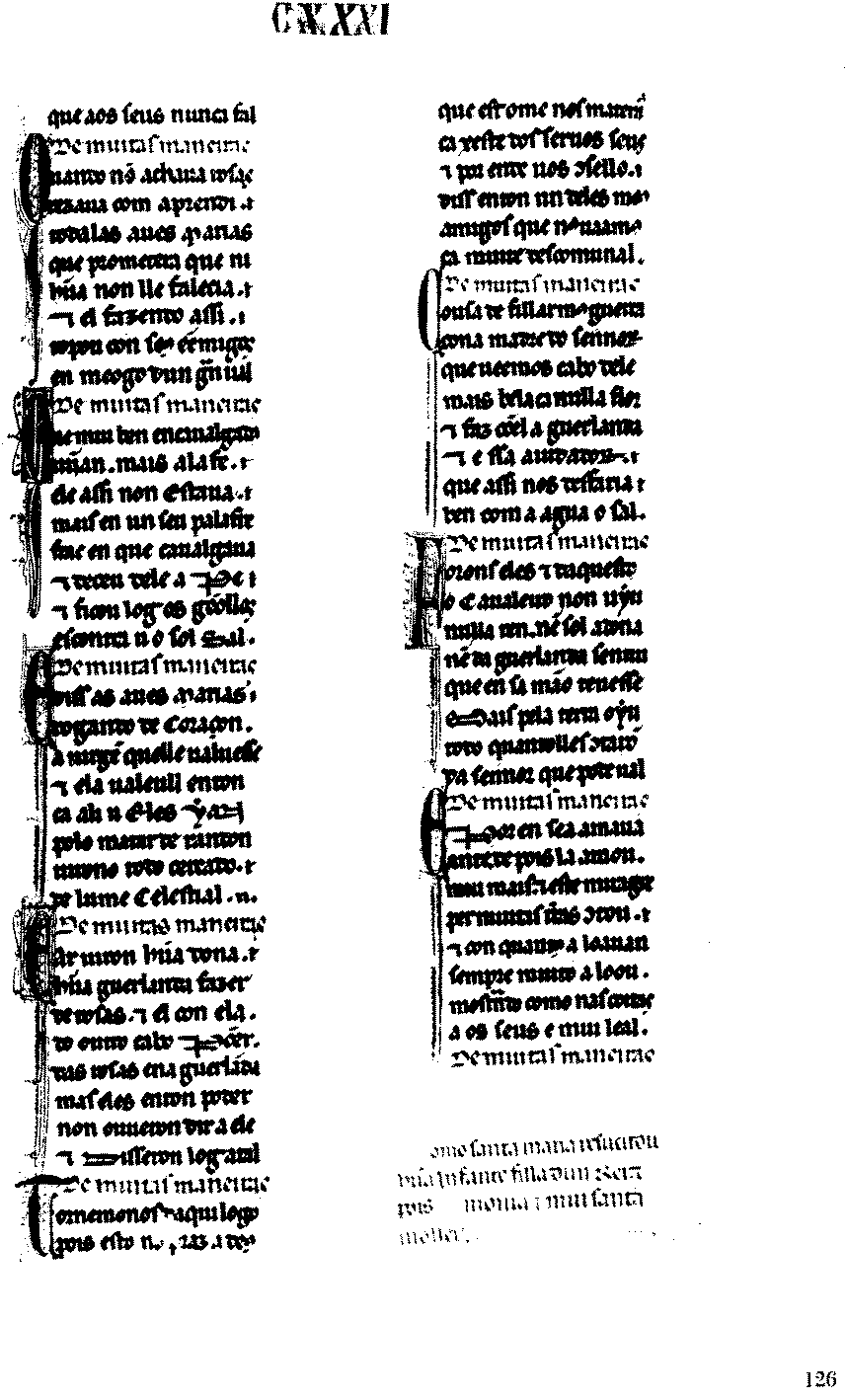
- a. 1284, Alfonso X of Castile, Cantigas de Santa Maria, Códice de los músicos, cantiga 122 (facsimile):
- Como ſanta maria reſucitou hũa infante filla dun Rei
- How Holy Mary resurrected the daughter of a King.
- Como ſanta maria reſucitou hũa infante filla dun Rei
Descendants
Portuguese
Alternative forms
Etymology
From Old Galician-Portuguese infante, a borrowing from Latin īnfantem (“infant”).
Cognate with Galician, Spanish, and Italian infante, French enfant.
Pronunciation
- (Brazil) IPA(key): /ĩˈfɐ̃.t͡ʃi/
- (Portugal) IPA(key): /ĩˈfɐ̃.tɨ/
- Rhymes: (Brazil) -ɐ̃tʃi, (Portugal) -ɐ̃tɨ
- Hyphenation: in‧fan‧te
Noun
infante m (plural infantes, feminine infanta, feminine plural infantas)
- infant (very young human being)
- (military) a soldier of the infantry
- prince, infante (the son of a king in Spain and Portugal)
Related terms
Adjective
infante m or f (plural infantes)
Further reading
- “infante”, in Dicionário Infopédia da Língua Portuguesa (in Portuguese), Porto: Porto Editora, 2003–2026
- “infante”, in Dicionário Priberam da Língua Portuguesa (in Portuguese), Lisbon: Priberam, 2008–2026
Romanian
Etymology
Borrowed from Spanish infante.
Noun
infante m (plural infanți)
Declension
| singular | plural | |||
|---|---|---|---|---|
| indefinite | definite | indefinite | definite | |
| nominative-accusative | infante | infanteul | infanți | infanții |
| genitive-dative | infante | infanteului | infanți | infanților |
| vocative | infanteule | infanților | ||
Spanish
Etymology
From an alteration of Old Spanish ifante, from Latin īnfāns, īnfāntem.
Pronunciation
- IPA(key): /inˈfante/ [ĩɱˈfãn̪.t̪e]
- Rhymes: -ante
- Syllabification: in‧fan‧te
Noun
infante m (plural infantes)
- infant
- prince, infante (son of a king)
- Synonym: príncipe
- foot soldier, infantryman
- Synonym: peón
Derived terms
Related terms
Further reading
- “infante”, in Diccionario de la lengua española [Dictionary of the Spanish Language] (in Spanish), 24th edition, Royal Spanish Academy [Spanish: Real Academia Española], 30 October 2026
- English terms derived from Spanish
- English terms derived from Portuguese
- English terms derived from Latin
- English doublets
- English lemmas
- English nouns
- English countable nouns
- English terms with historical senses
- English male equivalent nouns
- en:Monarchy
- en:Nobility
- French doublets
- French 2-syllable words
- French terms with IPA pronunciation
- French lemmas
- French nouns
- French countable nouns
- French feminine nouns
- Galician terms inherited from Old Galician-Portuguese
- Galician terms derived from Old Galician-Portuguese
- Galician terms derived from Latin
- Galician terms with IPA pronunciation
- Rhymes:Galician/ante
- Rhymes:Galician/ante/3 syllables
- Galician lemmas
- Galician nouns
- Galician countable nouns
- Galician masculine nouns
- gl:Military
- gl:Botany
- Galician feminine nouns
- Galician terms with archaic senses
- Interlingua lemmas
- Interlingua nouns
- Italian terms borrowed from Latin
- Italian terms derived from Latin
- Italian doublets
- Italian 3-syllable words
- Italian terms with IPA pronunciation
- Rhymes:Italian/ante
- Rhymes:Italian/ante/3 syllables
- Italian terms with audio pronunciation
- Italian lemmas
- Italian adjectives
- Italian epicene adjectives
- Italian dated terms
- Italian terms with rare senses
- Italian relational adjectives
- Italian nouns
- Italian countable nouns
- Italian masculine and feminine nouns by sense
- Italian masculine nouns
- Italian feminine nouns
- Italian nouns with multiple genders
- Latin 3-syllable words
- Latin terms with IPA pronunciation
- Latin non-lemma forms
- Latin noun forms
- Middle English variant lemmas
- Old Galician-Portuguese terms derived from Latin
- Old Galician-Portuguese terms with IPA pronunciation
- Old Galician-Portuguese lemmas
- Old Galician-Portuguese nouns
- Old Galician-Portuguese masculine nouns
- Old Galician-Portuguese feminine nouns
- Old Galician-Portuguese nouns with multiple genders
- Old Galician-Portuguese terms with rare senses
- Old Galician-Portuguese terms with quotations
- Portuguese terms inherited from Old Galician-Portuguese
- Portuguese terms derived from Old Galician-Portuguese
- Portuguese terms derived from Latin
- Portuguese 3-syllable words
- Portuguese terms with IPA pronunciation
- Rhymes:Portuguese/ɐ̃tʃi
- Rhymes:Portuguese/ɐ̃tʃi/3 syllables
- Rhymes:Portuguese/ɐ̃tɨ
- Rhymes:Portuguese/ɐ̃tɨ/3 syllables
- Portuguese lemmas
- Portuguese nouns
- Portuguese countable nouns
- Portuguese masculine nouns
- pt:Military units
- Portuguese adjectives
- Portuguese epicene adjectives
- Romanian terms derived from Spanish
- Romanian terms borrowed from Spanish
- Romanian lemmas
- Romanian nouns
- Romanian countable nouns
- Romanian masculine nouns
- Spanish terms inherited from Old Spanish
- Spanish terms derived from Old Spanish
- Spanish terms derived from Latin
- Spanish terms derived from Proto-Indo-European
- Spanish terms derived from the Proto-Indo-European root *bʰeh₂- (speak)
- Spanish 3-syllable words
- Spanish terms with IPA pronunciation
- Rhymes:Spanish/ante
- Rhymes:Spanish/ante/3 syllables
- Spanish lemmas
- Spanish nouns
- Spanish countable nouns
- Spanish masculine nouns
- es:Age