doce
Aragonese
Numeral
doce
- alternative spelling of dotze
References
- Martínez Tur, Feliciano; Rodés Orquín, Francho (2022), “doce / dotse”, in Diccionario aragonés-castellano-catalán[1], Zaragoza, Spain: Estudio de Filolochía Aragonesa, Edicions Dichitals de l’Academia de l’Aragonés, published April 2025, →ISSN, page 39526
Asturian
| ← 11 | 12 | 13 → [a], [b] |
|---|---|---|
| Cardinal: doce, (archaic) dolce Ordinal: decimosegundu | ||
Etymology
Old (16th century) borrowing from Spanish doce, from Latin duodecim. Compare inherited dolce.
Pronunciation
- IPA(key): /ˈdoθe/ [ˈd̪o.θe]
- Rhymes: -oθe
- Syllabification: do‧ce
Numeral
doce (indeclinable)
Derived terms
Further reading
- “doce”, in Diccionariu de la llingua asturiana [Dictionary of the Asturian Language] (in Asturian), 1st edition, Academy of the Asturian Language [Asturian: Academia de la Llingua Asturiana], 2000, →ISBN
- García Arias, Xosé Lluis (2002–2004), “doce”, in Diccionario general de la lengua asturiana [General Dictionary of the Asturian Language] (overall work in Spanish), Editorial Prensa Asturiana, →ISBN
Chavacano
| ← 11 | 12 | 13 → |
|---|---|---|
| Cardinal: doce Ordinal: aca-doce, ika-doce, duodecimo, duodecima, decimosegunda, decima segunda, decimosegundo, decimo segundo Multiplier: duodecuplo Collective: dozena | ||
Etymology
Inherited from Spanish doce (“twelve”).
Pronunciation
- Hyphenation: do‧ce
Numeral
doce
Related terms
Franco-Provençal
Adjective
doce
- feminine singular of dox
Galician
| [a], [b] ← 11 | 12 | 13 → [a], [b] |
|---|---|---|
| Cardinal (standard): doce Cardinal (reintegrationist): doze Ordinal: duodécimo, décimo segundo Ordinal abbreviation: 12º Fractional (standard): doceavo Fractional (reintegrationist): doze avos | ||
Pronunciation
- IPA(key): (standard) /ˈdoθe/ [ˈd̪o.θɪ]
- IPA(key): (seseo) /ˈdose/ [ˈd̪o.sɪ]
- (standard) Rhymes: -oθe
- (seseo) Rhymes: -ose
- Hyphenation: do‧ce
Etymology 1
Inherited from Old Galician-Portuguese doze, from Latin duodecim.
Numeral
doce (indeclinable)
Noun
doce f pl (plural only)
- (always preceded by the definite article) twelve o'clock
- Synonym: doce en punto
- Son as doce ― It's twelve o'clock.
Related terms
Etymology 2
From Old Galician-Portuguese doce, from Latin dulcis (“sweet”).

Alternative forms
- dulce (proscribed)
Adjective
doce m or f (plural doces)
- sweet
- 1775, María Francisca Isla y Losada, Romance:
- Dime algùnha còusa dòce
como habes doito, é catá,
que si así no no fazèdes,
me escatìmo, é velo hàs.
Ven sabedes, vaiche bòa!
como estas cousas se fàn,
è madia tendes, senon
eu êime de encabuxar.- Tell me something sweet
As you use to, but beware,
if you don't do it like that
I'll take offence, you'll see.
You know well, it could not be otherwise!
how these things are done,
no doubt about it or else
I'll get angry.
- Tell me something sweet
Derived terms
Noun
doce m (plural doces)
- sweet (candy), confection
References
- Antón Santamarina, editor (2006–2013), “doce”, in Dicionario de Dicionarios da lingua galega [Dictionary of Dictionaries of the Galician language] (in Galician), Santiago de Compostela: Instituto da Lingua Galega
- Antón Santamarina, Ernesto X. González Seoane, María Álvarez de la Granja, editors (2003–2018), “doce”, in Tesouro informatizado da lingua galega (in Galician), Santiago de Compostela: Instituto da Lingua Galega
- Rosario Álvarez Blanco, editor (2014–2024), “doce”, in Tesouro do léxico patrimonial galego e portugués (in Galician), Santiago de Compostela: Instituto da Lingua Galega, →ISSN
Further reading
- “doce”, in Dicionario da Real Academia Galega (in Galician), A Coruña: Royal Galician Academy, 2012–2026
Latin
Verb
docē
- second-person singular present active imperative of doceō
References
- "doce", in Charles du Fresne du Cange, Glossarium Mediæ et Infimæ Latinitatis (augmented edition with additions by D. P. Carpenterius, Adelungius and others, edited by Léopold Favre, 1883–1887)
Neapolitan
Etymology
Inherited from Latin dulcem. Compare Sicilian duci.
Pronunciation
- (Naples) IPA(key): [ˈɾoːt͡ʃə]
Adjective
doce
References
- AIS: Sprach- und Sachatlas Italiens und der Südschweiz [Linguistic and Ethnographic Atlas of Italy and Southern Switzerland] – map 1266: “una mela dolce” – on navigais-web.pd.istc.cnr.it
Old Galician-Portuguese
Alternative forms
- doçe
Etymology
From Latin dulcem, accusative of dulcis (“sweet”).
Pronunciation
- IPA(key): /ˈdot͡se/
- Rhymes: -ot͡se
- Hyphenation: do‧ce
Adjective
doce m or f (plural doces)
- sweet
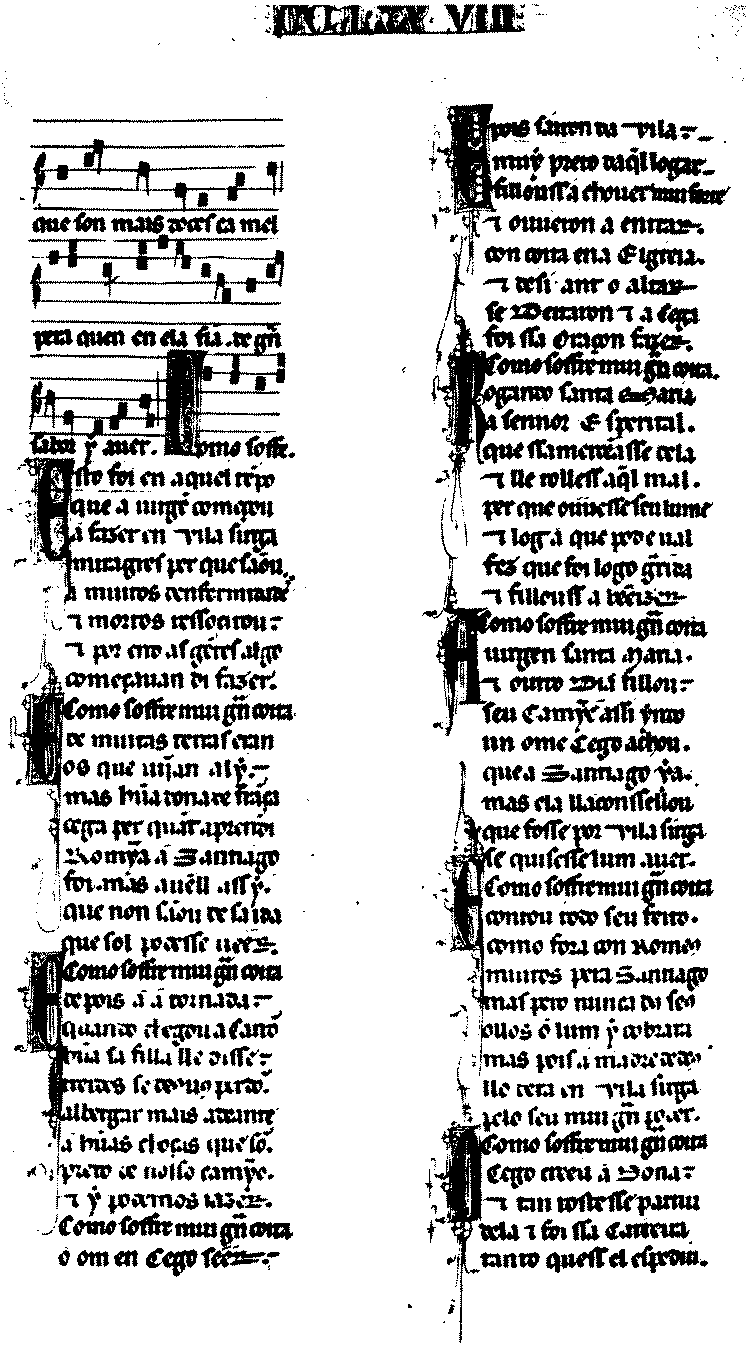
- a. 1284, Alfonso X of Castile, Cantigas de Santa Maria, Códice de los músicos, cantiga 278 (facsimile):
- […] que ſon mais doceſ ca mel […]
- […] which are sweeter than honey […]
Descendants
References
- Seoane, Ernesto Xosé González; Granja, María Álvarez de la; Agrelo, Ana Isabel Boullón (2006–2022), “doce”, in Dicionario de Dicionarios do galego medieval [Dictionary of dictionaries of Medieval Galician] (in Galician), Santiago de Compostela: Instituto da Lingua Galega
- Barreiro, Xavier Varela; Guinovart, Xavier Gómez (2006–2018), “doce”, in Corpus Xelmírez: corpus lingüístico da Galicia medieval [Corpus Xelmírez: linguistic corpus of Medieval Galicia] (in Galician), Santiago de Compostela: Instituto da Lingua Galega
Portuguese
Etymology
From Old Galician-Portuguese doce, from Latin dulcem (“sweet”). Doublet of Dulce.
Compare Galician doce and Sicilian duci.
Pronunciation
- (Brazil) IPA(key): /ˈdo.si/
- (Portugal) IPA(key): /ˈdo.sɨ/
Adjective
doce m or f (plural doces)
- sweet, sugary
- 1902, Fernando Pessoa, Quando ela passa:
- Quando eu me sento à janela
P'los vidros qu'a neve embaça
Vejo a doce imagem d'ela
Quando passa… passa… passa…- When I sit at the window
I see through the panes clouded by snow
The sweet image of her
When she passes… passes… passes…
- When I sit at the window
- 2010, Marcial Serrano, O Livro Proibido do Jiu Jitsu: Volume 3, Clube de Autores, page 40:
- Enquanto isso vai tomando o doce saqué, em minúsculas tijelinhas[sic] brancas, quase do tamanho de um dedal.
- (please add an English translation of this quotation)
- 1902, Fernando Pessoa, Quando ela passa:
- (water) fresh
- (figuratively) gentle, sweet, kind
- (figuratively) agreeable, pleasant
Descendants
Noun
doce m (plural doces)
- sweet, candy
- jam, marmelade
- dessert
- (figuratively, person) sweet, dear
- (Brazil, slang) LSD (lysergic acid diethylamide)
Derived terms
Descendants
- → Hunsrik: Doss
Further reading
- “doce”, in Dicionário Aulete Digital (in Portuguese), Rio de Janeiro: Lexikon Editora Digital, 2008–2026
- “doce”, in Dicionário Priberam da Língua Portuguesa (in Portuguese), Lisbon: Priberam, 2008–2026
- “doce”, in Dicionário Infopédia da Língua Portuguesa (in Portuguese), Porto: Porto Editora, 2003–2026
Spanish
| ← 11 | 12 | 13 → |
|---|---|---|
| Cardinal: doce Ordinal: duodécimo, decimosegundo, décimo segundo, doceno Ordinal abbreviation: 12.º Multiplier: duodécuplo Fractional: doceavo, duodécimo | ||
| Spanish Wikipedia article on 12 | ||
Etymology
Inherited from Old Spanish doze, dodze from Latin duodecim. Compare Portuguese doze.
Pronunciation
- IPA(key): /ˈdoθe/ [ˈd̪o.θe] (Spain, Equatorial Guinea)
- IPA(key): /ˈdose/ [ˈd̪o.se] (Latin America, Philippines)
Audio (Colombia): (file) - Rhymes: -oθe (Spain, Equatorial Guinea)
- Rhymes: -ose (Latin America, Philippines)
- Syllabification: do‧ce
Numeral
doce
Related terms
Descendants
Further reading
- “doce”, in Diccionario de la lengua española [Dictionary of the Spanish Language] (in Spanish), 24th edition, Royal Spanish Academy [Spanish: Real Academia Española], 30 October 2026
- Aragonese lemmas
- Aragonese numerals
- Asturian terms borrowed from Spanish
- Asturian terms derived from Spanish
- Asturian terms derived from Latin
- Asturian terms with IPA pronunciation
- Rhymes:Asturian/oθe
- Rhymes:Asturian/oθe/2 syllables
- Asturian lemmas
- Asturian numerals
- Asturian cardinal numbers
- Chavacano terms inherited from Spanish
- Chavacano terms derived from Spanish
- Chavacano lemmas
- Chavacano numerals
- cbk:Twelve
- Chavacano cardinal numbers
- Franco-Provençal non-lemma forms
- Franco-Provençal adjective forms
- Galician terms with IPA pronunciation
- Rhymes:Galician/oθe
- Rhymes:Galician/oθe/2 syllables
- Rhymes:Galician/ose
- Rhymes:Galician/ose/2 syllables
- Galician terms derived from the Proto-Indo-European word *déḱm̥
- Galician terms derived from Proto-Italic
- Galician terms derived from Old Galician-Portuguese
- Galician terms inherited from Old Galician-Portuguese
- Galician terms derived from Latin
- Galician terms derived from the Proto-Indo-European word *dwóh₁
- Galician terms derived from Proto-Indo-European
- Galician terms inherited from Latin
- Galician lemmas
- Galician numerals
- Galician cardinal numbers
- Galician nouns
- Galician feminine nouns
- Galician pluralia tantum
- Galician terms with usage examples
- Galician adjectives
- Galician epicene adjectives
- Galician terms with quotations
- Galician countable nouns
- Galician masculine nouns
- gl:Sweets
- Latin non-lemma forms
- Latin verb forms
- Neapolitan terms inherited from Latin
- Neapolitan terms derived from Latin
- Neapolitan terms with IPA pronunciation
- Neapolitan lemmas
- Neapolitan adjectives
- Old Galician-Portuguese terms derived from Latin
- Old Galician-Portuguese terms inherited from Latin
- Old Galician-Portuguese terms with IPA pronunciation
- Rhymes:Old Galician-Portuguese/ot͡se
- Rhymes:Old Galician-Portuguese/ot͡se/2 syllables
- Old Galician-Portuguese lemmas
- Old Galician-Portuguese adjectives
- Old Galician-Portuguese terms with quotations
- Portuguese terms inherited from Old Galician-Portuguese
- Portuguese terms inherited from Latin
- Portuguese terms derived from Latin
- Portuguese terms derived from Old Galician-Portuguese
- Portuguese doublets
- Portuguese 2-syllable words
- Portuguese terms with IPA pronunciation
- Portuguese terms with audio pronunciation
- Rhymes:Portuguese/osi
- Rhymes:Portuguese/osi/2 syllables
- Rhymes:Portuguese/osɨ
- Rhymes:Portuguese/osɨ/2 syllables
- Portuguese lemmas
- Portuguese adjectives
- Portuguese epicene adjectives
- Portuguese terms with quotations
- Portuguese nouns
- Portuguese countable nouns
- Portuguese masculine nouns
- Brazilian Portuguese
- Portuguese slang
- pt:Sweets
- pt:Taste
- Spanish terms derived from the Proto-Indo-European word *déḱm̥
- Spanish terms inherited from Old Spanish
- Spanish terms derived from the Proto-Indo-European word *dwóh₁
- Spanish terms inherited from Latin
- Spanish terms derived from Old Spanish
- Spanish terms derived from Proto-Indo-European
- Spanish terms derived from Latin
- Spanish terms derived from Proto-Italic
- Spanish 2-syllable words
- Spanish terms with IPA pronunciation
- Spanish terms with audio pronunciation
- Rhymes:Spanish/oθe
- Rhymes:Spanish/oθe/2 syllables
- Rhymes:Spanish/ose
- Rhymes:Spanish/ose/2 syllables
- Spanish lemmas
- Spanish numerals
- Spanish cardinal numbers