destruccioun
Middle English
Alternative forms
- distruccioun, distructioun
- destruccion, destruccione, destruccon, destructione, destruxioun, distroccioun, distruccion, dystruccioun (Late Middle English)
Etymology
Borrowed from Old French destruccion, from Latin dēstrūctiō (“destruction, demolition”). Forms with /i/ may either represent vowel reduction or influence from the prefix dis- (as if Latin *distrūctiō).
Pronunciation
- IPA(key): /dɛˌstruksiˈuːn/, /dɛˈstruksjun/, /dɛː-/, /di-/
Noun
destruccioun (uncountable)
- Destruction; the act of destroying or being destroyed:
- Devastation, ruination (of a place or of the Earth)
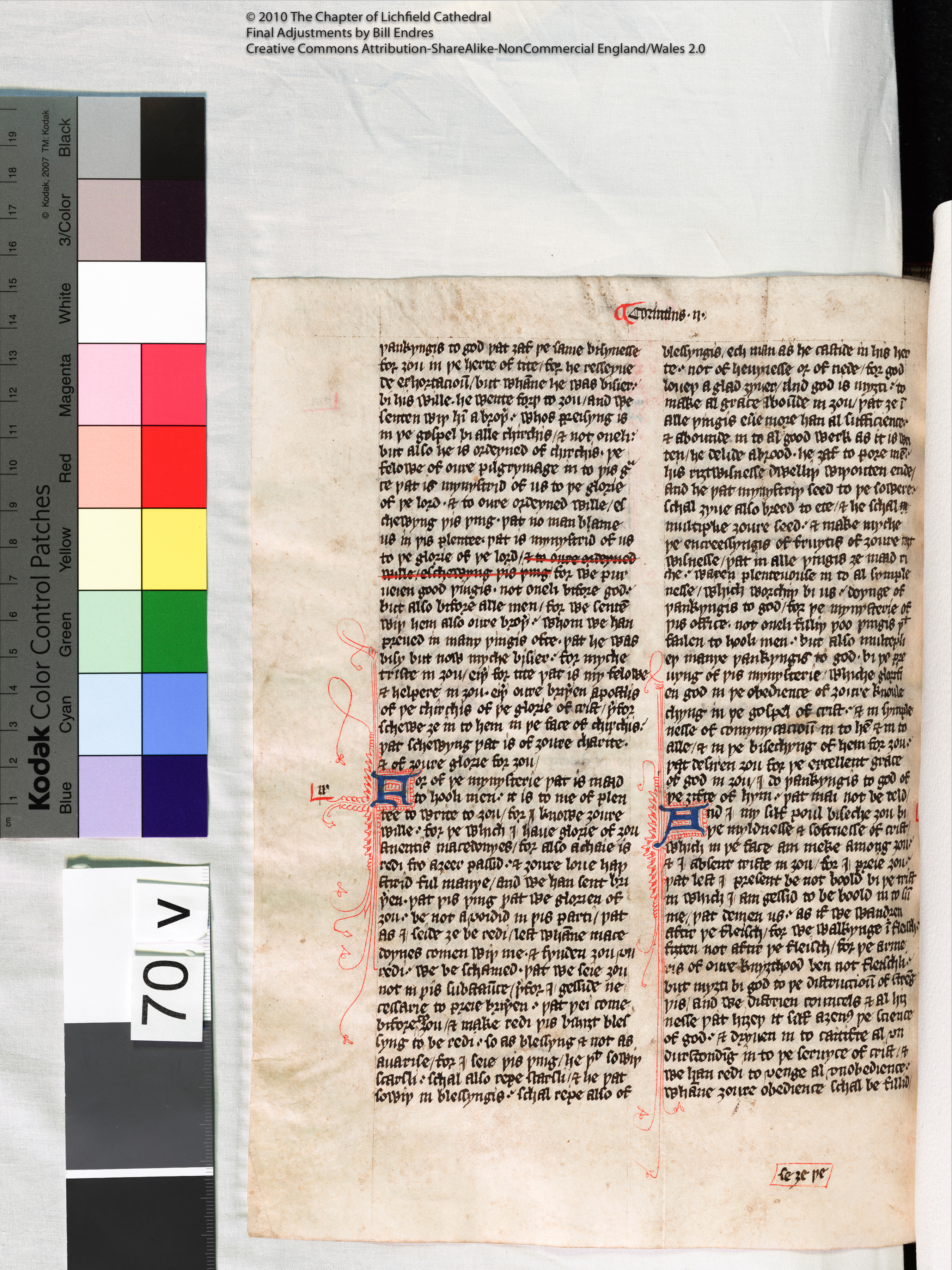
- c. 1395, John Wycliffe, John Purvey [et al.], transl., Bible (Wycliffite Bible (later version), MS Lich 10.)[1], published c. 1410, Coꝛinthis ·ii· 10:4, folio 70, verso, column 2; republished as Wycliffe's translation of the New Testament, Lichfield: Bill Endres, 2010:
- foꝛ þe armeris of oure knyȝthood ben not fleıſchli⹎ but myȝtı bı god to þe dıſtruccioũ of ſtrẽgþis.
- Since the weapons of our warfare aren't material, but [are] instead powered by God for the destruction of strongholds.
- 1471 September 28 [1464], Raoul le ffeure, translated by Willyam Caxton, [T]he recuyell of the hiſtoryes of Troye, [London], published c. 1474, translation of Le recueil de histoires de Troye (in Middle French); republished by H. Oskar Sommer, editor[2]volume II, London: David Nutt, 1894, →OCLC, leaf 175:
- AFter this generall deſtruccion of troye . whan the grekes were departed and hercules had ſo lefte hem […]
- After this total devastation of Troy, when the Greeks had departed and Hercules therefore had left them […]
- Ruin, downfall, dissolution (of a person or institution)
- Death, mortality; the end of a life.
- (rare) Annihiliation (of a sin); nullification (of a law).
- Devastation, ruination (of a place or of the Earth)
- Something that leads to or creates destruction.
Descendants
- English: destruction
- Middle Scots: destructioun, distructioun
- Scots: destruction
References
- “dē̆strucciǒun, n.”, in MED Online, Ann Arbor, Mich.: University of Michigan, 2007.
Categories:
- Middle English terms borrowed from Old French
- Middle English terms derived from Old French
- Middle English terms derived from Latin
- Middle English terms with IPA pronunciation
- Middle English lemmas
- Middle English nouns
- Middle English uncountable nouns
- Middle English terms with quotations
- Middle English terms with rare senses
- enm:Death