brid
Maltese
Pronunciation
- IPA(key): /briːt/
- Rhymes: -iːt
Noun
brid m (instance noun barda)
Middle English
Etymology 1
From Old English bridd, of disputed origin.
Alternative forms
Pronunciation
- IPA(key): /brid/
- IPA(key): /bird/, /burd/ (metathetic)
Noun
brid (plural briddes)
- A bird (of any age)
- Synonym: foul
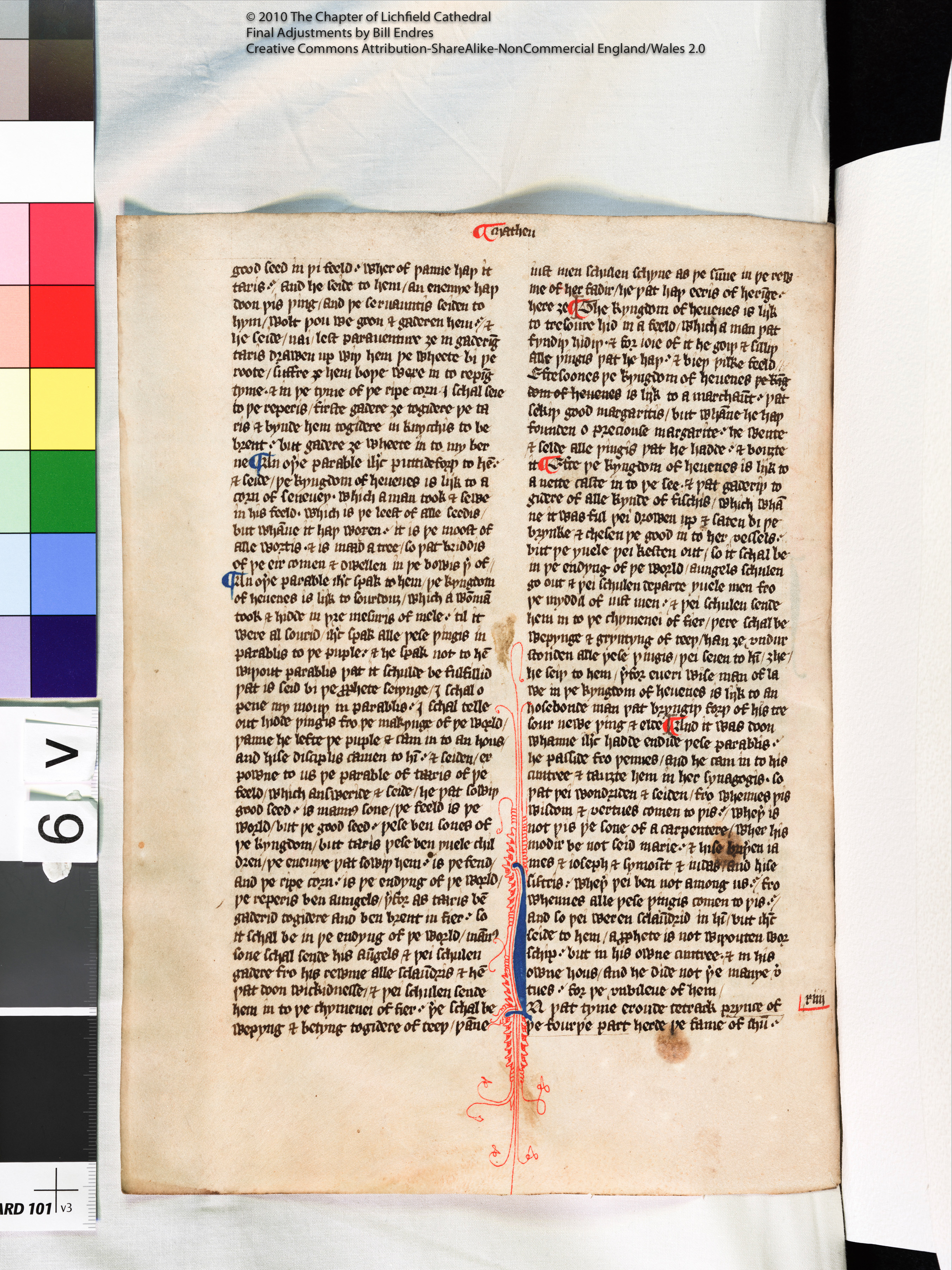
- c. 1395, John Wycliffe, John Purvey [et al.], transl., Bible (Wycliffite Bible (later version), MS Lich 10.)[1], published c. 1410, Matheu 13:31-32, folio 6, verso, column 1; republished as Wycliffe's translation of the New Testament, Lichfield: Bill Endres, 2010:
- An oþer parable iheſus puttide foꝛþ to hem. / ⁊ ſeide / þe kyngdom of heuenes is lijk to a coꝛn of ſeneuey · which a man took ⁊ ſewe in his feeld · / which is þe leeſt of alle ſeedis / but whanne it haþ woxen .· it is the mooſt of alle woꝛtis · ⁊ is maad a tre / ſo þe bꝛiddis of þe eir comen ⁊ dwellen in þe bowis þerof.
- Jesus put another parable forwards to them, saying: "The Kingdom of Heaven is like a mustard seed that a person took and sowed in their field; / it is the smallest of all seeds, but when it has grown, it is the largest of all plants; it becomes a tree, so the birds of the air come and nest in its branches."
- A young bird; a chick.
- A baby; a young animal (in reference to humans or non-mammals)
- A term of affection or derogation.
- (uncommon) Any winged animal.
Related terms
- bridlim
Descendants
References
- “brid, n.”, in MED Online, Ann Arbor, Mich.: University of Michigan, 2007.
Etymology 2
Noun
brid
- alternative form of bride (“bride”)
Etymology 3
Noun
brid
- alternative form of bred (“bread”)
Serbo-Croatian
Noun
brȋd m inan (Cyrillic spelling бри̑д)
Further reading
- “brid”, in Hrvatski jezični portal [Croatian language portal] (in Serbo-Croatian), 2006–2026
Sudovian
Etymology
From Proto-Balto-Slavic *bréidis, from Proto-Indo-European *bʰreydʰ-. Compare Lithuanian bri̇́edis (“elk, moose”), Latvian briêdis (“deer, stag; (originally) elk”), Old Prussian braydis (“elk”).[1][2]
Noun
brid
- (zoology) deer, stag
- 1985 [1984], Pogańske gwary z Narewu [Pagan dialects from Narew], line 26, sourced from copy by V. Zinow:
- jełen [jeleń] — brid
- deer
References
- ^ Zigmas Zinkevičius (1985), “Lenkų-jotvingių žodynėlis? [A Polish-Yotvingian dictionary?]”, in Baltistica, volume 21, number 1 (in Lithuanian), Vilnius: VU, , page 70: “brid ‘elnias, l. jełen’ 26.”
- ^ “bríedis” in Hock et al., Altlitauisches etymologisches Wörterbuch 2.0 (online, 2020–): “nar. s. brid Hirsch”.
Welsh
Pronunciation
- IPA(key): /briːd/
- Rhymes: -iːd
- Homophone: bryd (“aim”) (South Wales)
Etymology 1
Noun
brid m (plural bridiau)
Derived terms
- bridfa (“ breeding centre, breeding ground”)
- bridio (“to breed”)
- bridiog (“pedigree”)
- bridiol (“relating to breeding”)
- bridiwr (“breeder”)
Mutation
| radical | soft | nasal | aspirate |
|---|---|---|---|
| brid | frid | mrid | unchanged |
Note: Certain mutated forms of some words can never occur in standard Welsh.
All possible mutated forms are displayed for convenience.
Etymology 2
Noun
brid
- soft mutation of prid (“expensive”)
Mutation
| radical | soft | nasal | aspirate |
|---|---|---|---|
| prid | brid | mhrid | phrid |
Note: Certain mutated forms of some words can never occur in standard Welsh.
All possible mutated forms are displayed for convenience.
References
- R. J. Thomas, G. A. Bevan, P. J. Donovan, A. Hawke, et al., editors (1950–present), “brid”, in Geiriadur Prifysgol Cymru Online (in Welsh), University of Wales Centre for Advanced Welsh & Celtic Studies
Categories:
- Maltese terms belonging to the root b-r-d
- Maltese 1-syllable words
- Maltese terms with IPA pronunciation
- Rhymes:Maltese/iːt
- Rhymes:Maltese/iːt/1 syllable
- Maltese lemmas
- Maltese nouns
- Maltese masculine nouns
- Maltese verbal nouns
- Middle English terms inherited from Old English
- Middle English terms derived from Old English
- Middle English terms with IPA pronunciation
- Middle English lemmas
- Middle English nouns
- Middle English terms with quotations
- Middle English terms with uncommon senses
- Middle English variant lemmas
- enm:Baby animals
- enm:Birds
- Middle English terms of address
- Serbo-Croatian lemmas
- Serbo-Croatian nouns
- Serbo-Croatian masculine inanimate nouns
- Serbo-Croatian masculine nouns
- Serbo-Croatian inanimate nouns
- sh:Graph theory
- Sudovian terms inherited from Proto-Balto-Slavic
- Sudovian terms derived from Proto-Balto-Slavic
- Sudovian terms inherited from Proto-Indo-European
- Sudovian terms derived from Proto-Indo-European
- Sudovian lemmas
- Sudovian nouns
- xsv:Zoology
- Sudovian terms with quotations
- xsv:Mammals
- Welsh terms with IPA pronunciation
- Rhymes:Welsh/iːd
- Welsh terms with homophones
- Welsh terms borrowed from English
- Welsh terms derived from English
- Welsh lemmas
- Welsh nouns
- Welsh countable nouns
- Welsh masculine nouns
- Welsh non-lemma forms
- Welsh mutated nouns
- Welsh soft-mutation forms