besta
Dutch
Pronunciation
Audio: (file) - Rhymes: -aː
Verb
besta
- inflection of bestaan:
- first-person singular present indicative
- (in case of inversion) second-person singular present indicative
- imperative
- (dated or formal) singular present subjunctive
Anagrams
Galician

Etymology 1
Inherited from Old Galician-Portuguese besta, possibly a learned borrowing from Latin bēstia (“beast”).
Pronunciation
- IPA(key): /ˈbesta/ [ˈbes̺.t̪ɐ]
- Rhymes: -esta
- Hyphenation: bes‧ta
Noun
besta f (plural bestas)
- beast (quadruped animal)
- horse or any other equine
- 1326, Antonio López Ferreiro, editor, Galicia Histórica. Colección diplomática, Santiago: Tipografía Galaica, page 295:
- pelas bestas de caualgar et carrega
- for the animals [used] for riding or for carrying load
- 1813, anonymous author, Conversa no adro da igrexa:
- Dixêronme que asta á besta que trouxêra á balixâ con tan boa notisea, chegara mais sedo do que habia doito leda coma un cuco.
- They told me that even the horse that brought the postbag with such good news arrived earlier than usual, happy as a lark.
- mount
- 1775, María Francisca Isla y Losada, Romance:
- Virés acò meu Dieguiño
cando ò tempo milloràr,
porqe si escorrega á Besta
è esbarroufàs, alabay.- You'll come here my little Diego
when the weather improves
because if the mount slips
and you sprawl, here goes nothing!
- You'll come here my little Diego
- mare
- Synonym: egua
- (figuratively) brute
- Synonym: bruto
Derived terms
- besta brava (“wild horse”)
Etymology 2
Pronunciation
- IPA(key): /ˈbɛsta̝/
Noun
besta f (plural bestas)
- misspelling of bésta
References
- Seoane, Ernesto Xosé González; Granja, María Álvarez de la; Agrelo, Ana Isabel Boullón (2006–2022), “besta”, in Dicionario de Dicionarios do galego medieval [Dictionary of dictionaries of Medieval Galician] (in Galician), Santiago de Compostela: Instituto da Lingua Galega
- Barreiro, Xavier Varela; Guinovart, Xavier Gómez (2006–2018), “besta”, in Corpus Xelmírez: corpus lingüístico da Galicia medieval [Corpus Xelmírez: linguistic corpus of Medieval Galicia] (in Galician), Santiago de Compostela: Instituto da Lingua Galega
- Antón Santamarina, editor (2006–2013), “besta”, in Dicionario de Dicionarios da lingua galega [Dictionary of Dictionaries of the Galician language] (in Galician), Santiago de Compostela: Instituto da Lingua Galega
- Antón Santamarina, Ernesto X. González Seoane, María Álvarez de la Granja, editors (2003–2018), “besta”, in Tesouro informatizado da lingua galega (in Galician), Santiago de Compostela: Instituto da Lingua Galega
- Rosario Álvarez Blanco, editor (2014–2024), “besta”, in Tesouro do léxico patrimonial galego e portugués (in Galician), Santiago de Compostela: Instituto da Lingua Galega, →ISSN
Norwegian Nynorsk
Etymology 1
Noun
besta f (definite singular besta, indefinite plural bester or bestor, definite plural bestene or bestone)
Etymology 2
Verb
besta (present tense bestar or bester, past tense besta or beste, supine and past participle besta or best, present participle bestande, imperative best)
- alternative spelling of beste
Etymology 3
Adjective
besta
- (dialectal or obsolete) neuter definite singular of best
Old Galician-Portuguese
Alternative forms
Etymology
Possibly a learned borrowing from Latin bēstia (“beast”).
Pronunciation
- IPA(key): /ˈbes̺.ta/
Noun
besta f (plural bestas)
- beast (a non-human animal, especially large vertebrate quadrupeds)
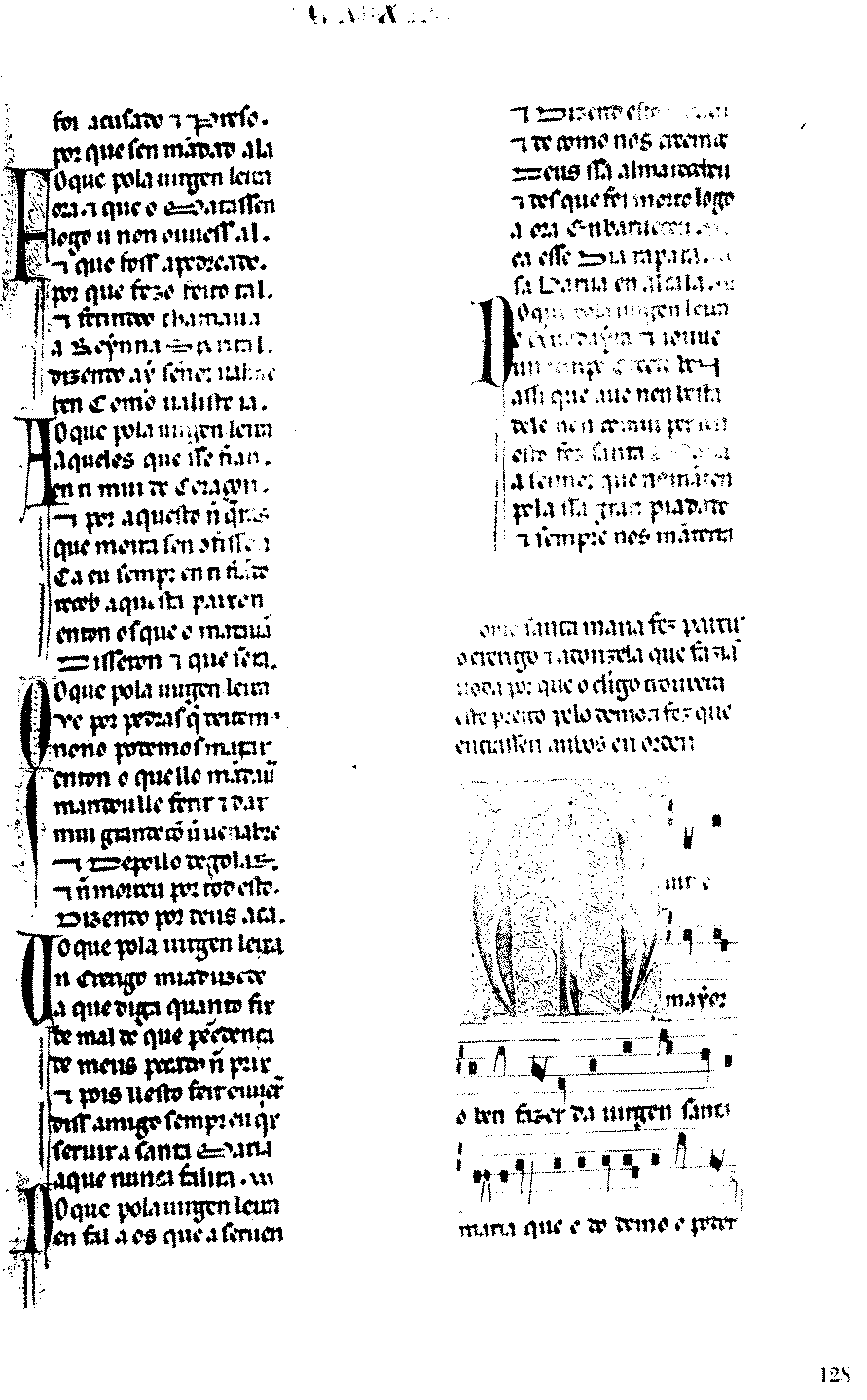
- a. 1284, Alfonso X of Castile, Cantigas de Santa Maria, Códice de los músicos, cantiga 124 (facsimile):
- aue nen beſta dele non comiu per ren.
- Neither bird nor beast would eat him for anything.
- aue nen beſta dele non comiu per ren.
- beast of burden, donkey
- a. 1284, Alfonso X of Castile, Cantigas de Santa Maria, Códice de los músicos, cantiga 147 (facsimile):
- a beſtia de balaam
- Balaam's donkey
- a beſtia de balaam

Synonyms
Descendants
Portuguese
Etymology 1
Inherited from Old Galician-Portuguese besta, probably borrowed from Latin bēstia (“beast”). Doublet of bicha.
Alternative forms
- bêsta (pre-reform spelling)
Pronunciation
- (Brazil) IPA(key): /ˈbes.tɐ/
- (Rio de Janeiro) IPA(key): /ˈbeʃ.tɐ/
- (Portugal) IPA(key): /ˈbeʃ.tɐ/
- Rhymes: -estɐ
- Hyphenation: bes‧ta
Noun
besta f (plural bestas)
- beast (any large animal)
- beast of burden (animal used to transport cargo)
- Synonym: besta de carga
- ass (any of several species of horse-like animals)
- (euphemistic, with definite article) the Beast; Satan
- (by extension) a monster
Derived terms
- besta de carga
- besta-fera
- bestar
- besteira
- bestice
- bestidade
- bestificar
Related terms
- bestial
- bestialidade
- bestialização
- bestializado
- bestializar
- bestialogia
- bestialógico
- bestificação
- bestificado
- bestificante
- bicha
- bicho
Noun
besta m or f by sense (plural bestas)
- (derogatory) fool; idiot (stupid person)
- Synonyms: see Thesaurus:idiota
Adjective
besta m or f (plural bestas)
- (derogatory) idiotic, stupid
- astonished, speechless (extremely surprised)
- Synonyms: estupefato, pasmo
Etymology 2
Inherited from Old Galician-Portuguese baesta (“crossbow”), from Latin bālista, from Ancient Greek βαλλίστρα (ballístra). Doublet of balista.
Pronunciation
- (Brazil) IPA(key): /ˈbɛs.tɐ/, (more common but proscribed) /ˈbes.tɐ/
- (Rio de Janeiro) IPA(key): /ˈbɛʃ.tɐ/, (more common but proscribed) /ˈbeʃ.tɐ/
- (Portugal) IPA(key): /ˈbɛʃ.tɐ/
- Rhymes: -ɛstɐ, (Brazil, proscribed) -estɐ
- Hyphenation: bes‧ta
Noun
besta f (plural bestas)
- crossbow (weapon consisting of a bow mounted on a stock)
Related terms
Etymology 3
See the etymology of the corresponding lemma form.
Pronunciation
- (Brazil) IPA(key): /ˈbɛs.tɐ/
- (Rio de Janeiro) IPA(key): /ˈbɛʃ.tɐ/
- (Portugal) IPA(key): /ˈbɛʃ.tɐ/
- Rhymes: -ɛstɐ
- Hyphenation: bes‧ta
Verb
besta
- inflection of bestar:
- third-person singular present indicative
- second-person singular imperative
Further reading
- “besta”, in Dicionário Aulete Digital (in Portuguese), Rio de Janeiro: Lexikon Editora Digital, 2008–2026
- “besta”, in Dicionário Priberam da Língua Portuguesa (in Portuguese), Lisbon: Priberam, 2008–2026
- Dutch terms with audio pronunciation
- Rhymes:Dutch/aː
- Rhymes:Dutch/aː/2 syllables
- Dutch non-lemma forms
- Dutch verb forms
- Galician terms derived from Old Galician-Portuguese
- Galician terms derived from Latin
- Galician terms derived from the Proto-Indo-European root *dʰwes-
- Galician terms derived from Proto-Indo-European
- Galician terms inherited from Old Galician-Portuguese
- Galician terms with IPA pronunciation
- Rhymes:Galician/esta
- Rhymes:Galician/esta/2 syllables
- Galician lemmas
- Galician nouns
- Galician countable nouns
- Galician feminine nouns
- Galician terms with quotations
- Galician misspellings
- gl:Anatomy
- gl:Animals
- Norwegian Nynorsk lemmas
- Norwegian Nynorsk nouns
- Norwegian Nynorsk feminine nouns
- Norwegian Nynorsk pre-2012 forms
- Norwegian Nynorsk verbs
- Norwegian Nynorsk weak verbs
- Norwegian Nynorsk non-lemma forms
- Norwegian Nynorsk adjective forms
- Norwegian Nynorsk dialectal terms
- Norwegian Nynorsk terms with obsolete senses
- Old Galician-Portuguese terms borrowed from Latin
- Old Galician-Portuguese learned borrowings from Latin
- Old Galician-Portuguese terms derived from Latin
- Old Galician-Portuguese terms derived from the Proto-Indo-European root *dʰwes-
- Old Galician-Portuguese terms derived from Proto-Indo-European
- Old Galician-Portuguese terms with IPA pronunciation
- Old Galician-Portuguese lemmas
- Old Galician-Portuguese nouns
- Old Galician-Portuguese feminine nouns
- Old Galician-Portuguese terms with quotations
- Portuguese terms inherited from Old Galician-Portuguese
- Portuguese terms derived from Old Galician-Portuguese
- Portuguese terms borrowed from Latin
- Portuguese terms derived from Latin
- Portuguese doublets
- Portuguese 2-syllable words
- Portuguese terms with IPA pronunciation
- Rhymes:Portuguese/estɐ
- Rhymes:Portuguese/estɐ/2 syllables
- Portuguese lemmas
- Portuguese nouns
- Portuguese countable nouns
- Portuguese feminine nouns
- Portuguese euphemisms
- Portuguese nouns with irregular gender
- Portuguese masculine and feminine nouns by sense
- Portuguese masculine nouns
- Portuguese nouns with multiple genders
- Portuguese derogatory terms
- Portuguese adjectives
- Portuguese epicene adjectives
- Portuguese terms inherited from Latin
- Portuguese terms derived from Ancient Greek
- Rhymes:Portuguese/ɛstɐ
- Rhymes:Portuguese/ɛstɐ/2 syllables
- Portuguese non-lemma forms
- Portuguese verb forms
- pt:Animals
- pt:Archery
- pt:Weapons