Quantum Darwinism
| Part of a series of articles about |
| Quantum mechanics |
|---|
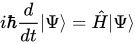
Quantum Darwinism is a theory meant to explain the emergence of the classical world from the quantum world as due to a process of Darwinian natural selection induced by the environment interacting with the quantum system; where the many possible quantum states are selected against in favor of a stable pointer state. It was proposed in 2003 by Wojciech Zurek and a group of collaborators including Ollivier, Poulin, Paz and Blume-Kohout. The development of the theory is due to the integration of a number of Zurek's research topics pursued over the course of 25 years, including pointer states, einselection and decoherence.
A study in 2010 is claimed to provide preliminary supporting evidence of quantum Darwinism with scars of a quantum dot "becoming a family of mother-daughter states" indicating they could "stabilize into multiple pointer states"; additionally, a similar kind of scene has been suggested with perturbation-induced scarring in disordered quantum dots (see scars). This interpretation has been subject to criticism by philosopher of physics Ruth Kastner on grounds of circularity. Kastner argues that the decoherence process central to quantum Darwinism does not arise from unitary dynamics alone. It instead relies on an assumed partitioning of the system from its environment together with mutual randomization of environmental phases, features that presuppose classical distinctions not present in the quantum state of the universe as a whole. Such that, even if decoherence occurs, it doesn't clearly show that objective macroscopic pointer states emerge naturally without additional postulates such as wave-function collapse. (See Implications below.)